


September Drips to January Disasters: The Hidden Threat in Your Pipes
The September pre-heating season transition is a busy time for homeowners across Western Pennsylvania. As you wrap up summer yard work, disconnect the garden hoses, and pull out the fall decorations, it is incredibly easy to ignore a small, seemingly harmless drip from an outdoor hose bib or a weeping pipe in the basement. However, addressing pre-winter plumbing leaks before they become frozen pipe disasters is the single most important step you can take to protect your home this season.
Right now, that minor leak is just a nuisance. You might place a bucket under it or simply let it soak into the ground. But when the mild early fall weather inevitably gives way to freezing winter temperatures, that same minor drip becomes a catastrophic liability. At Sureway Heating Cooling Plumbing, our team typically sees a massive spike in emergency calls every January, and we can tell you firsthand: pipe bursts rarely happen out of nowhere. In almost every case, they are the direct result of minor, unfixed vulnerabilities that were ignored months earlier when the weather was still forgiving.
As a homeowner, you face a critical decision point during this seasonal shift. You can leave the minor drip alone and hope for the best, or you can secure your water lines before the first hard freeze hits. By taking the time to review our plumbing resources and scheduling professional plumbing services now, you ensure that your home is prepared to handle the extreme temperature drops ahead.
The Physics of Ice Expansion: Why Water is Your Plumbing's Worst Enemy
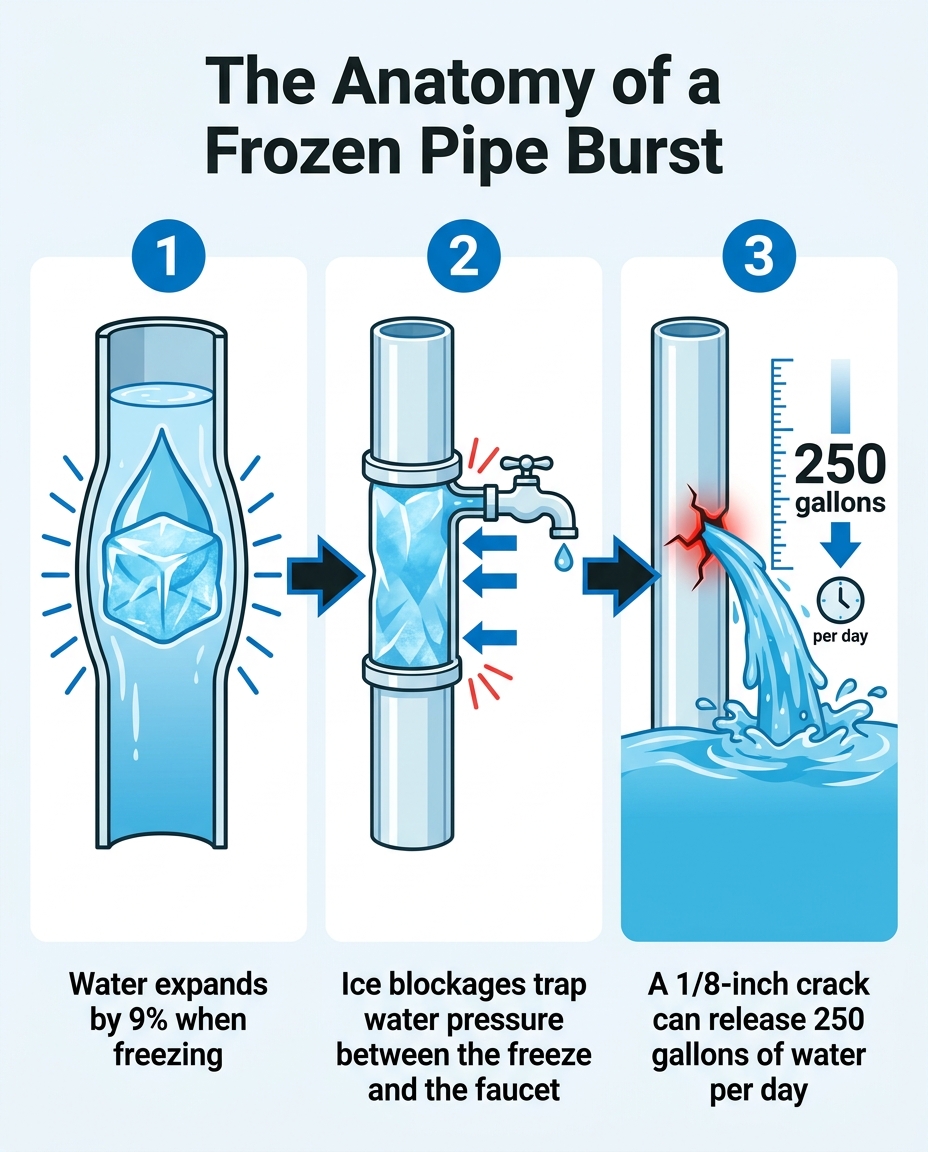
To understand why a small leak is so dangerous, you have to look at the unique physical properties of water. Most materials shrink when they get cold, but water does the exact opposite. When water freezes into ice, its volume increases by approximately 9%. Inside the rigid, confined space of a copper, PVC, or galvanized steel pipe, that 9% expansion creates immense outward pressure.
However, the ice itself is rarely the thing that actually breaks the pipe. The real danger comes from the water pressure that gets trapped. When a section of pipe freezes, the ice acts like a solid plug. If that plug forms between the main water supply and a closed faucet, the remaining liquid water becomes trapped. As the ice continues to expand, it pushes against the trapped water. Because water cannot be compressed, that pressure has nowhere to go but outward against the walls of your plumbing.
This is why unconditioned spaces in your home—like crawlspaces, unheated garages, and poorly insulated exterior walls—are the primary battlegrounds for winter plumbing failures. These areas lose heat rapidly, allowing ice blockages to form quickly. Once the pressure exceeds the structural capacity of the pipe, the metal or plastic tears open.
How Pressure Spikes Cause Catastrophic Ruptures
The downstream burst: Because the pressure spike happens between the ice block and the closed faucet, the actual rupture often occurs downstream from the frozen area, sometimes in a completely different room.
The volume of destruction: A pipe does not need to shatter completely to cause a flood. A microscopic 1/8-inch crack—barely the width of a pencil lead—can release up to 250 gallons of water a day once the frozen blockage thaws and water flows freely again. This volume of water can destroy drywall, ruin flooring, and lead to severe structural damage in a matter of hours.

How Compromised Pipe Integrity Accelerates the Freezing Process
A pipe that is already weeping, dripping, or showing signs of corrosion in September has fundamentally lost its structural integrity. It is no longer a solid, seamless barrier. Whether the issue is a degraded solder joint, a rusted thread, or a hairline fracture, that specific section of plumbing is significantly weaker than the rest of the system.
When winter arrives and the 9% expansion rule takes effect, the pressure inside your pipes will always seek the path of least resistance. A healthy, intact pipe might be able to withstand a temporary pressure spike. A compromised pipe cannot. The weakened area where the leak is currently dripping will be the exact spot that gives way and tears open when the pressure builds.
Furthermore, a leaking pipe actually freezes faster than a sealed one. Continuous, slow-moving moisture escaping from a crack can create a buildup of ice on the exterior of the pipe when exposed to freezing drafts in a crawlspace or basement. This external ice draws heat away from the pipe faster, accelerating the freezing of the water inside.
This is why comprehensive plumbing repair in the early fall is so critical. Restoring the structural strength of your pipe network means removing these weak points before they are tested by extreme cold. Homeowners should never rely on DIY patches, temporary sealants, or hardware store tape on compromised pipes. These superficial fixes cannot withstand the immense PSI of expanding ice and will fail instantly during a freeze.
The Critical Early Fall Window for Western Pennsylvania Homes
Timing is everything when it comes to winterizing your home. In Bridgeville PA and the greater Western Pennsylvania region, the first frost typically occurs in October. This makes the early fall weeks your final, optimal window for taking action. Once the temperatures begin to drop, the unpredictable weather swings of late fall can easily catch you off guard.
Our local climate presents specific challenges. Winter temperatures frequently drop into the teens and low 20s, creating high-risk freezing conditions for basements and unheated exterior walls. In our years of servicing older homes throughout the Bridgeville area, we've found they are particularly vulnerable, as they often feature aging plumbing systems located in drafty, poorly insulated spaces.
To protect your property, you need to take specific steps during this early fall window:
• Disconnect and drain outdoor hoses: Leaving a garden hose attached to an outdoor bib traps water in the fixture. When that water freezes, the expansion travels backward into the house, bursting the pipe just inside the wall.
• Insulate exposed pipes: Any plumbing running through an unheated garage, attic, or crawlspace should be wrapped in high-quality foam insulation sleeves to slow the transfer of heat.
• Seal drafty foundation walls: Cold air blowing directly onto a basement pipe will freeze it rapidly. Seal any visible gaps, cracks, or open vents near your water lines.
• Schedule professional maintenance: The most effective step is scheduling preventative plumbing maintenance before the seasonal rush of emergency calls begins. A professional can spot the vulnerabilities you cannot see.
Beyond the Obvious: Uncovering Hidden Plumbing Vulnerabilities Before Winter
While a dripping hose bib or a puddle under a basement sink is obvious, your plumbing system harbors many potential vulnerabilities that are completely hidden from view. Failing to identify these hidden risks can leave your home just as exposed to winter disasters as an active leak.
For example, a failing pressure regulator might not leak a single drop of water, but it can allow incoming municipal water pressure to spike dangerously high. If your pipes are already under extreme stress from high baseline pressure, the added strain of a winter freeze will cause them to rupture much faster. Similarly, safety mechanisms on your water heating equipment must be functioning perfectly to handle the increased demand of colder incoming ground water.
Identifying these hidden risks requires a licensed professional, not a quick visual DIY check. Real-world scenarios prove this time and time again. Recently, one of our Sureway technicians performed a routine safety check for a local Bridgeville homeowner's hot water tank. During the visit, our team member not only answered the homeowner's questions and addressed a critical safety issue on the tank itself, but also uncovered a faulty pressure regulator on the main line. By fixing both issues proactively, the homeowner avoided a massive pressure-related failure that we often see strike during the colder months.
A professional inspection evaluates your entire system's readiness for winter strain. Technicians check the integrity of shut-off valves, test the pressure reducing valves, and inspect hidden joints in crawlspaces to ensure your home is fully shielded against the elements.
Proactive Prevention vs. Reactive Emergency Repairs
It is easy to view a small leak as a minor nuisance that can be put off until next year. However, framing leak repair as a nuisance fix is a dangerous mindset. Instead, you should view early fall leak repair as a critical shield against catastrophic winter flooding.
Our team at Sureway Heating Cooling Plumbing places a heavy emphasis on proactive, preventative maintenance because we have seen the alternative too many times in local homes. Homeowners who ignore small leaks inevitably find themselves making panicked phone calls in the dead of winter, dealing with the devastating reality of frozen and ruptured lines.
The difference between these two approaches is staggering when you compare the outcomes:
• Timing & Convenience — Proactive Fall Prevention: Scheduled at your convenience during mild September weather. — Reactive Winter Emergency: Happens unexpectedly, often late at night or during a severe winter storm.
• Property Damage — Proactive Fall Prevention: Zero damage. Leaks are fixed before they can burst and flood the home. — Reactive Winter Emergency: Extensive water damage to drywall, flooring, insulation, and personal belongings.
• System Disruption — Proactive Fall Prevention: Water is turned off briefly for a controlled, targeted repair. — Reactive Winter Emergency: Total loss of household water until the burst pipe is located, thawed, and replaced.
• Scope of Work — Proactive Fall Prevention: Simple tightening of joints, replacing a valve, or patching a small section. — Reactive Winter Emergency: Tearing open walls and ceilings to access shattered pipes and replace ruined materials.
When you take action early, you have the luxury of time. You can have a calm, informed discussion with your plumber about repairing vs replacing vulnerable water lines before winter hits, ensuring your system is robust enough for freezing temperatures. When you wait for an emergency, your only option is immediate damage control.
Frequently Asked Questions About Winter Plumbing Preparation
Why do pipes burst in the winter?
Pipes burst because freezing water expands by roughly 9%, creating immense pressure inside the plumbing. When an ice blockage forms, it traps liquid water between the ice and a closed faucet. Because water cannot be compressed, the trapped pressure pushes outward against the pipe walls until the material tears open.
How does a leaking pipe freeze faster?
A leaking pipe freezes faster because escaping moisture can freeze on the outside of the pipe, drawing heat away from the metal rapidly. Additionally, a pipe that is already leaking has lost its structural integrity, meaning it takes significantly less internal pressure from expanding ice to cause a full rupture at the site of the leak.
When should I winterize my plumbing in Pennsylvania?
You should winterize your plumbing in September or early October, before the first hard frost hits the region. Because Western Pennsylvania experiences unpredictable temperature drops in late fall, completing your preventative maintenance during the mild early fall weather ensures you are never caught off guard.
At what temperature do pipes freeze?
Pipes generally begin to freeze when the outside temperature drops to 20 degrees Fahrenheit or lower. However, pipes located in drafty crawlspaces, unheated garages, or poorly insulated exterior walls can freeze at slightly higher outdoor temperatures due to wind chill and lack of ambient heat.
How do you keep pipes from freezing without heat?
To keep unheated pipes from freezing, you must insulate them heavily with foam sleeves and seal any surrounding air leaks to block freezing drafts. During extreme cold snaps, allowing a faucet to drip slightly can also relieve the internal pressure, preventing a catastrophic burst even if some ice begins to form.
Can a minor drip in my basement really cause a pipe to burst?
Yes, a minor drip is a clear indicator that the pipe's structural integrity is compromised. When winter temperatures cause the water inside to freeze and expand, that weakened, dripping joint will be the first place the pipe fails, turning a small puddle into a major flood.
Secure Your Plumbing Before the First Freeze Hits
Understanding the physics of ice expansion makes one thing abundantly clear: winter plumbing disasters are almost entirely preventable. By taking action during the mild September pre-heating season transition, you can easily protect your home from the stress and destruction of a January pipe burst.
Do not wait for the temperature to plummet before you take your home's vulnerabilities seriously. Addressing pre-winter plumbing leaks before they become frozen pipe disasters gives you the ultimate peace of mind as the seasons change. If you have noticed a small drip, a weeping joint, or simply want to ensure your older plumbing system is ready for the Western Pennsylvania winter, talk to an expert today. Let our team assess your lines, resolve lingering leaks, and ensure your home is fully secured before the first freeze arrives.




.svg)
.avif)


