

The Chilly Morning Surprise: When Your Furnace Quits on Day One
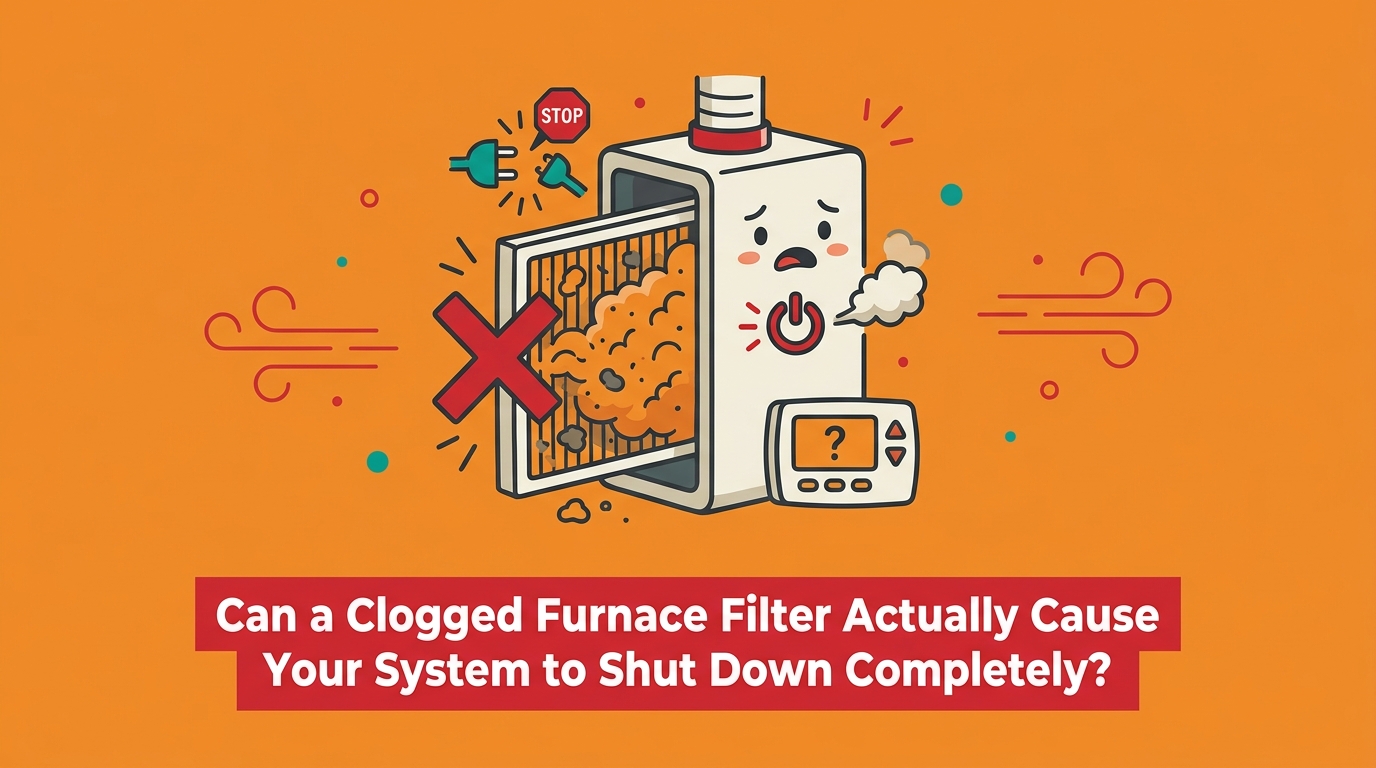
As the Bridgeville PA early fall heating transition begins and September temperatures suddenly drop into the 40s overnight, many homeowners find themselves asking: can a clogged furnace filter actually cause your system to shut down completely? You wake up to a freezing house on the first truly cold morning of the year, and your immediate reaction is panic. It is easy to assume the heating equipment is completely broken and requires a major mechanical overhaul. However, before assuming the worst, the culprit often traces back to a simple maintenance step ignored all summer long while the air conditioner ran constantly. Checking the air filter is the first critical diagnostic step before assuming a catastrophic failure has occurred. For more comprehensive guidance, explore our furnace troubleshooting and resources or reach out for professional heating services.
Yes, a Dirty Filter Can Force a Total Furnace Shutdown
The short answer is yes. A clogged furnace filter can absolutely cause your heating system to shut down completely. Many homeowners mistakenly view the air filter solely as an indoor air quality accessory designed to catch dust, pet dander, and allergens. In reality, the filter is a vital mechanical requirement for your heating system to function. Without a steady, unrestricted flow of air, the internal mechanisms of the furnace simply cannot operate safely.
When you transition into the September early fall heating transition, a filter that spent all summer capturing dust from the air conditioner is often completely blocked. This severe restriction starves the system of return air. When the furnace burners ignite, they generate intense heat. Without enough cool air flowing over the internal components to absorb and distribute that heat throughout your home, the temperature inside the furnace cabinet spikes rapidly.
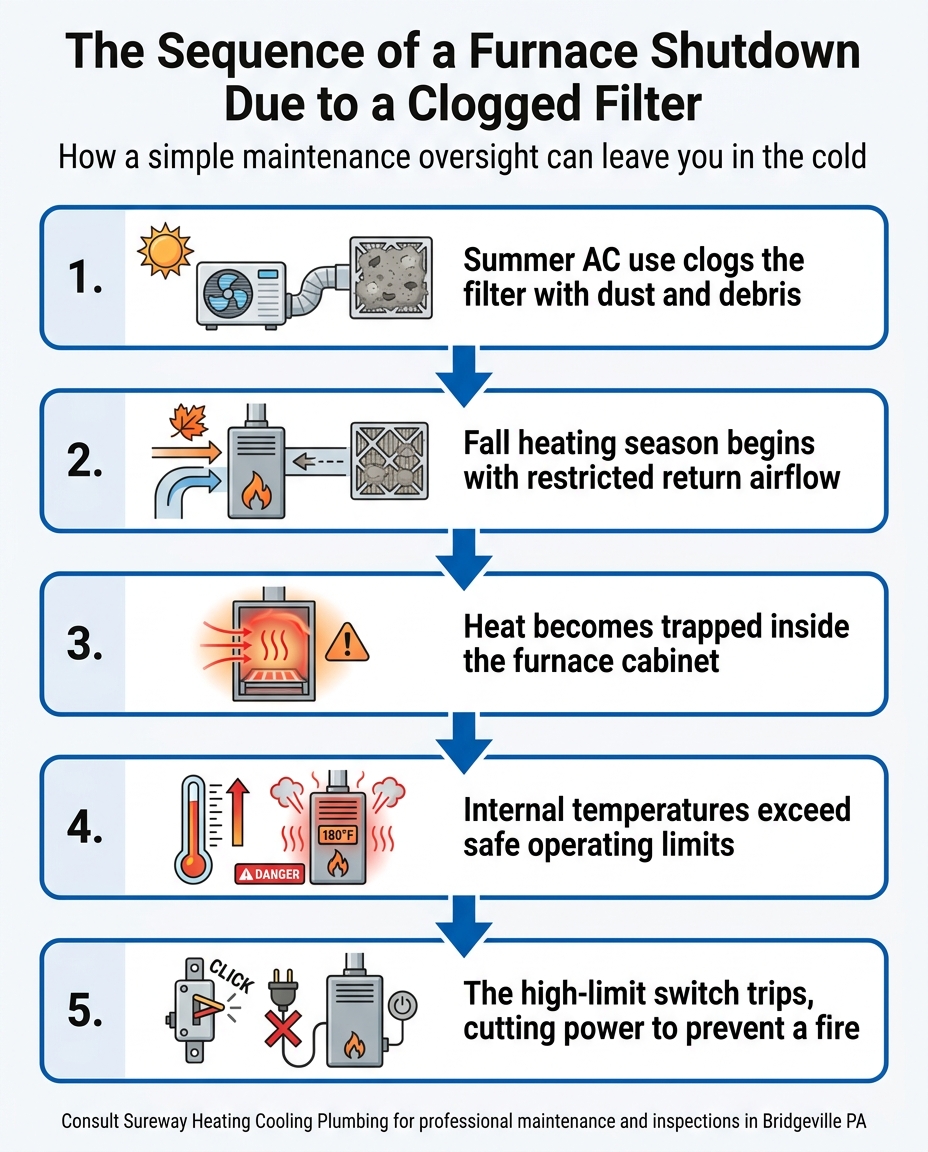
The Sequence of a Furnace Shutdown:
• Airflow Restriction: A heavily soiled filter acts like a wall, preventing cool return air from entering the system.
• Heat Trapping: The heat generated by the burners stays trapped inside the heat exchanger rather than being pushed into your ductwork.
• Critical Overheating: Internal heat buildup triggering the high-limit switch occurs within minutes of the heating cycle starting.
• Safety Shutoff: The system actively cuts power to the burners to prevent a dangerous fire hazard or catastrophic damage to the metal components.
This shutdown is not a malfunction; it is the equipment working exactly as designed to protect your home from extreme danger.
The Mechanics of Airflow and Internal Heat Buildup
To fully understand why a filter can stop a powerful furnace in its tracks, you have to look at the physics of how the system warms your home. Furnaces do not just generate heat; they exchange it. They rely on a constant, calculated volume of cool return air drawn from your living spaces. This air passes over a critical component called the heat exchanger, stripping the heat away from the hot metal and carrying it through your vents.
The Danger to Your Heat Exchanger
When a summer-clogged filter blocks this essential return air, the heat stays trapped inside the furnace cabinet. The heat exchanger is made of metal, and while it is built to withstand high temperatures, it is not invincible. If the heat is not constantly carried away by moving air, the metal expands too rapidly. Over time, this repeated stress causes the heat exchanger to crack.
A cracked heat exchanger is one of the most severe problems a heating system can face, as it allows dangerous combustion gases, including carbon monoxide, to leak into your home's breathing air. Because the consequences of a cracked heat exchanger are so severe, modern furnaces are heavily engineered to protect themselves from this exact scenario. Neglecting the basic airflow requirement by leaving a dirty filter in place is a leading cause of premature heat exchanger failure.
How the System Protects Itself
Because internal heat buildup triggering the high-limit switch is a known consequence of poor airflow, manufacturers build multiple layers of defense into the control board. The system constantly monitors its own operating temperature. If the airflow drops below the minimum required threshold, the internal temperature rises almost immediately. Staying on top of routine HVAC maintenance ensures these safety sensors are clean, calibrated, and ready to protect the system during the vital September early fall heating transition.
Why the High-Limit Switch is Your Furnace's Ultimate Safety Net
The unsung hero of your heating equipment is a small component known as the high-limit switch. This is a temperature-sensing probe located near the heat exchanger, deep inside the furnace cabinet. Its primary job is simple but critical: to cut power to the gas burners immediately if safe operating temperatures are exceeded.
Understanding the High-Limit Switch Function
The high-limit switch typically features a bimetallic disc that reacts to ambient heat. As the temperature inside the cabinet rises beyond a safe threshold—usually due to a clogged filter restricting airflow—the disc warps, breaking the electrical circuit that keeps the gas valve open. The moment that circuit breaks, the flames extinguish. The blower motor will usually continue to run for several minutes in an attempt to cool the overheated heat exchanger down to a manageable temperature.
It is important to understand that a tripped limit switch means your furnace's safety mechanisms are working correctly to prevent a fire. At Sureway Heating Cooling Plumbing, our safety-first expertise means we always check these critical sensors during inspections to ensure they are properly protecting local homes. When a system overheats, you may experience a temporary trip, which might reset on its own once the cabinet cools. However, repeated overheating events will eventually cause a "hard lockout," where the system shuts down entirely and refuses to turn back on.
Real-World Consequences of Overheating
Ignoring the warning signs of a tripping limit switch can lead to compounding mechanical stress. A typical pattern we see involves systems breaking down entirely when pushed to their limits. One local homeowner experienced a sudden furnace breakdown late at night during a bitter winter freeze. Because internal heat buildup triggering the high-limit switch had caused severe strain on the system, a technician had to arrive after hours to rebuild the necessary safety components and restore the furnace's function safely. Catching an airflow issue early prevents these late-night emergency scenarios.
Short Cycling vs. a Hard Lockout: Recognizing the Symptoms
When a dirty filter starts choking your heating system, the furnace rarely fails all at once. Instead, it goes through a progression of symptoms. Helping homeowners identify whether their furnace is just struggling or has completely shut down is a crucial part of diagnosing the problem correctly.
The Warning Phase: Short Cycling
Short cycling occurs when the furnace turns on, runs for a few minutes, overheats, shuts off, cools down, and then repeats the process. You will hear the system kick on, feel warm air for a brief moment, and then hear the burners shut down prematurely. This is the high-limit switch doing its job over and over again. The system is desperately trying to heat your home, but internal heat buildup triggering the high-limit switch forces it to stop before the thermostat's target temperature is reached.
The Final Consequence: A Hard Lockout
If the short cycling continues without the underlying airflow issue being resolved, the furnace's main control board will step in. Modern control boards are programmed to count how many times the high-limit switch trips within a specific timeframe. If it detects multiple high-limit trips in a row, it registers a critical fault and completely disables the system for safety. This is known as a hard lockout. The furnace will not attempt to ignite again until the error is cleared.
• Short Cycling — What It Means: The furnace overheats, shuts off, cools down, and restarts repeatedly. — Required Action: Change the dirty air filter immediately to restore proper airflow.
• Blower Running, No Heat — What It Means: The limit switch tripped; the blower is trying to cool the heat exchanger. — Required Action: Wait for the system to cool down, replace the filter, and monitor the next cycle.
• Hard Lockout — What It Means: The control board has disabled the system after multiple overheating events. — Required Action: Professional diagnosis is required to reset the board and check for damage.
While short cycling is a warning sign, a hard lockout is the final consequence of ignoring a severely restricted filter. Changing the filter during the short-cycling phase can often prevent a total lockout. If you notice these patterns, it is one of the clearest signs you need furnace repair or immediate maintenance.
Why You Must Never Attempt a DIY High-Limit Switch Reset
When a furnace enters a hard lockout, it can be tempting to search online for ways to force the system back on. However, we must provide a strict safety warning: the only DIY action a homeowner should ever take is replacing the dirty air filter. You must never attempt to open the furnace cabinet to manually reset a tripped limit switch, bypass safety controls, or tamper with the internal wiring.
The Hidden Dangers of Bypassing Safety Controls
The high-limit switch tripped for a reason. It detected a dangerous level of internal heat buildup. If you bypass this switch or force a reset without addressing the root cause, you are removing the only barrier between your home and a catastrophic fire. Furthermore, if a new filter does not clear a hard lockout, a professional must diagnose the system to ensure the heat exchanger hasn't already suffered microscopic cracks from the repeated thermal stress.
Tampering with these safety mechanisms not only introduces severe fire risks and the potential for carbon monoxide leaks, but it will also immediately void your manufacturer's warranty. Complex heating issues require a trained eye. For example, when an owner of an older local house with complex plumbing and heating challenges faced persistent furnace issues, they didn't try to bypass the safety controls themselves. Instead, they relied on professional diagnosis, eventually purchasing a new system and receiving ongoing, safe support for their home. Always rely on licensed professionals for HVAC system repairs when the equipment enters a lockout state.
Frequently Asked Questions About Furnace Airflow and Shutdowns
Can a dirty air filter stop a furnace from working?
Yes, a dirty air filter can completely stop a furnace from working. By blocking the necessary return airflow, the filter causes the internal components to overheat rapidly. This dangerous internal heat buildup triggers the high-limit safety shutoffs, forcing the system to power down to prevent a fire.
Why does my furnace shut off after a few minutes?
This rapid on-and-off behavior is called short cycling. It is most often caused by a dirty filter restricting airflow, which forces the high-limit switch to trip repeatedly as the system overheats. The furnace shuts down to cool off, tries again, and overheats once more.
What happens if a furnace overheats?
When a furnace overheats, the high-limit safety switch detects the excess heat and immediately cuts power to the gas burners. This crucial safety action prevents a fire and protects the metal heat exchanger from cracking under extreme thermal stress.
What is a furnace high-limit switch?
A high-limit switch is a temperature-sensing safety device located deep inside the furnace cabinet, near the heat exchanger. It monitors the internal ambient temperatures and acts as a fail-safe, breaking the electrical circuit to the gas valve if the cabinet gets too hot.
How often should I change my filter during the fall transition?
You should check your air filter monthly, especially during the September early fall heating transition. Switching from heavy summer AC use to initial heating cycles often reveals a filter that is entirely clogged with summer dust, making it highly susceptible to causing a sudden furnace shutdown.
Restoring Your Heat Safely and Professionally
A dirty air filter is one of the most common, yet easily fixable, causes for a sudden heating system shutdown. As the September early fall heating transition brings colder temperatures to Bridgeville, ensuring your system can breathe is paramount. If your furnace is short cycling or refusing to run, check and change your air filter immediately.
If swapping the filter doesn't bring your system back online, it means the furnace has likely entered a hard lockout due to internal heat buildup triggering the high-limit switch. When this happens, do not attempt to force a reset. Our team is known for providing a prompt, safe response to "no heat" emergencies in the Bridgeville area. We will safely diagnose the issue, ensure your heat exchanger is intact, and properly reset the system. If you are struggling with a stubborn furnace, schedule professional service today to restore your home's comfort and safety. Ultimately, can a clogged furnace filter actually cause your system to shut down completely? Yes—but with proper care and expert support, you can keep the warm air flowing all season long.



.svg)
.avif)


