


Is It Time to Rethink Your Heating Strategy Before Winter Arrives?
Are you actively choosing between a gas furnace and a dual-fuel heat pump system as the weather begins to cool down? If your current heating setup struggled to keep your home comfortable last year, the early fall is the perfect window to evaluate your options. We are currently in the September pre-heating season transition, which means you have time to make an informed, calculated decision before the freezing weather arrives and emergency replacements become your only option.
In our years serving Bridgeville PA and the surrounding communities, our team at Sureway Heating Cooling Plumbing often sees homeowners simply replace their old equipment with the exact same type of unit they have always had. However, modernizing your approach can drastically improve your long-term comfort and energy efficiency. The core decision you face right now is whether to stick with a traditional single-source setup or upgrade to a hybrid approach that leverages two different energy sources. Taking the time to evaluate modern heating systems now ensures you are prepared for whatever the upcoming winter demands.
The proactive approach means scheduling a professional assessment while the weather is still mild. A thorough evaluation of your home's thermal envelope, your existing ductwork, and your long-term efficiency goals will reveal whether a standard replacement or a dual-fuel heat pump installation makes the most sense for your property.
Understanding the Core Differences: Gas Furnaces vs. Dual-Fuel Systems
To make an informed decision, you need to understand how these two distinct technologies operate. The mechanical differences dictate how they consume energy, how they deliver warm air, and how they perform under varying weather conditions across Bridgeville PA and surrounding Western PA areas.
A traditional natural gas furnace relies entirely on fossil fuels. It uses a combustion process, burning natural gas to create heat, which is then transferred to the air circulating through your ductwork via a heat exchanger. This is a tested, reliable method of generating heat, but it is limited by the fact that it must consume fuel to create thermal energy.
A dual-fuel system, on the other hand, pairs an electric heat pump with a gas furnace to create a smart hybrid approach. It is important to clarify that a dual-fuel setup does not mean you have two furnaces. Instead, it utilizes an outdoor heat pump unit alongside an indoor gas furnace. The heat pump handles the heating duties during mild weather by capturing ambient heat from the outside air and transferring it indoors. Because it moves heat rather than generating it from scratch, it offers massive efficiency gains. If you are exploring different equipment brands for this setup, reviewing specific Amana heat pump options for homeowners can provide a clearer picture of the technology available.
The Reliability of the Traditional Gas Furnace
The standard gas furnace remains a staple in many local homes for good reason. It provides consistent, high-heat output regardless of how cold the outdoor temperatures drop. Because it operates independently of electric heating elements, it delivers a very hot, rapid stream of air that quickly raises the indoor temperature. This familiar technology is highly dependable when you need immediate recovery from a deep freeze.
The Hybrid Advantage of Dual-Fuel Heat Pumps
The hybrid advantage comes from the system's ability to automatically optimize its energy source based on outdoor conditions. An air-source heat pump is incredibly efficient, but its efficiency naturally decreases as the outdoor air loses thermal energy. By combining the heat pump with a gas backup, you utilize electricity when it is most efficient (during mild weather) and switch to gas when extreme cold sets in, ensuring you never sacrifice comfort for efficiency.
The Magic of the Switchover Temperature in Pennsylvania
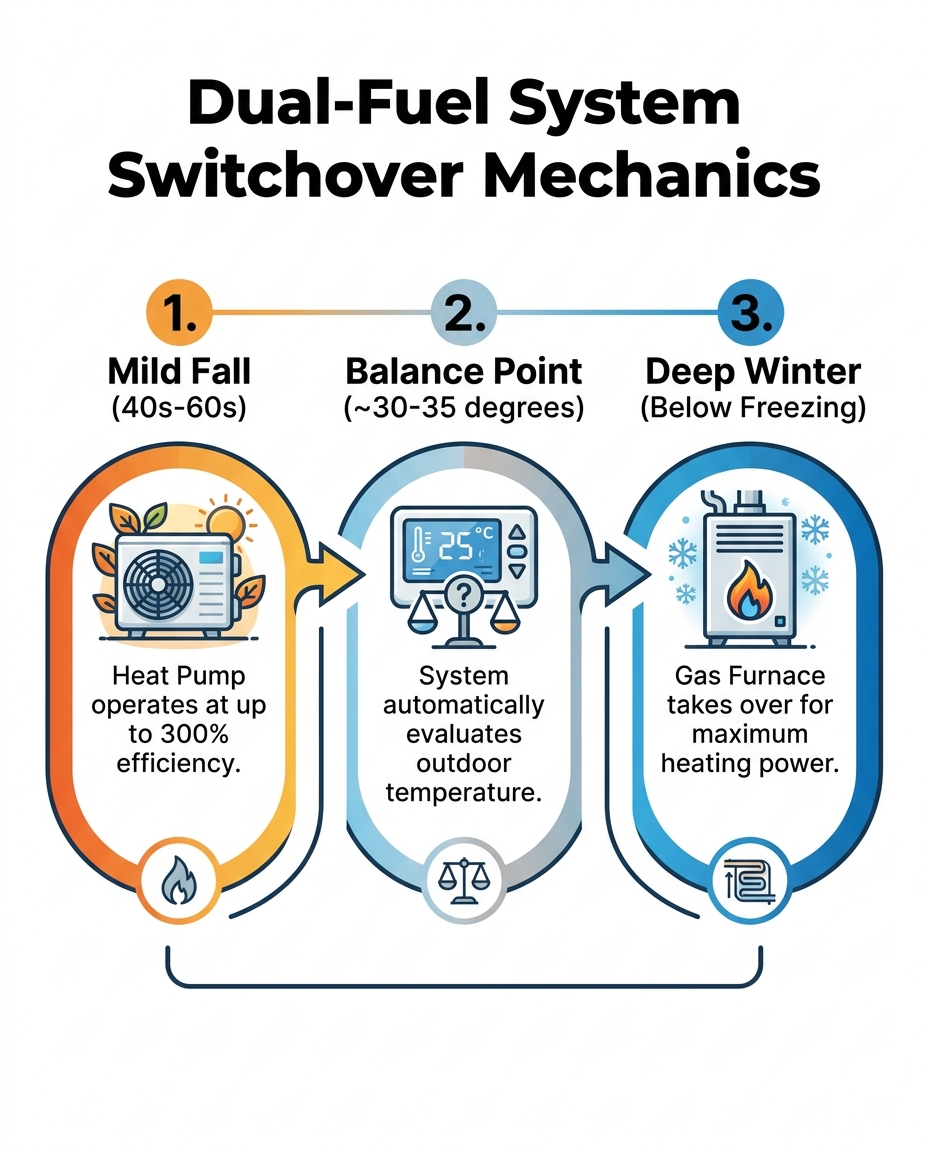
The true genius of a hybrid setup lies in a concept called the balance point, or the switchover temperature. With summer temperatures fading, Bridgeville's mild fall temperatures typically hover in the 40s and 50s. During these months, the heat pump can run at peak efficiency. However, when deep winter freezes arrive, the heat pump loses its efficiency advantage, and the gas furnace must seamlessly take over.
The balance point is the specific outdoor temperature at which your heat pump can no longer efficiently meet your home's heating demands on its own. When the temperature drops below this precise threshold, the system's smart thermostat automatically signals the heat pump to shut down and ignites the gas furnace. This automated switchover maximizes energy efficiency without sacrificing indoor comfort, preventing your home from ever feeling drafty or cold during sudden temperature drops.
How the Balance Point is Determined
Setting the correct switchover temperature is not a guessing game. Our experienced HVAC technicians calculate this threshold based on several distinct factors:
1. Thermal Envelope Assessment: We evaluate your home's insulation levels, window quality, and overall heat loss. A poorly insulated home will require a higher switchover temperature than a tightly sealed home.
2. Climate Data Integration: Local weather patterns across Western PA are factored in. The balance point is typically set near freezing (around 30 to 35 degrees Fahrenheit), where the air holds less extractable heat.
3. Utility Rate Comparison: The system can be calibrated to prioritize either comfort or energy savings, depending on the current local costs of electricity versus natural gas.

Comparing Energy Efficiency and Long-Term Comfort
When weighing the long-term operational benefits of a dual-fuel system against a standard gas furnace, efficiency is usually the deciding factor. Heat pumps are unique because they can transfer up to 300% more energy than they consume during mild weather. Contrast this with the maximum efficiency ratings (AFUE) of top-tier gas furnaces, which can only ever approach 98% efficiency because some energy is always lost during the combustion process.
We recently worked with a local homeowner who reached out during the winter when they needed a new furnace and condenser installed. After our team spent time reviewing their entire HVAC system and tracing the ductwork flow to find specific solutions, the new setup had a tremendous positive impact. They reported saving energy while enjoying consistent temperatures and incredibly quiet operation. This highlights how a properly sized and carefully selected system transforms daily comfort.
• Primary Energy Source — Standard Gas Furnace: Natural gas or propane — Dual-Fuel Heat Pump System: Electricity (mild weather) & Gas (freezing weather)
• Mild Weather Efficiency — Standard Gas Furnace: Standard combustion efficiency — Dual-Fuel Heat Pump System: Up to 300% efficient via heat transfer
• Extreme Cold Performance — Standard Gas Furnace: High-heat output, rapid recovery — Dual-Fuel Heat Pump System: Switches to gas for identical high-heat output
• Year-Round Utility — Standard Gas Furnace: Heating only — Dual-Fuel Heat Pump System: Provides both heating and summer cooling
Efficiency in Mild Weather
Electric heat pumps dominate efficiency during the shoulder seasons. As we navigate the September pre-heating season transition, a heat pump sips electricity to keep the house warm. This results in a lower carbon footprint due to significantly reduced fossil fuel consumption. Additionally, because the outdoor unit functions as an air conditioner in the summer, it provides true year-round value.
Performance in Extreme Cold
Gas furnaces provide faster, hotter air during sub-freezing days. The beauty of the dual-fuel approach is that it ensures you never have to rely on inefficient electric resistance strips for backup heat—a common drawback of standalone heat pumps in northern climates. You get the best of both worlds: exceptional efficiency when it is mild outside, and robust combustion power when it is freezing.
Factoring in Tax Incentives and Utility Rebates
Upgrading your heating infrastructure is a significant investment, but generic financial incentives can help offset the initial costs. High-efficiency systems are frequently targeted by government and utility programs designed to reduce overall grid strain and lower carbon emissions.
When planning your project during the September pre-heating season transition, you have the advantage of time to research and apply for these programs before the end of the tax year. High-efficiency heat pumps often qualify for generic federal tax credits, which can reduce your overall tax liability. Furthermore, local utility companies frequently offer rebates for transitioning to dual-fuel systems, as these hybrid setups help balance the energy load during peak winter months.
Key steps to maximize your incentives:
• Verify Energy Star Ratings: Ensure the specific models you are considering meet the efficiency thresholds required by incentive programs.
• Act Early: We advise homeowners to act early in the season to ensure equipment availability for rebate-qualifying models, as high-efficiency units often experience supply shortages during the winter rush.
• Consult the Experts: We strongly recommend consulting with a tax professional and your local HVAC expert to verify current program eligibility and application requirements.
• Check Local Programs: Explore available HVAC rebates through your specific gas and electric providers to stack potential savings.
Making the Right Choice: The Break-Even Analysis
Our team always acknowledges right away that dual-fuel systems generally require a higher initial investment than a standalone gas furnace replacement. Because you are essentially installing a high-end air conditioner that can run in reverse, plus a furnace, the upfront costs are higher. The decision ultimately comes down to a break-even analysis: calculating exactly how long your monthly energy savings will take to offset those upfront costs.
Evaluating your home's specific ductwork, insulation, and heating load is critical to this analysis. If your home is poorly insulated, the heat pump will switch over to gas more frequently, reducing your overall electric savings. Conversely, a well-insulated home in Bridgeville PA and surrounding Western PA areas will rely heavily on the highly efficient heat pump, accelerating your return on investment.
Sureway Heating Cooling Plumbing provides a personalized break-even analysis for dual-fuel upgrades, helping homeowners navigate generic rebates and equipment choices confidently. For example, one local customer who required various heating jobs over several years noted the profound relief and pleasure that came from having our professionals strategize and weigh their long-term options rather than just pushing a single product.
If the math makes sense for your property, exploring flexible financing options can make higher-efficiency upgrades far more accessible, allowing you to pay for the system over time while immediately benefiting from lower monthly utility bills.
Take Control of Your Winter Comfort Today
The right heating system depends entirely on your individual home needs, your local climate patterns, and your long-term efficiency goals. Using the September pre-heating season transition to your advantage gives you the breathing room to make a smart, unhurried decision.
Getting a professional assessment before the winter rush ensures your home is equipped to handle whatever the season brings. Do not wait until your current system fails on the coldest night of the year. Book an appointment with our team today to explore your dual-fuel and gas furnace options, and secure your family's comfort for the years ahead.
Frequently Asked Questions
At what temperature does a dual fuel system switch to gas?
The switchover temperature, or balance point, is typically set between 30 and 35 degrees Fahrenheit. At this temperature, the smart thermostat determines that the heat pump can no longer efficiently extract enough heat from the outside air. It automatically shuts down the heat pump and ignites the gas furnace to maintain consistent indoor comfort without wasting electricity.
Is it worth upgrading to a dual fuel heat pump in Pennsylvania?
For many Pennsylvania homeowners, the upgrade is highly beneficial due to our distinct shoulder seasons. During the mild fall and spring months, the heat pump operates at peak efficiency, significantly lowering utility bills. When the deep winter freezes arrive, the gas furnace provides the necessary high-capacity heat, giving you the best operational efficiency year-round.
What are the disadvantages of a dual fuel heat pump?
The primary disadvantage is the higher initial installation cost compared to a standard gas furnace. Because you are installing both a heat pump (which also acts as your air conditioner) and a gas furnace, the upfront investment is larger. Additionally, these systems require a slightly more complex installation process and a smart thermostat capable of managing the dual fuel logic.
Is a dual fuel heat pump better than a gas furnace?
It is not necessarily "better" in terms of heat output, but it is far more versatile and energy-efficient over a full calendar year. A standalone gas furnace relies 100% on fossil fuels, whereas a dual-fuel system uses electricity when it is highly efficient to do so. The right choice depends on your budget, your home's insulation, and your desire to reduce your carbon footprint.
Can I use my existing ductwork when upgrading to a dual-fuel system?
In most cases, yes, your existing ductwork can be utilized for a dual-fuel system. However, a professional technician must inspect the ducts to ensure they are properly sized, sealed, and capable of handling the specific airflow requirements of a variable-speed heat pump. Leaky or undersized ducts can severely diminish the efficiency gains of your new equipment.
How long does it take to install a dual-fuel heat pump system?
A standard installation typically takes one to two full days, depending on the complexity of the job. If your existing ductwork requires modification, or if new electrical circuits need to be run to accommodate the outdoor heat pump, the process may take slightly longer. Your technician will provide a precise timeline during your initial consultation.



.svg)
.avif)


