


Why September is the Critical Window for Plumbing Winterization
Before the first freeze hits Western Pennsylvania, our team at Sureway Heating Cooling Plumbing wants you to know that understanding the role of proper insulation in preventing frozen water lines is essential to keeping your home safe and dry this winter. Early fall is the absolute best time to evaluate your property's vulnerabilities, long before the temperatures drop and emergency calls begin to spike. In our experience, when homeowners wait until November or December to think about their plumbing, they are often already fighting a losing battle against the cold.
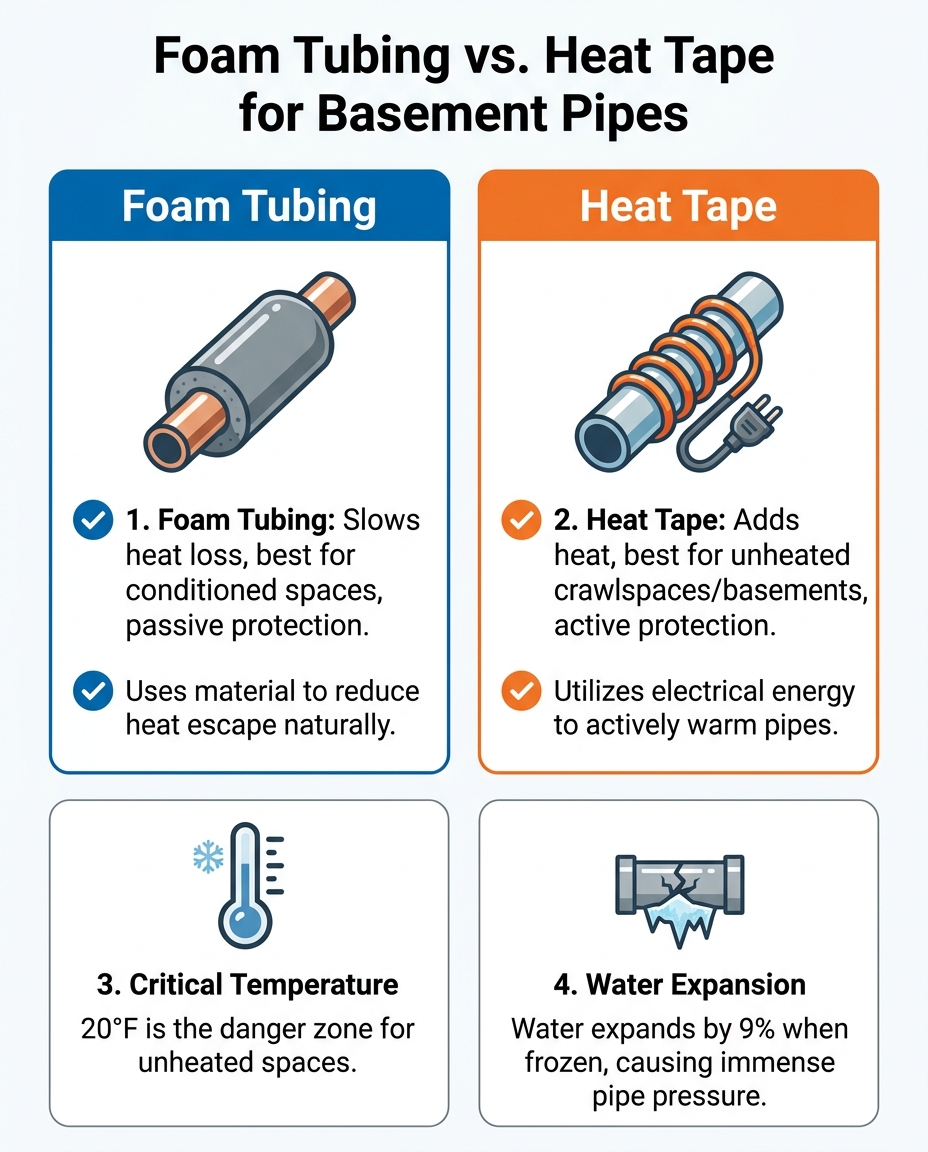
In our years of repairing burst pipes across the region, we've seen the destructive science firsthand. When water freezes, it expands by approximately nine percent. This expansion creates immense pressure inside your plumbing system—sometimes exceeding 2,000 pounds per square inch (psi). No standard residential pipe, whether copper, PVC, or PEX, can withstand that kind of internal force for long. The result is a ruptured line that can cause catastrophic water damage the moment it thaws.
To protect your home during this September early fall prep window, you face a crucial decision: choosing between passive insulation (like foam tubing) and active heating (like heat tape) for your exposed lines. Both methods serve a distinct purpose, and our technicians frequently see how selecting the wrong one can leave a home unprotected during a deep freeze. If you need assistance evaluating your home's vulnerabilities, reaching out for professional plumbing services now can save you significant trouble later.
Identifying Vulnerable Pipes in Older Homes
Before you can choose the right protection, you have to know where your home is most at risk. In Western Pennsylvania, freeze-thaw cycles and prolonged cold snaps routinely drop temperatures well below 20 degrees Fahrenheit. Our crews recognize this 20-degree mark as the critical alert threshold for pipes located in unconditioned spaces.
At Sureway Heating Cooling Plumbing, our deep knowledge of local Bridgeville home construction tells us that older architectural styles require distinct winterization approaches. Many historic and mid-century homes in the area lack modern thermal boundaries. We frequently encounter stone foundations, aging sill plates, and unsealed rim joists that allow freezing drafts to blow directly across exposed plumbing.
To properly assess your home, we recommend homeowners follow these simple visual inspection steps to locate their most vulnerable plumbing:
1. Inspect unconditioned spaces: Walk through your home and identify any areas that do not receive direct heat from your furnace or boiler.
2. Trace exterior wall routing: Look for pipes that run along the inside of exterior walls, particularly on the north-facing side of the house where sunlight rarely reaches.
3. Check for draft points: Feel around basement windows, crawlspace vents, and cable penetrations for cold air entering the home near water lines.
4. Review previous problem areas: Take note of any faucets that have been slow to run during past winters, as this indicates a line that has partially frozen before.
The Danger Zones: Basements, Crawlspaces, and Garages
The lack of ambient heat in these specific areas accelerates the freezing process dramatically. Your main living spaces might be a comfortable 70 degrees, but we constantly remind our customers that an unheated basement or garage can easily hover near freezing.
Drafty crawlspaces are particularly dangerous. Wind chill penetrating through loose vents or cracked foundations can strip heat away from exposed pipes rapidly. In these environments, water lines can freeze even when the ambient outdoor temperature is slightly above freezing, simply because the constant flow of cold air acts like a refrigerator on the metal or plastic tubing. Identifying these Bridgeville PA unheated basements and crawlspaces is the mandatory first step before applying any protective measures.
Passive Protection: When Foam Tubing is Sufficient
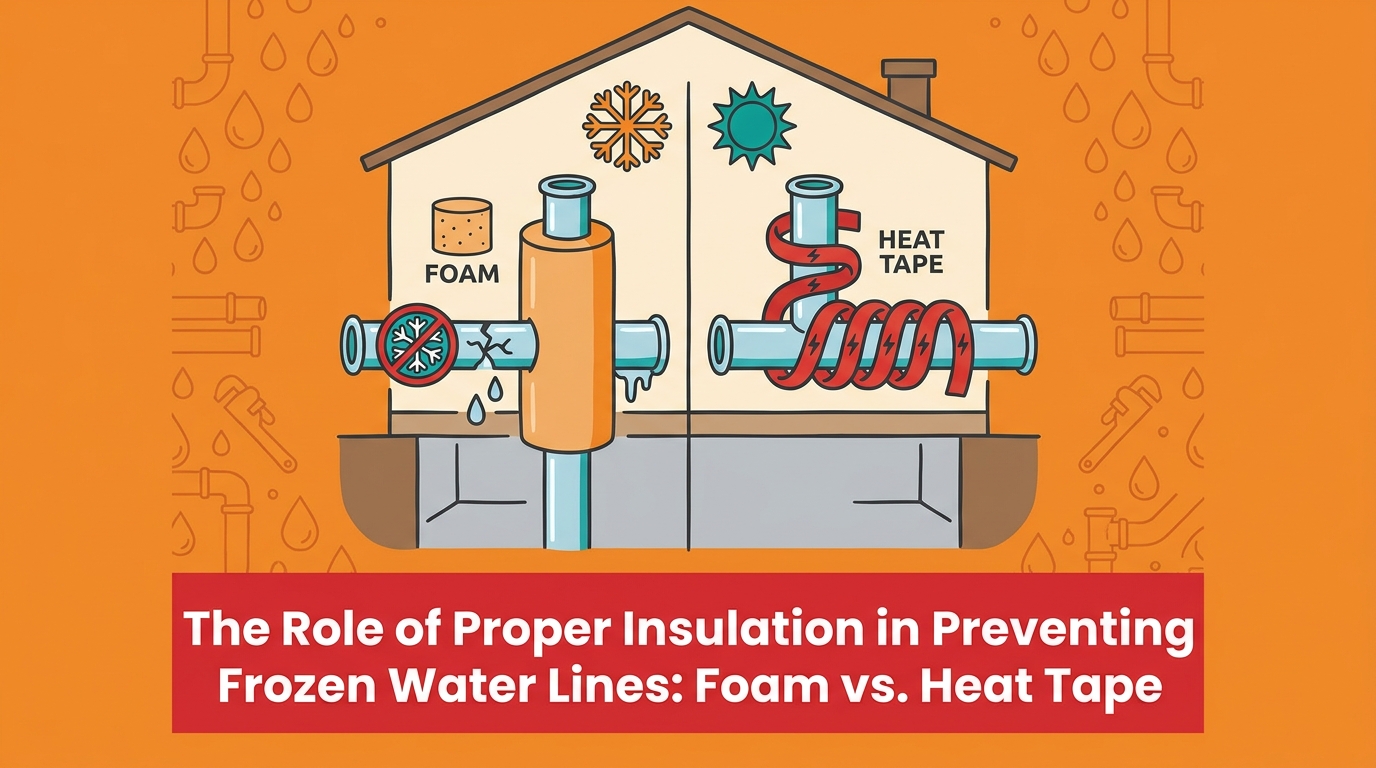
Standard foam tubing is the most common form of pipe protection, but our technicians find it is frequently misunderstood. Passive insulation means that the material slows the transfer of heat away from the pipe, but it does not generate any heat of its own. It acts much like a winter coat—it keeps the existing warmth trapped against the surface for as long as possible.
The effectiveness of foam wrap is measured by its R-value, which indicates its resistance to heat flow. Thicker foam provides a higher R-value, offering a stronger thermal boundary between the water inside the pipe and the freezing air outside. For interior pipes that only experience brief cold exposure, or for lines located in partially conditioned spaces that rarely drop below freezing, we find that a high-quality foam wrap is often perfectly adequate.
During your September early fall prep, applying foam to these low-risk areas is a straightforward way to add a layer of security. However, it is vital to understand the primary limitation of passive insulation. During a prolonged, multi-day deep freeze, standard foam will eventually allow the pipe to reach ambient freezing temperatures. Because it cannot add heat, it only buys you time. Understanding this limitation is a key part of repairing vs replacing vulnerable water lines before winter.
Active Heating Solutions: The Case for Heat Tape
When passive insulation is not enough to withstand the local climate, our team relies on active heating. Active heating utilizes heat tape (also known as heat cables), which uses electricity to actively warm the pipe. Instead of just trapping existing heat, these specialized cables generate their own warmth, ensuring the water inside never drops below the freezing point regardless of the ambient temperature.
Heat tape is the definitive solution for high-risk scenarios we see locally. If you have plumbing running through an unheated crawlspace, a mobile home underbelly, or a basement that routinely drops below 20 degrees, passive foam will eventually fail. Active heating cables, many of which feature built-in thermostats that turn on automatically when temperatures plummet, are required to keep these lines flowing.
Safety is a major consideration when dealing with active heating elements. Because heat tape involves running electrical current alongside water lines, our master plumbers warn that improper installation can create serious fire and shock hazards. It is highly recommended to rely on professional installation to ensure the cables are routed correctly, plugged into GFCI-protected outlets, and never overlapped in a way that could cause overheating.
We see the value of proactive repairs frequently in our community. One local homeowner called Sureway Heating Cooling Plumbing last fall with general plumbing issues that needed immediate attention in their unheated basement. A technician quickly resolved the problems, providing friendly service and cost-effective solutions that included securing their vulnerable lines before winter hit. Taking care of these vulnerabilities early is always preferable to making an emergency call to repair frozen water lines in the middle of January.
Foam Tubing vs. Heat Tape: Comparing Your Options
Making an informed decision requires looking at your specific plumbing layout and matching the solution to the environment. While both methods protect pipes, they function in fundamentally different ways. For Bridgeville PA unheated basements and crawlspaces, we've seen firsthand how choosing the wrong method can lead to unexpected mid-winter disasters.
Use the following comparison to determine which approach is best suited for the different zones within your home:
• Primary Function — Passive Foam Tubing: Slows the loss of heat from the pipe to the surrounding air. — Active Heat Tape: Actively generates heat to warm the pipe and the water inside.
• Ideal Environment — Passive Foam Tubing: Partially heated basements, interior walls, and areas with brief cold exposure. — Active Heat Tape: Unheated crawlspaces, exterior walls, and areas prone to prolonged deep freezes.
• Maintenance Required — Passive Foam Tubing: Low maintenance; generally set-and-forget once properly secured. — Active Heat Tape: Requires periodic checks to ensure the thermostat and electrical connections are functioning.
• Freeze Protection Limit — Passive Foam Tubing: Will eventually fail during a prolonged, multi-day freeze below 20°F. — Active Heat Tape: Provides continuous protection as long as electrical power is maintained.
• Power Source — Passive Foam Tubing: None required. — Active Heat Tape: Requires a dedicated, properly grounded electrical outlet (GFCI).

The Value of Proactive Plumbing Maintenance
Applying the correct insulation is a vital step, but our team stresses that it is only one part of a comprehensive winterization strategy. Relying solely on foam or tape without assessing the overall health of your plumbing system can leave you vulnerable to other cold-weather failures. Proactive plumbing maintenance ensures that the entire system is prepared to handle the thermal stress of winter.
Having a Sureway Heating Cooling Plumbing professional evaluate your home during your September early fall prep can uncover issues that standard visual inspections miss. Our technicians look for hidden drafts that might be bypassing your insulation, failing pressure regulators that could exacerbate a burst pipe scenario, and previously damaged lines that have been weakened by past freezes. Early intervention in these areas prevents catastrophic water damage and expensive emergency service calls.
The care taken during these preventative visits makes a significant difference. During a recent maintenance visit, a customer needed plumbing repairs that required accessing extremely tight, unconditioned spaces. Our team performed the work meticulously, taking extra care to protect the home's flooring and minimizing any disruption—leaving the space better than expected. That same level of detailed, respectful care is applied when securing your home against the winter cold. Scheduling proactive plumbing maintenance gives you a complete picture of your home's readiness.
When to Consult a Local Expert for Winterization
While wrapping accessible interior pipes with foam is a common homeowner task, our plumbers often see the distinct limits of DIY pipe protection. Knowing when to call in a professional can mean the difference between a secure home and a flooded basement. If you have pipes that have frozen in previous years, complex plumbing layouts in an older home, or inaccessible crawlspaces, DIY methods are often insufficient.
The risks associated with improperly installed heat tape cannot be overstated. We've encountered situations where cables were crossed, insulated over incorrectly, or plugged into unsafe outlets, transforming them into severe fire hazards. Furthermore, if the built-in thermostat is positioned improperly, the tape may not activate when needed, rendering your investment useless.
Consulting with an expert provides the peace of mind that comes with a professional evaluation of your home's entire thermal envelope and plumbing integrity. Addressing these vulnerabilities in early fall is infinitely safer, less stressful, and more effective than waiting for a mid-winter crisis. If you are unsure about the state of your Bridgeville PA unheated basements and crawlspaces, reaching out to experienced plumbers in Bridgeville PA is the most reliable way to protect your property.
Protect Your Home Before the First Freeze
Choosing the right method to protect your plumbing is not a one-size-fits-all process. By understanding the distinct differences between passive foam tubing and active heat tape, you can apply the right defense to the right areas of your home. Foam works wonderfully for minor, short-term exposure, but our team considers active heat non-negotiable for lines facing the brunt of prolonged freezing temperatures.
We encourage you to act now while the weather remains mild. Evaluating your home's vulnerabilities today ensures you won't be scrambling to repair frozen water lines when the first major cold front arrives. Take the time to inspect your unheated spaces, assess your plumbing, and reach out to Sureway Heating Cooling Plumbing to secure your home for a worry-free winter.
Frequently Asked Questions
What is the best insulation for water pipes to keep them from freezing?
In our experience, the best insulation depends entirely on the pipe's location and exposure to the cold. For interior pipes in partially conditioned spaces, a thick foam or fiberglass wrap with a high R-value is usually best. However, for pipes in unheated crawlspaces or exterior walls facing prolonged freezing temperatures, active heat tape is required to prevent freezing.
Does foam pipe insulation keep pipes from freezing in an unheated basement?
Foam insulation will delay freezing, but it cannot prevent it entirely during a prolonged deep freeze. Because foam is passive, it only slows the transfer of heat rather than generating it. If an unheated basement stays below freezing for several days, the water inside a foam-wrapped pipe will eventually freeze.
When should I use heat tape instead of foam insulation?
Our plumbers recommend using heat tape whenever pipes are located in unconditioned spaces that consistently drop below 20 degrees Fahrenheit. This includes drafty crawlspaces, unheated garages, mobile home underbellies, and exterior walls. Heat tape actively warms the pipe, making it the necessary choice for high-risk areas where passive foam would fail.
Do you need heat tape if you already have pipe insulation?
In severely cold environments, yes, you may need both—but they must be installed correctly. Heat tape is applied directly to the pipe to provide warmth, and specific types of non-combustible insulation can sometimes be placed over the tape to direct the heat inward. Always consult the manufacturer's safety guidelines or a professional, as covering heat tape improperly can create a major fire hazard.
At what temperature do insulated pipes freeze?
We consider 20 degrees Fahrenheit to be the critical alert threshold for most unheated spaces. Even with standard passive insulation, prolonged exposure to temperatures at or below 20 degrees will eventually cause the water inside to freeze. Wind chill in drafty areas can accelerate this process, causing pipes to freeze even faster.
How early in the fall should I prepare my plumbing for winter?
September and early October are the ideal times to prepare your plumbing for winter. Acting early allows you to assess vulnerabilities, install necessary insulation or heat tape, and schedule professional maintenance before the first hard freeze hits. Waiting until late fall or winter often results in emergency repairs and potential water damage.



.svg)
.avif)


