

Is Your Late-Night AC Failure a True Emergency?
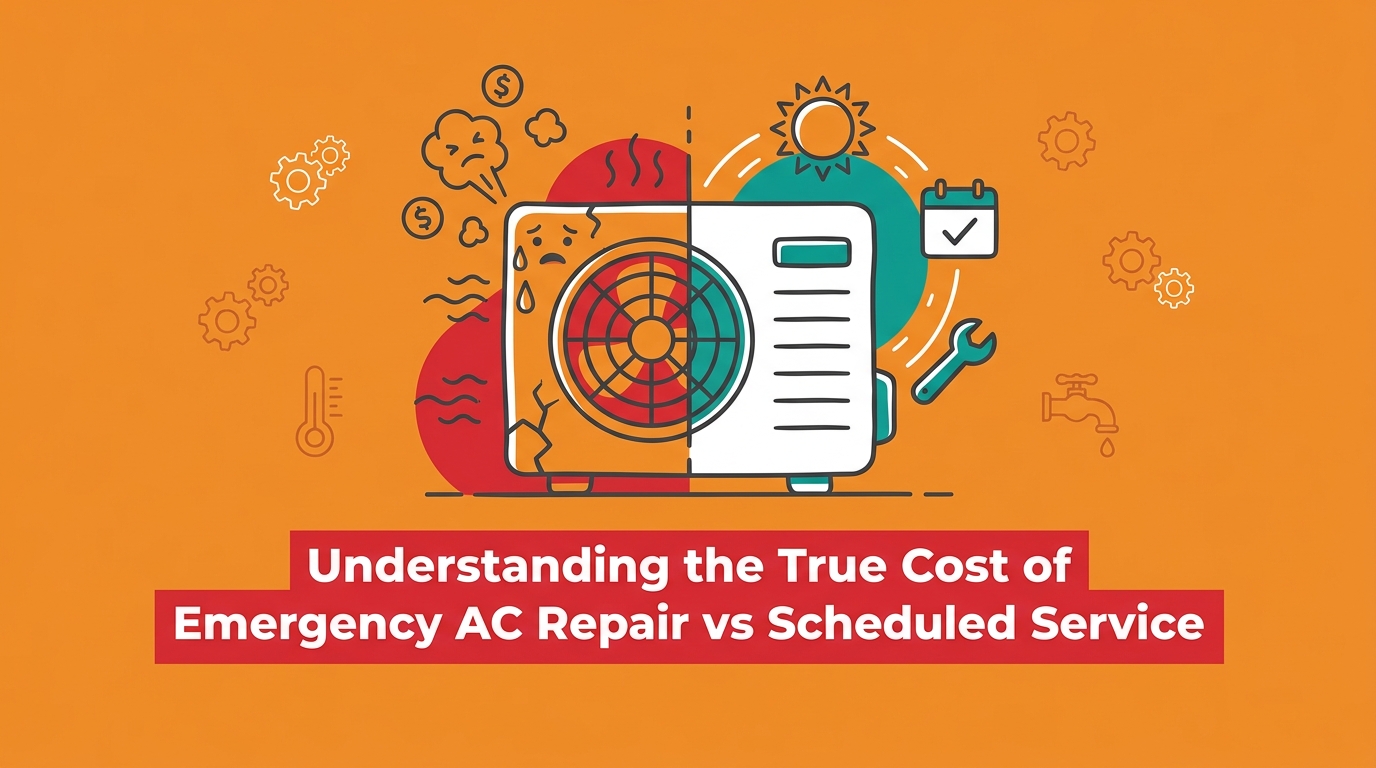
Are you stuck wondering if you need an immediate late-night dispatch, or are you better off understanding the true cost of emergency AC repair vs scheduled service and waiting for normal business hours? When your cooling system suddenly shuts down during peak July summer heat, the immediate reaction is usually panic. The temperature inside your home begins to climb, sleep becomes impossible, and the stress of an unexpected breakdown sets in. You are suddenly faced with a difficult choice: do you call a technician at 2 AM and pay a premium for an after-hours dispatch, or do you endure the warm night and book a standard morning appointment?
Whether you need immediate air conditioning services or you decide to wait and discuss scheduled HVAC maintenance, knowing how to assess your system's symptoms is critical. At Sureway Heating Cooling Plumbing, our team has helped countless Bridgeville homeowners navigate these exact late-night dilemmas. The key to making the right choice lies in separating genuine safety hazards from standard mechanical failures. Not every strange noise or warm breeze coming from your vents requires a midnight rescue mission.
Many homeowners assume that any complete system failure automatically qualifies as an emergency. However, reacting out of discomfort rather than assessing the actual mechanical situation can lead to unnecessary expenses. Understanding exactly what constitutes a true threat to your home or your family's health allows you to make a calm, informed decision. Furthermore, establishing a consistent routine of proactive scheduled care often prevents these late-night dilemmas entirely, catching minor wear and tear before it escalates into a complete system shutdown under the heavy strain of summer weather.
The Financial Reality: Premium After-Hours Rates vs. Standard Fees
The difference between an emergency dispatch and a standard service call comes down to logistics, availability, and the inherent costs of running a 24/7 operation. Emergency dispatches inherently carry premium after-hours rates. This pricing structure exists because providing immediate, round-the-clock availability requires technicians to remain on standby, dispatchers to monitor lines overnight, and suppliers to facilitate rapid access to parts outside of normal operating hours. You are paying for the immediate prioritization of your comfort over everything else.
In contrast, standard scheduled service operates during normal business hours and incurs standard service fees, which are significantly more economical. When a technician arrives during a planned route, the operational overhead is much lower, and those savings are reflected in the standard diagnostic fee. However, the "true cost" of a late-night breakdown extends far beyond just the initial dispatch charge.
Late-night panic can sometimes lead to rushed decisions about major repairs. When you are exhausted and sweating at 3 AM, you might hastily approve a massive repair simply because you want to get back to sleep as quickly as possible. This environment is not conducive to making careful, long-term investments in your home comfort system.
• Emergency After-Hours — Cost Structure: Premium rates to cover 24/7 standby logistics. — Decision Environment: High-stress, rushed decisions driven by immediate discomfort. — Best Used For: Active safety hazards, electrical risks, or health threats.
• Standard Scheduled — Cost Structure: Standard diagnostic fees during normal business hours. — Decision Environment: Calm, clear evaluation of repair vs. replacement options. — Best Used For: Mechanical failures, frozen coils, or warm air blowing.
Waiting for normal business hours allows you to review the diagnostic report with a clear head. It gives you the time to ask questions, compare solutions, and carefully evaluate financing options if a total system replacement makes more sense than a temporary patch. That level of peace of mind is something a rushed 2 AM decision simply cannot offer.
Symptom Triage: When You Absolutely Must Call for Emergency AC Repair
While many cooling failures can wait until the sun comes up, certain symptoms demand immediate professional intervention. At Sureway Heating Cooling Plumbing, our practical, no-upsell approach means we only want homeowners to pay after-hours fees when there is a true safety, health, or property risk. If your system exhibits any of the following warning signs, you should shut down the unit immediately at the thermostat and call for an emergency dispatch.
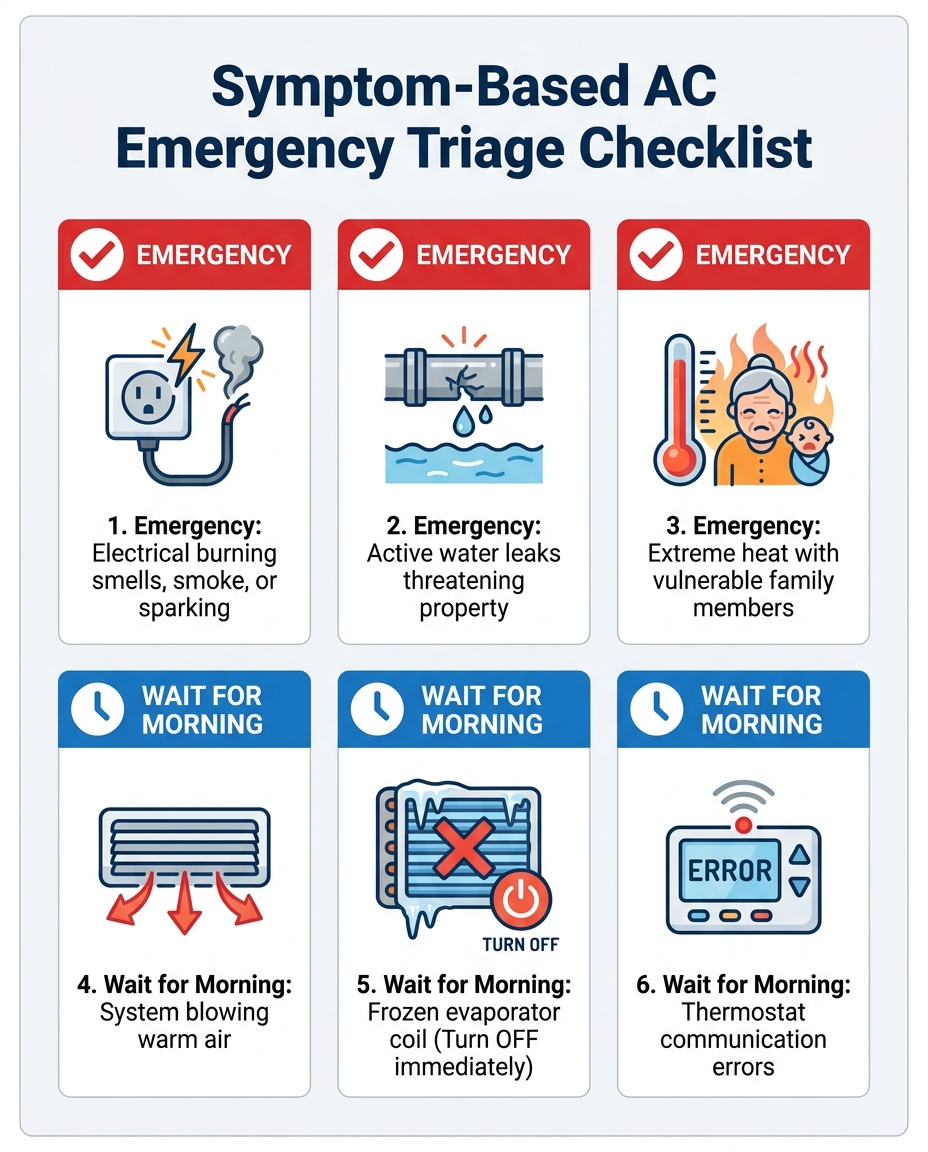
• Electrical burning smells, sparking, or visible smoke: This is the most critical warning sign. According to the National Fire Protection Association, electrical failures in HVAC equipment pose a severe fire risk. If you smell melting plastic, burning wire insulation, or ozone, turn off the system immediately. Do not attempt to reset the breaker or inspect the wiring yourself. This requires immediate emergency attention from a qualified professional.
• Active, rapid water leaks: While a slow drip from a condensation line is a nuisance, a rapid, active water leak is a property emergency. If your indoor unit is located in an attic or a second-floor closet, a sudden rush of water can quickly destroy ceilings, drywall, and hardwood flooring. The cost of repairing extensive water damage far outweighs the premium rate of an after-hours HVAC visit.
• Extreme indoor temperatures with vulnerable individuals: A broken air conditioner elevates from a mechanical inconvenience to a health emergency when vulnerable family members are involved. If your household includes infants, elderly residents, or medically compromised individuals who cannot safely regulate their body temperature, an indoor climate rapidly approaching 90 degrees justifies an immediate after-hours call.
If your situation matches any of these criteria, do not hesitate. Shut the system down to prevent further damage or danger, and contact an emergency technician right away.
When It's Safe to Turn It Off and Wait for Morning
If your cooling system has failed but you do not observe any electrical hazards, active flooding, or extreme health risks, waiting is almost always the safer, more economical choice for both the equipment and your wallet. Many common air conditioning symptoms are strictly mechanical failures. If the system is simply blowing warm air but shows no signs of electrical distress, it is frustrating, but it can safely wait until normal business hours.
Another common issue is a thermostat communication error or a completely unresponsive unit. A blank thermostat screen or a system that refuses to kick on is certainly annoying, but it rarely poses an immediate safety threat to your home. Waiting for a standard morning appointment allows for a thorough, un-rushed diagnostic process where a technician can trace the low-voltage wiring and test the components methodically.
Our team at Sureway Heating Cooling Plumbing sees this pattern frequently throughout the Bridgeville area. Last summer, one local homeowner noticed their air conditioner was not working properly late in the evening. Instead of panicking and demanding a midnight dispatch, they shut the system down and waited for a standard morning visit. When our technician John arrived during normal hours, he thoroughly explained everything that was happening, completely fixed the air conditioner without the rush of an emergency call, and ensured the system was running perfectly for the rest of the season. If you are unsure where to begin your own troubleshooting before making a call, understanding what to check first if your AC won't turn on can save you unnecessary stress.
The Danger of Running a Frozen AC Overnight
One specific scenario where you absolutely must wait for morning is a frozen evaporator coil. If you notice ice building up on the indoor coil or the outdoor refrigerant lines, you might be tempted to call for immediate help. However, a technician cannot properly diagnose or repair a frozen system. The solid block of ice must melt completely before gauges can be attached or airflow can be tested, a process that takes several hours.
Continuing to run an air conditioner with a frozen coil overnight can cause severe, irreversible damage to the compressor. The compressor is designed to pump refrigerant gas, not liquid. When the coil freezes, liquid refrigerant can travel backward into the compressor—a condition known as "slugging"—which can destroy the heart of your system in minutes. Shutting the system down entirely at the thermostat is the most critical step a homeowner can take to protect their investment while waiting for the ice to thaw.
Managing Comfort Until Your Scheduled Appointment
Deciding to wait for a morning appointment is the financially smart choice, but you still need to get through the night. While Bridgeville PA July days are sweltering and push cooling equipment to its absolute limits, the local climate offers a distinct advantage after the sun goes down. Overnight lows often dip into the 60s or low 70s, making it highly manageable to wait for morning service if you take the right steps to manage your indoor environment.
To keep your family comfortable while protecting your broken equipment, follow these practical steps:
1. Turn the AC system completely off at the thermostat: Do not just turn the temperature up; switch the system mode to "Off." This prevents the equipment from attempting to cycle on, which protects against thermal overload, prevents a frozen coil from getting worse, and eliminates the risk of a burned-out compressor motor.
2. Utilize ceiling fans to create a wind-chill effect: Ceiling fans do not actually lower the temperature of a room, but they do make the people in the room feel cooler. The moving air evaporates moisture from your skin, creating a wind-chill effect that can make a 78-degree room feel perfectly comfortable for sleeping.
3. Open windows strategically for cross-ventilation: Once the outside temperature drops below the indoor temperature, open windows on opposite sides of your home. Place a box fan in one window blowing inward, and another fan in the opposite window blowing outward. This actively pulls the cooler Bridgeville night air through the house, flushing out the trapped daytime heat.
4. Close blinds and curtains early in the morning: As soon as the sun begins to rise, shut your windows and heavily draw all blinds, shades, and curtains. This traps the cooler night air inside your home and blocks the radiant heat of the morning sun, buying you several hours of comfort while you wait for your scheduled technician to arrive.
Frequently Asked Questions About AC Emergencies and Service Costs
Is a broken AC considered an emergency?
It depends entirely on the specific symptoms your system is displaying. Electrical hazards, active flooding that threatens your property, or severe health risks to vulnerable individuals make a breakdown a true emergency. However, standard mechanical failures—like a blown capacitor or a refrigerant leak—without accompanying safety risks are not considered true emergencies and can wait for normal hours.
Can I wait until morning for AC repair?
Yes, in the vast majority of cases, turning the system off and waiting for standard business hours is the safest and most economical choice. As long as there is no immediate danger from electricity or water, waiting allows you to avoid premium rates and gives the technician a better environment to perform a thorough, un-rushed diagnostic evaluation.
Should I turn off my AC if it's blowing warm air?
Absolutely. Continuing to run an air conditioner that is blowing warm air can cause severe damage to the compressor, especially if the underlying issue is a refrigerant leak or a frozen evaporator coil. Shutting the system down at the thermostat protects the equipment from overheating and prevents a minor repair from turning into a major replacement.
What happens if you run a broken AC overnight?
Running a malfunctioning system can lead to catastrophic equipment failure, including thermal overload, burned-out blower motors, or a completely destroyed compressor. When safety switches are bypassed or components are strained, the system works twice as hard to produce zero cooling, which drastically increases the chances of permanent, irreversible damage.
How much more does after-hours AC service cost?
While exact rates vary depending on the specific time and the required repair, emergency dispatch fees are universally charged at a premium compared to standard service fees. This higher rate accounts for the logistical costs of 24/7 technician availability, overnight dispatching, and after-hours parts sourcing. Choosing standard scheduled service avoids these premium overhead charges.
Make the Smart Choice for Your AC and Your Budget
Navigating a sudden cooling failure doesn't have to mean draining your wallet on unnecessary after-hours fees. By taking a moment to review your symptoms calmly, you can confidently decide whether you need immediate help to prevent a safety hazard or if you can safely shut the system down and wait for a standard morning visit. Making the smart choice protects both your equipment from further damage and your budget from premium rates.
If your system is acting up but it's safe to wait, take advantage of the daytime hours to explore special promotions that may apply to your scheduled service. Contact our team at Sureway Heating Cooling Plumbing today to discuss your AC issues and get honest, no-upsell guidance on the best next steps for restoring your home's comfort.



.svg)
.avif)


