


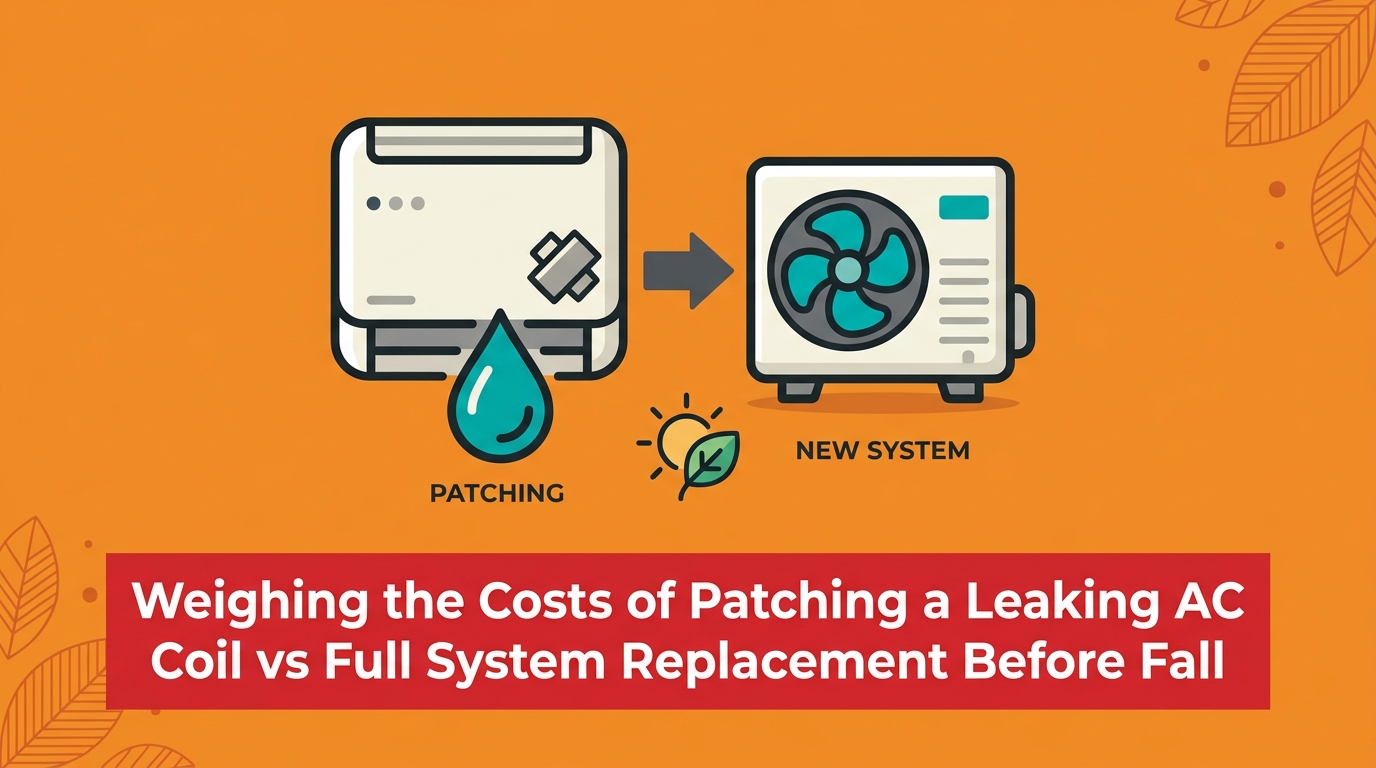
Facing an August AC Breakdown: The Coil Leak Dilemma
Is your air conditioner suddenly blowing warm air just as the heat makes its final, punishing push, leaving you weighing the costs of patching a leaking AC coil vs full system replacement before fall? It is a frustrating scenario that many homeowners face during the dog days of late summer. In our years serving Bridgeville and the surrounding communities, the team at Sureway Heating Cooling Plumbing has seen this exact situation countless times. You walk into your living room expecting a cool, comfortable retreat, only to find the thermostat reading 82 degrees and the vents barely pushing out room-temperature air. When our technician arrives and diagnoses a leaking evaporator coil in your aging system, you are immediately thrust into a high-stakes decision process.
Making this choice does not have to be a panicked reaction to a sweltering afternoon. By stepping back and looking at the mechanical realities of your equipment, you can approach this dilemma logically. If you are trying to understand your options, diving into comprehensive air conditioning resources can help clarify the underlying issues causing your system to fail.
The central question is straightforward, even if the answer feels complex: do you attempt a temporary patch to simply survive the rest of the season, or do you invest in a proactive replacement that secures your home's comfort for the long haul? Making the right call requires looking beyond the immediate discomfort and evaluating the true condition of your equipment. Relying on professional air conditioning services ensures that you get an accurate diagnosis, allowing you to weigh the short-term relief of a recharge against the long-term reliability of a modern upgrade.
The Reality of R-410a Coil Leaks in Older Systems
When our technicians arrive at a home, we always start by explaining what is actually happening inside your air conditioner so you can make an informed decision. The evaporator coil is responsible for absorbing the heat from your home's indoor air. Over years of constant use, these metal coils are subjected to moisture, temperature fluctuations, and volatile organic compounds (VOCs) commonly found in household air. This combination often leads to formicary corrosion—microscopic pinhole leaks that allow your vital refrigerant to slowly escape into the atmosphere.
The R-410a Phasedown Complication
If you have an aging system, it likely uses R-410a refrigerant. This presents a massive complication for temporary repairs. Under the EPA's American Innovation and Manufacturing (AIM) Act, there is a strict, ongoing phasedown of hydrofluorocarbons (HFCs) like R-410a due to their environmental impact. As production quotas shrink each year, sourcing this specific refrigerant becomes increasingly difficult. Pouring resources into refilling a leaking system with a disappearing refrigerant is often a losing battle, as the underlying structural damage to the coil remains unresolved.
The Danger to Your Compressor
Operating a cooling system with low refrigerant does not just result in warmer indoor temperatures; it actively damages the heart of your equipment. When the refrigerant charge drops, the compressor has to work significantly harder to achieve the same cooling effect. This excessive strain can cause the compressor to overheat and suffer a catastrophic failure. Because handling coils and pressurized refrigerants requires specialized training and EPA certification, these diagnoses and repairs must strictly be handled by licensed professionals—this is never a DIY project.
At Sureway Heating Cooling Plumbing, we see this pattern frequently in aging R-410a AC systems across Western PA. One local Bridgeville homeowner reached out to our team when their air conditioner stopped working correctly during a brutal late-summer heatwave. Our technician came out, did the work, cleaned up the area, and explained everything that was happening mechanically. Once the homeowner understood how microscopic coil leaks compound over time and how they contribute to excessive AC condensation and overall system strain, the reality of the situation became much clearer.
Pros and Cons of Patching a Leaking Coil
When you are sweating through an August heatwave, the idea of a quick fix is incredibly tempting. Patching the coil and topping off the refrigerant might seem like the path of least resistance, but it is critical to weigh both sides of this approach before committing your financial resources to a temporary solution.
The Short-Term Advantages
• Immediate thermal relief: The primary benefit of a patch and recharge is that it often gets your system blowing cold air again within a few hours, providing immediate comfort for the final weeks of the cooling season.
• Delaying the larger project: If you are completely unprepared for a major home improvement project, a temporary fix pushes the full installation timeline down the road, giving you a brief window to plan.
• Buying time for research: A stopgap measure allows you a few weeks to research new systems, evaluate different brands, and schedule installation quotes without the pressure of a sweltering house.
The Long-Term Drawbacks
• High risk of secondary leaks: Patching a degraded, corroded metal coil is often like putting a bandage on a rusty pipe. Because the metal is already compromised, secondary leaks frequently develop right next to the original patch shortly after the repair is completed.
• Poor return on investment: Pouring significant resources into an R-410a recharge on aging R-410a AC systems offers a notoriously poor long-term ROI. The refrigerant will likely leak out again, meaning you have paid for a temporary fix on a unit that still needs replacing.
• Unpredictable reliability: A patched system is inherently unstable. You will spend the rest of the season holding your breath, wondering if the unit will fail again on the next 90-degree day.
• Wasted efficiency: Even with a patched coil, an older, degraded system will never operate at its original efficiency, meaning you continue to pay inflated monthly utility bills for subpar cooling.
The Case for Proactive System Replacement
While a patch offers a fleeting sense of relief, choosing to replace the failing unit fundamentally solves the problem. Proactive system replacement is about taking control of your home's comfort and removing the anxiety of unpredictable breakdowns. When you upgrade an aging system, you are not just swapping out a metal box; you are investing in modern engineering designed to perform reliably for the next decade or more.
Long-Term Reliability and Efficiency
The most immediate benefit of a new installation is absolute reliability. Brand-new systems utilize modern, compliant refrigerants that are environmentally friendly and readily available. Furthermore, the efficiency gains are substantial. Today's air conditioners boast significantly higher SEER (Seasonal Energy Efficiency Ratio) ratings than units manufactured just ten years ago. This means the new system uses a fraction of the electricity to produce the exact same amount of cooling, helping to offset the initial investment over time through reduced monthly utility bills.
Financial Incentives and Warranties
Upgrading to a high-efficiency system often unlocks financial incentives that simply do not apply to repairs. Generic federal tax credits or local utility rebates may apply to qualifying high-efficiency installations, making the transition more manageable. Additionally, a new system provides the ultimate peace of mind: a comprehensive manufacturer warranty. If a component fails, you are protected, completely eliminating the stress of unexpected repair bills.
The relief of a timely upgrade is significant. Just this past August, our team worked with another local family who needed a new central air conditioning unit installed right before the back-to-school transition. Our installation crew worked to get the new unit installed in a timely manner, and the new equipment was successfully integrated without prolonged downtime. The immediate improvement in indoor air quality and consistent cooling validated their decision to skip the temporary patch and invest in a permanent solution.
End-of-Season Timing: Why August Matters in Western PA
The timing of your AC breakdown plays a massive role in how you should respond. Based on our extensive experience handling late-summer service calls, we know that an August failure carries unique implications. Bridgeville PA experiences hot, humid late summers that demand peak performance from your cooling equipment, but those temperatures taper off quickly as we head into autumn. Limping through the end of August with a patched coil might seem feasible, but it ignores the rapidly approaching seasonal shift.
Preparing for the Fall Transition
When you replace an air conditioner, it is rarely just about the outdoor condenser. A proper installation involves evaluating the entire HVAC system, including the indoor air handler or furnace. The blower motor inside your furnace is responsible for pushing the chilled air throughout your ductwork. If you patch a failing AC now, you are leaving an equally old furnace in place just weeks before the heating season begins.
Our installation crews frequently see the benefits of addressing the whole home environment at once. During a recent project that we thoroughly tested over both winter and summer extremes, our team spent time reviewing the entire HVAC system, seeking specific solutions, and educating the customer on how their equipment interacts. The outcome was a perfectly matched new system that was installed seamlessly, ultimately saving them money on utilities while providing consistent temperatures and quiet operation throughout the entire year.
Attempting to survive the last few weeks of heat with a patched coil leaves your home highly vulnerable. The stress of the summer often weakens older components, meaning that patched system is highly likely to suffer a complete failure just as you need to switch over to heating. Proactive replacement in August ensures your entire HVAC infrastructure is robust, matched, and ready for whatever the Western Pennsylvania winter brings.
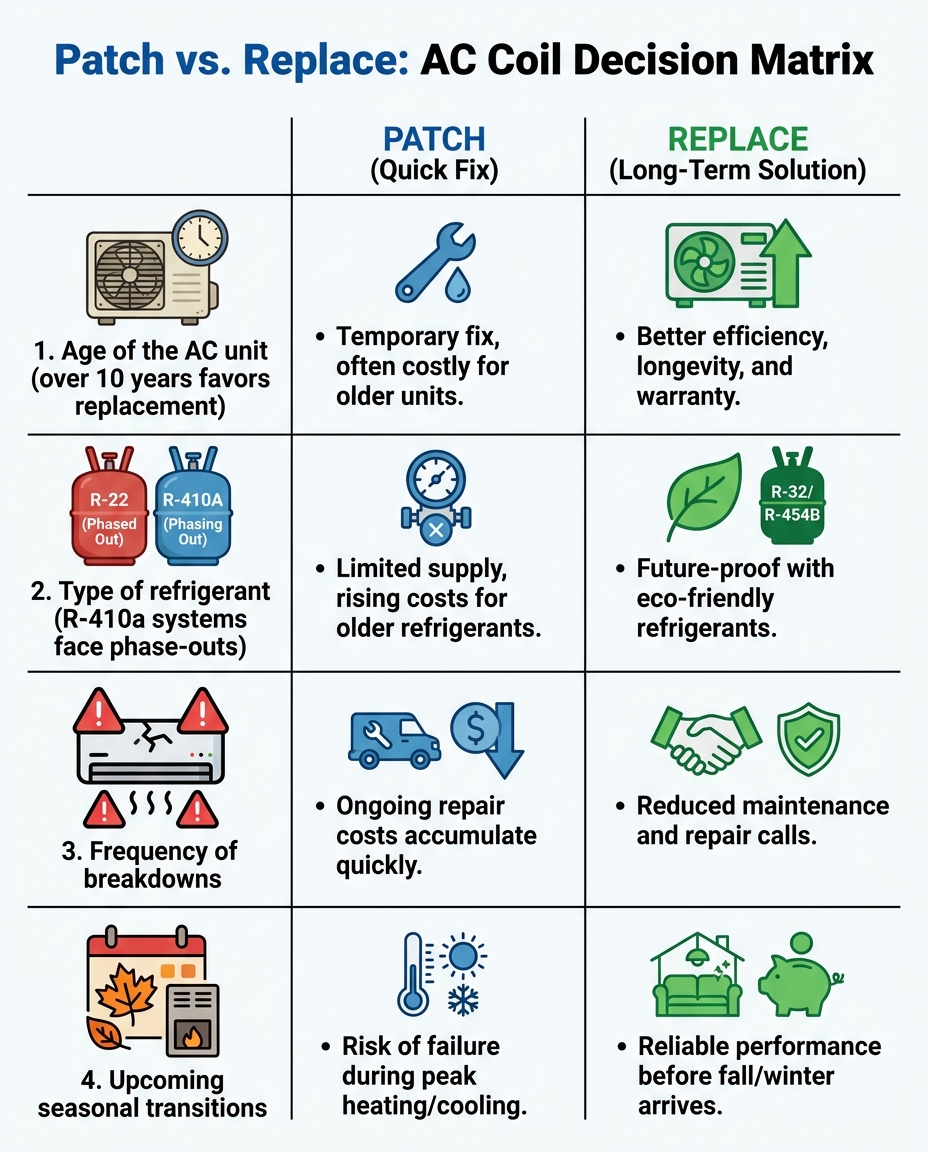
Side-by-Side Comparison: Patching vs. Replacing
To help clarify the decision-making process, it helps to look at the tangible differences between a short-term patch and a comprehensive replacement. This framework strips away the immediate stress of a hot house and focuses on the long-term outcomes for your comfort and your home's infrastructure.
• Expected Lifespan — Patching the Leaking Coil: Highly unpredictable; often fails again within weeks or months as degraded metal continues to corrode. — Proactive System Replacement: 10 to 15+ years of reliable operation with proper seasonal maintenance.
• Energy Efficiency — Patching the Leaking Coil: System continues to operate poorly; older SEER ratings mean higher monthly utility bills. — Proactive System Replacement: Significant SEER improvements; modern units use far less electricity to cool the home.
• Refrigerant Compliance — Patching the Leaking Coil: Relies on R-410a, which is actively being phased out, making future recharges difficult and restrictive. — Proactive System Replacement: Utilizes modern, EPA-compliant refrigerants that are environmentally friendly and widely available.
• Peace of Mind — Patching the Leaking Coil: Low; constant worry about the next breakdown and zero warranty protection on the aging components. — Proactive System Replacement: High; protected by comprehensive manufacturer warranties and guaranteed performance through seasonal shifts.
Reviewing this comparison makes it clear that while patching addresses the symptom for a fleeting moment, replacing the system cures the underlying mechanical disease.

Making Your HVAC Upgrade Manageable
We understand that an unexpected late-summer AC replacement can feel overwhelming. No homeowner wants to face a major equipment upgrade right as the season is winding down. However, making the transition does not have to be a stressful ordeal. The key to a smooth process is working with a team that prioritizes education over high-pressure tactics.
At Sureway Heating Cooling Plumbing, we focus on providing transparent cost comparisons that help you make the right non-monetary and long-term financial decisions for your home. We lay out exactly what a patch entails versus the comprehensive benefits of a new installation, allowing you to see the true value of your investment over the next decade. To ensure that a necessary upgrade never compromises your household budget, we offer flexible HVAC financing options. These programs allow you to spread out the investment comfortably, removing the financial stress from an unexpected replacement and letting you focus entirely on restoring your home's comfort.
Protecting Your Investment Moving Forward
Regardless of whether you ultimately decide to apply a short-term patch to get through August or invest in a brand-new, high-efficiency system, ongoing care is absolutely non-negotiable. HVAC equipment is essentially a complex engine that runs for thousands of hours every year; it requires regular attention to perform at its peak.
Consistent, professional upkeep is the only way to catch minor issues—like microscopic coil leaks, loose electrical connections, or restricted airflow—before they cascade into catastrophic compressor failures. By committing to ongoing HVAC maintenance, you establish a relationship with our trusted local team that knows your equipment inside and out. Regular seasonal checks ensure that your system operates safely, efficiently, and reliably, protecting your investment and keeping your home perfectly comfortable year after year.
Frequently Asked Questions
Is patching an AC coil a permanent fix?
No, patching a leaking evaporator coil is almost always a temporary stopgap. Because the metal has already begun to corrode and degrade, secondary leaks frequently develop near the repaired area. Most professionals view a patch as a way to buy a few weeks of time, not a permanent solution for an aging system.
Why is R-410a getting harder to find?
The EPA's AIM Act mandates a strict, ongoing phasedown of HFC refrigerants, including R-410a, due to their environmental impact. As manufacturing quotas decrease each year, the supply shrinks. This makes relying on R-410a recharges for older, leaking systems increasingly difficult and a poor long-term strategy.
Should I replace my AC before fall?
Yes, replacing a failing AC in late summer is highly recommended. A new installation allows technicians to evaluate your entire HVAC setup, including the shared blower motor and furnace. Securing a matched, fully functional system in August ensures you are completely prepared for the upcoming winter heating transition.
Can you just add refrigerant to a leaking AC?
While you can technically add refrigerant to a leaking system, it is highly discouraged without repairing the leak first. Adding refrigerant to a compromised system means it will simply leak out again, forcing your compressor to overwork and risking total system failure. Furthermore, handling refrigerants requires professional EPA certification.
How does a matched HVAC system benefit my home in Western PA?
A matched system ensures that your outdoor AC condenser and indoor furnace or air handler are designed to work together seamlessly. In Western Pennsylvania, where we experience both humid summers and freezing winters, a matched system guarantees optimal airflow, maximum energy efficiency, and consistent indoor comfort across all seasons.
If you are tired of sweating through the end of the summer and constantly worrying about your aging equipment, it is time to take action. Stop weighing the costs of patching a leaking AC coil vs full system replacement before fall in the dark. Reach out to the experts at Sureway Heating Cooling Plumbing today for a transparent evaluation, and let us provide you with the clear, non-monetary decision framework you need to restore your home's comfort with confidence.



.svg)
.avif)


