

The Hidden Risks of Waiting Until the First Freeze
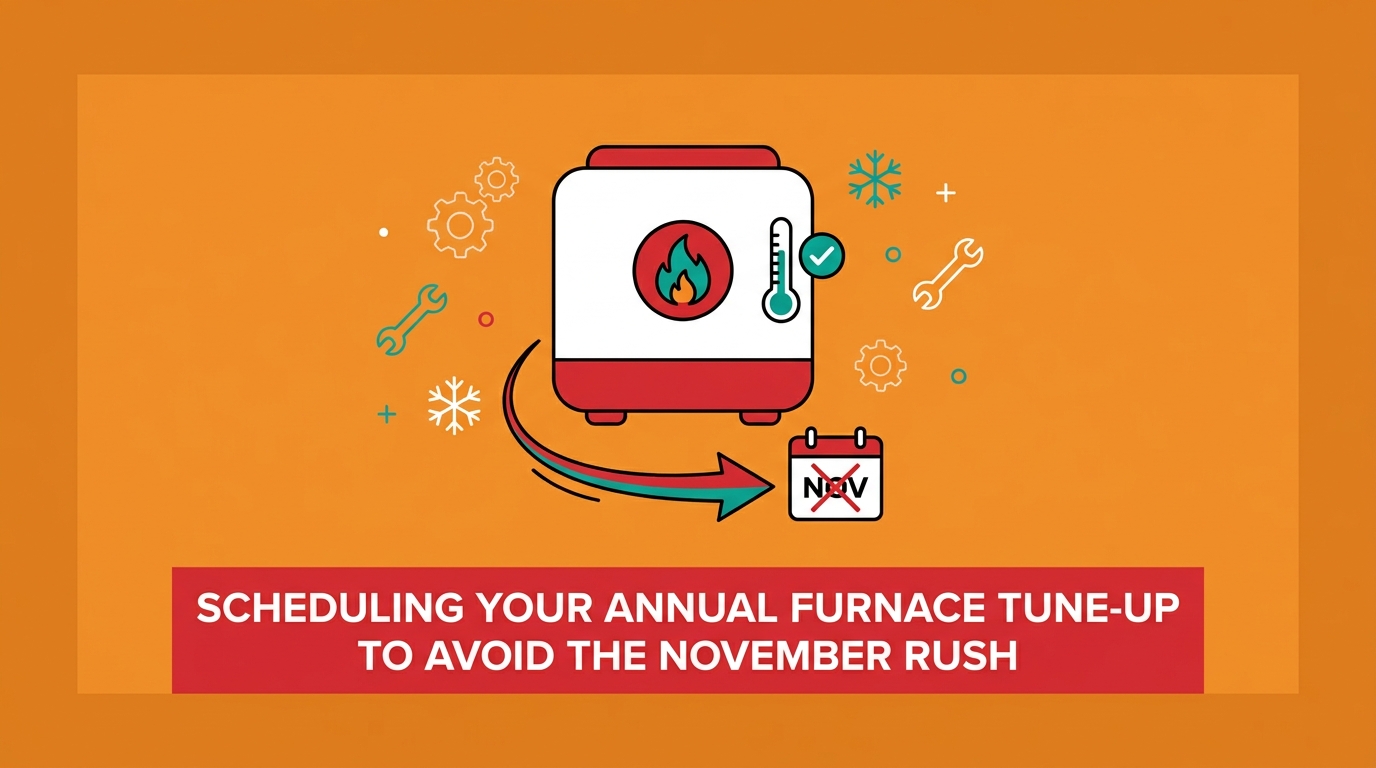
Before the first hard frost settles over Bridgeville and Western Pennsylvania, there is a narrow window of opportunity that many homeowners miss. Scheduling Your Annual Furnace Tune-Up to Avoid the November Rush is not just about crossing a routine chore off your maintenance list; it is a vital strategy to protect your home from sudden breakdowns when the weather turns severe. Autumn in our region is notoriously unpredictable, transitioning from mild afternoons to freezing nights in a matter of weeks. The most significant risk you face isn't just a sudden chill in the living room—it is discovering that your heating system needs a specific replacement part in mid-November, right when local supply chains are strained to their limits.
To secure your time buffer and ensure your home is ready for the cold, explore our heating services and book your annual furnace tune-up today.
The deceptive calm of early fall: When the weather is still comfortable, it is easy to ignore the thermostat. Your heating equipment has been sitting dormant since April, collecting dust and settling into a state of inactivity. Many homeowners assume that because the system worked fine during the last thaw, it will fire up perfectly when the winter freezes begin. However, dormant periods are often when minor issues—like dry bearings, settled dust on flame sensors, or microscopic cracks in the heat exchanger—quietly develop into critical failures.
The logistical nightmare of a late discovery: If you wait until you actually need the heat to turn the system on, you are joining thousands of other residents doing the exact same thing on the exact same day. This creates an immediate bottleneck. The concrete problem isn't always the repair itself; it is the reality of diagnosing a failing part in mid-November. By choosing to schedule maintenance now, you create a strategic time buffer. You take control of the timeline, allowing any necessary diagnostics, part ordering, and repairs to happen on your terms, rather than waiting in a freezing house for a backordered component.
The September Window vs. The November Reality
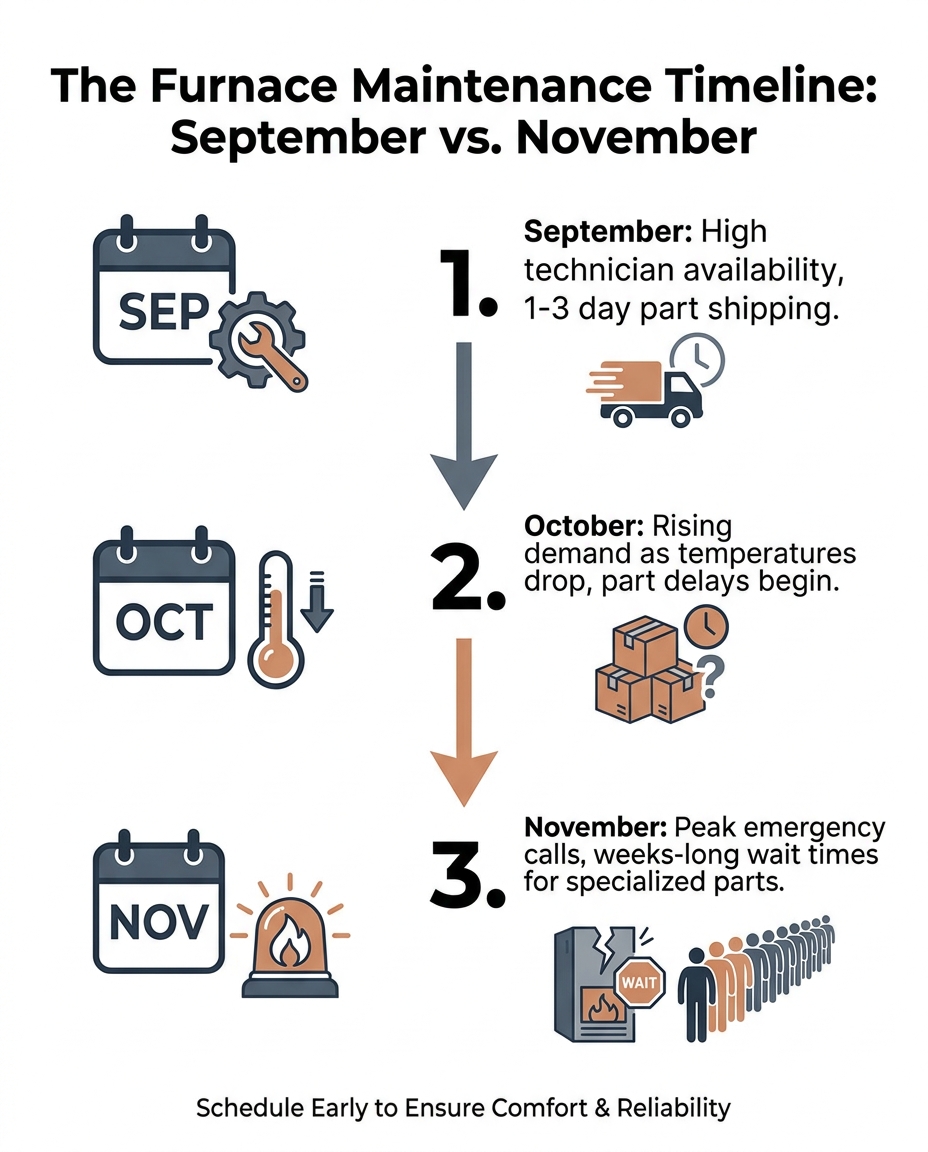
There is a distinct logistical difference between servicing your system during the September fall-prep transition and trying to get a technician to your door during the first major cold snap of November. In the HVAC industry, early fall is known as the shoulder season. The intense heat of summer has faded, easing the demand for emergency air conditioning repairs, and the bitter winter cold has not yet arrived. This transition period is the absolute best time to evaluate your heating equipment.
Once the first regional hard freeze hits, technician availability drops to near-zero almost overnight. A typical November emergency follows a frustrating timeline: you may wait days just for an initial diagnostic visit because every local company is dealing with a backlog of no-heat calls. If your system requires a specific part, that wait can easily extend into weeks. Securing a spot on the schedule before this rush begins guarantees peace of mind and keeps your family comfortable.
• Technician Availability — The September Window: High. Appointments are easy to schedule at your convenience. — The November Reality: Extremely limited. Priority goes to severe emergencies.
• Diagnostic Timeline — The September Window: Same-day or next-day evaluations are standard. — The November Reality: Wait times can stretch to several days just for an assessment.
• Part Sourcing — The September Window: Regional warehouses are fully stocked for the upcoming season. — The November Reality: High demand leads to backorders and shipping delays.
• Repair Completion — The September Window: Repairs are finished weeks before you actually need the heat. — The November Reality: You may rely on space heaters while waiting for parts to arrive.
The contrast between these two timelines highlights why proactive maintenance is a necessity. During the September fall-prep transition, your technician has the time to perform a meticulous, unhurried inspection. They can clean internal components, test electrical draws, and identify parts that are showing signs of wear but haven't completely failed yet. This early intervention is the key to preventing the chaotic, delayed reality of late fall breakdowns.
Navigating Supply Chain Realities for Aging Heating Equipment
Modern heating equipment and older systems alike rely on specific electronic and mechanical components to function safely. While service trucks are stocked with universal parts like standard capacitors, fuses, and common ignitors, they cannot carry every specific blower motor, control board, or inducer draft motor for every make and model. This is where the reality of the supply chain becomes a critical factor for homeowners.
As heating equipment ages, finding exact replacement components becomes more challenging. Identifying a failing component during the September fall-prep transition provides the necessary weeks to order and receive the part without the pressure of a freezing home. Proactive ordering prevents complete system breakdowns during peak usage, ensuring your furnace systems are fully operational when you need them most.
The process of sourcing a replacement part follows a specific sequence, and delays can compound quickly during peak season:
1. Diagnostic Identification: The technician must first accurately diagnose which specific component is failing, which requires an on-site visit.
2. Warehouse Sourcing: The part is checked against local and regional distribution center inventories.
3. Manufacturer Ordering: If the part is out of stock locally, it must be ordered directly from the manufacturer, adding significant shipping time.
4. Return Visit Scheduling: Once the part arrives, a second appointment must be scheduled to install and test the new component.
Why Specialized Parts Take Longer in Winter
The supply chain experiences massive strain the moment winter weather sets in. Regional distribution centers deplete their stock rapidly during the first cold snap as contractors across the state pull inventory to fix broken units. Shipping delays compound with winter weather events, slowing down freight trucks and delivery services. Furthermore, custom or older components often require direct-from-manufacturer ordering, which means your part might be sitting in a warehouse several states away while your house grows colder by the hour. By evaluating the system in early fall, you bypass these seasonal bottlenecks entirely.
The Immediate Impact of Western PA Winter Weather
Grounding this logistical argument in the reality of our local climate makes the need for early maintenance undeniably clear. The weather in Bridgeville and Western Pennsylvania is known for its rapid transition from a mild autumn to severe cold. By late October and November, temperatures can plummet drastically overnight, leaving zero margin for error if your heating equipment is compromised. The immediate impact of a breakdown during these conditions is not just an inconvenience; it is a highly stressful event that affects your family's safety and the integrity of your home's plumbing.
The stress of an unexpected late-night emergency repair is something many residents have faced. One local homeowner experienced this firsthand during a bitter winter night when their heating system broke down unexpectedly. A technician had to be dispatched late in the evening to diagnose the issue and rebuild a critical furnace component. Fortunately, the intervention was successful, and the furnace has been running reliably ever since. However, avoiding the anxiety of a freezing night is always the preferred route.
An early tune-up identifies the exact vulnerabilities that cold weather exacerbates. Metal components contract in freezing temperatures, electrical connections can become brittle, and motors have to work significantly harder to push warm air through the home. A controlled, scheduled repair in September stands in stark contrast to an urgent, uncomfortable waiting period in a cold house in November. When you plan ahead, you maintain control over your home's comfort and avoid the panic of an after-hours breakdown.
Beyond the Filter: What Proactive Maintenance Uncovers
There is a common misconception that a tune-up is nothing more than a quick wipe-down of the equipment and a filter change. In reality, a comprehensive tune-up involves deep system diagnostics designed to catch hidden dangers and mechanical wear before they escalate. During the September fall-prep transition, an inspection provides the exact diagnostic clarity you need to trust your system through the winter.
The value of receiving knowledgeable, practical service without unnecessary sales pressure cannot be overstated. A recent customer reached out for general HVAC diagnostics and repair, and a technician provided an expert assessment with a fair, accurate remedy that resolved the underlying problem effectively. This level of thorough, honest evaluation is exactly what an annual tune-up is meant to provide.
A proper maintenance visit goes far beyond the surface, checking critical safety and performance metrics:
• Carbon Monoxide Safety Checks: Technicians inspect the heat exchanger for hairline cracks that could leak dangerous exhaust gases into your home once the house is sealed up for winter.
• Electrical Connection Tightening: Loose wires can cause electrical shorts, blown fuses, or even fire hazards. Every connection is tested and secured.
• Gas Pressure Calibration: Ensuring the gas pressure is set to the manufacturer's exact specifications prevents poor heating performance and wasted energy.
• Flame Sensor Cleaning: A dirty flame sensor will cause the furnace to short-cycle, shutting off prematurely and leaving your home cold.
• Warranty Validation: Most major manufacturers explicitly require routine professional maintenance to keep equipment warranties intact. Skipping this step can void your coverage.
Securing Priority Scheduling with a Trusted Local Team
Taking control of your winter readiness requires partnering with a reliable service provider before the emergency season begins. Established local teams manage their schedules meticulously, and they prioritize their proactive, established customers. When you book early, you aren't just getting a tune-up; you are securing your place on the schedule and ensuring that if a mid-winter issue does arise, you have a dedicated professional ready to respond.
Relying on a trusted local team early in the season guarantees priority scheduling and immediate access to replacement parts before the peak emergency season begins. A dedicated professional evaluating your system in early autumn understands the specific demands of the climate in Bridgeville and Western Pennsylvania. They know exactly which components are most likely to fail under the stress of our local winters and can take preventative action.
This early intervention connects directly to broader fall preparation strategies for your home. Just as you would clean your gutters or winterize your plumbing, testing your furnace before the first frost is a non-negotiable step in homeownership. By taking action now, you eliminate the anxiety of the unknown and step into the winter season with complete confidence in your home's heating infrastructure.
Frequently Asked Questions
Why should I schedule furnace maintenance in early fall?
Scheduling in early fall allows you to beat the seasonal rush and secure an appointment at your convenience. It provides a crucial time buffer to identify and order any necessary replacement parts before freezing temperatures arrive. This proactive approach ensures your system is fully operational when you actually need it.
How long does it take to get furnace replacement parts in winter?
During the winter, wait times for specialized parts can stretch from a few days to several weeks. Regional distribution centers quickly run out of stock during cold snaps, forcing contractors to order directly from manufacturers. Winter weather events can also cause significant shipping delays across the country.
Why is my furnace making noises before winter?
Strange noises often indicate mechanical wear, such as failing motor bearings, a loose blower belt, or an unbalanced fan. If you notice grinding, squealing, or rattling sounds when testing your system in the fall, it usually means a component is struggling. Addressing these noises early prevents a complete breakdown later.
Is an annual furnace tune-up really necessary?
Yes, an annual tune-up is critical for both safety and performance. It ensures the system is operating efficiently, checks for dangerous issues like carbon monoxide leaks, and catches minor wear before it turns into a major repair. Furthermore, most manufacturers require yearly maintenance to keep your warranty valid.
What happens if I don't service my furnace before the first freeze?
Skipping maintenance drastically increases the risk of an unexpected breakdown during peak winter weather. You may face long wait times for a diagnostic visit and even longer delays for replacement parts. Additionally, an unserviced furnace runs less efficiently, leading to higher monthly utility costs.
Does preventative maintenance keep my manufacturer warranty valid?
Yes, the vast majority of HVAC manufacturers stipulate that professional, annual maintenance is required to maintain warranty coverage. If a major component fails and you cannot provide proof of regular service, the manufacturer may deny the warranty claim, leaving you responsible for the full cost of the repair.
Understanding the hidden logistical risks of waiting until November—from shipping delays for specialized parts to booked-out technician schedules—is the key to keeping your home safe and warm. Take control of your winter comfort and schedule your annual furnace tune-up today to ensure your system is ready for whatever the season brings.




.svg)
.avif)


