


Tips and Tricks: Understanding How Long a Tankless Water Heater Lasts
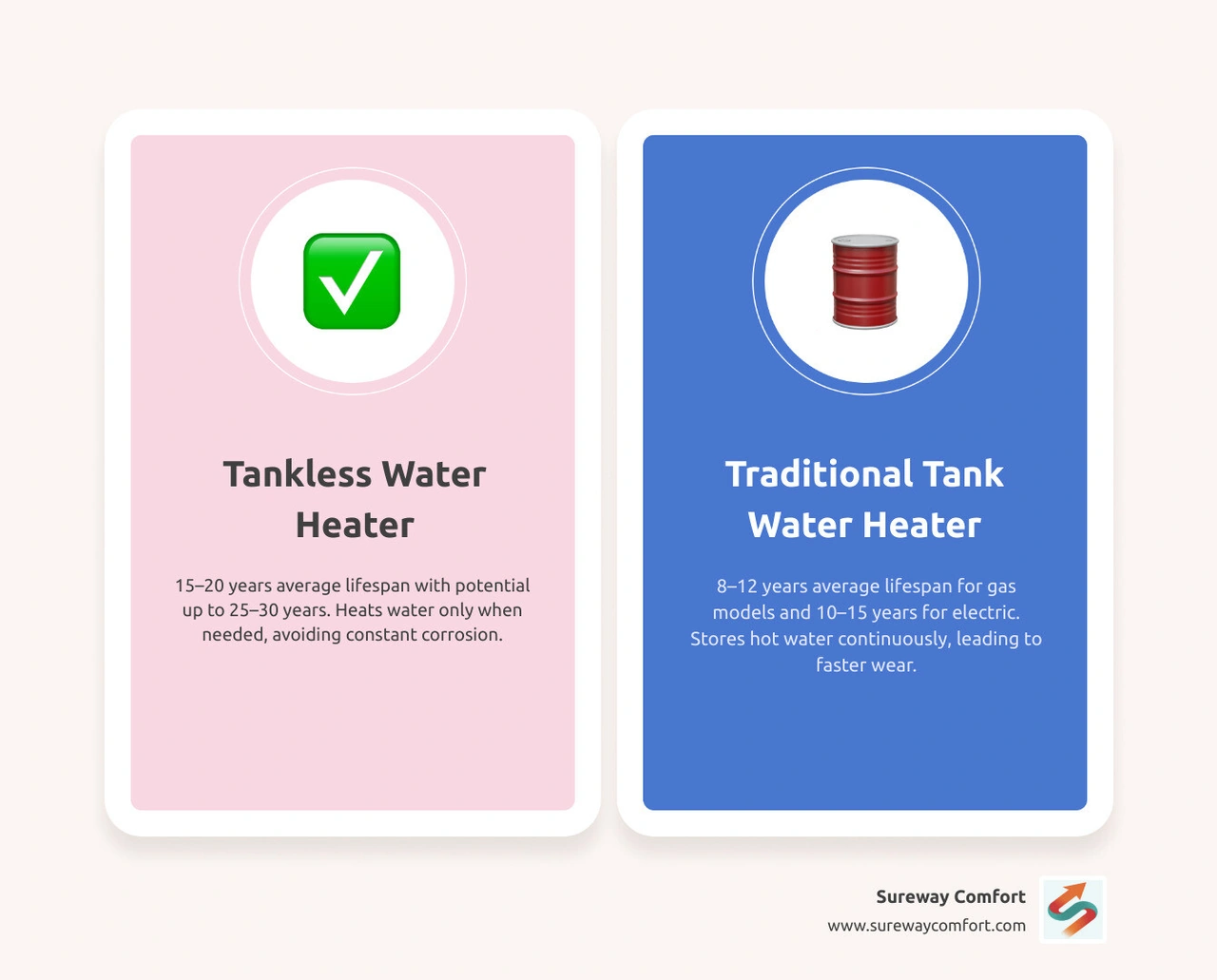
How long does a tankless water heater last is a top question for homeowners looking for efficiency tips. Most tankless units last 15 to 20 years with regular care, and well-maintained systems can push 25 to 30 years. That's nearly double the lifespan of a traditional tank water heater, which typically gives out in 8 to 12 years.
Here's a quick breakdown of what to expect:
• Tankless (gas or electric) — Average Lifespan: 15–20 years — Maximum Potential: 25–30 years
• Traditional tank (gas) — Average Lifespan: 8–12 years — Maximum Potential: Up to 15 years
• Traditional tank (electric) — Average Lifespan: 10–15 years — Maximum Potential: Up to 15 years
The secret to longevity is how the system operates. A tankless heater only runs when you turn on a tap — it doesn't sit full of water 24 hours a day. Less constant wear means a longer life. By following a few maintenance tricks, you can ensure your unit hits that 30-year mark.
If you're a homeowner in the Bridgeville area wondering whether your system is aging well, this guide walks through the best tips to keep it running.
Relevant articles related to how long does a tankless water heater last:
• is a tankless water heater worth it
• tankless water heater cost vs value long term
When we talk about the longevity of home appliances, tankless water heaters are the "marathon runners." As of May 2026, the technology is incredibly robust. According to the U.S. Department of Energy, the life expectancy is about 20 years, significantly better than storage-type models.
A pro tip for longevity is the modular design. Unlike traditional tanks, tankless units have replaceable parts. If a valve or sensor fails, you can often swap that specific component, extending the unit's life for many more years.
• Typical Lifespan — Tankless Heater: 15–20 Years — Traditional Tank: 8–12 Years
• Primary Failure Cause — Tankless Heater: Scale buildup / Component wear — Traditional Tank: Tank corrosion / Leaks
• Repairability — Tankless Heater: High (Individual parts) — Traditional Tank: Low (Usually requires full replacement)
• Energy Efficiency — Tankless Heater: 24%–34% higher (for low usage) — Traditional Tank: Standard
For more tips, check out our guide on how long a water heater lasts or see our tankless vs tank water heater comparison.
Tips for Managing Factors That Affect Longevity
While the 20-year mark is the standard, it isn't a guarantee. Here are the four main pillars of longevity we see in Bridgeville, Mt. Lebanon, and Bethel Park:
1. Usage Patterns: A tip for large households: be mindful of cycling the unit on and off excessively, which wears the ignition system faster.
2. Installation Environment: Keep units in "conditioned" spaces (like a heated utility room) to help them outlast those in cold garages.
3. Venting Quality: Ensure proper airflow. If venting isn't right, the unit can overheat. Learn more in our tankless water heater venting guide.
4. Water Quality: This is the most significant factor. Minerals act like "cholesterol" for your heater.
Understanding these factors helps you leverage the ultimate tankless water heater benefits.
How Hard Water Impacts How Long a Tankless Water Heater Lasts
In Pennsylvania, hard water is a common challenge. A key trick to extending life is addressing scale buildup. When minerals solidify, they force the unit to work harder.
Over time, chronic overheating leads to the heat exchanger cracking. A study found that units used with softened water lasted an average of 20 years, while those without maintenance averaged only 15 years. Regular tankless water heater descaling is your best defense.
Gas vs. Electric: How Long Does a Tankless Water Heater Last by Model Type?
Both gas and electric models offer impressive lifespans.
• Gas Tankless Units: These typically last 20+ years. Premium models, such as those in our Rinnai tankless water heaters guide, often use stainless steel heat exchangers to resist corrosion.
• Electric Tankless Units: These usually last 15 to 20 years. They are simpler but sensitive to electrical surges. For more details, see our electric tankless heater guide 2025.
Essential Maintenance Tricks for a 20-Year Lifespan
If you want your unit to reach that 25- or 30-year milestone, use these maintenance tips. Proper care is the single most impactful factor for longevity:
• Annual Flushing/Descaling: Use a food-grade descaling solution to clear out mineral deposits. In hard water areas, do this every 6 months.
• Clean the Air Filter: Gas units need to breathe. A clogged intake forces the fan to work harder.
• Inspect the Water Inlet Screen: Cleaning this small filter every few months maintains proper flow.
• Check the Valves: Ensure isolation valves function for easy servicing. Consult our tankless water heater valve complete guide.
• Professional Inspection: Once a year, have a technician check gas pressure and internal sensors.
Is the effort worth it? Absolutely. When you consider the cost vs value long term, a well-maintained unit pays for itself.
Repair vs. Replacement: Pro Tips
As your unit hits the 12- to 15-year mark, you might start seeing issues. Here are some tips on when to fix it and when to say goodbye:
Signs You Should Repair:
• Simple Error Codes: Many codes just mean a sensor needs cleaning or a filter is clogged.
• Ignition Issues: Burners can often be cleaned or replaced without replacing the whole unit.
• Minor Noises: Usually caused by debris that can be flushed out. Check our tankless water heater noises solutions for more.
• The Age Rule: If the unit is under 15 years old and has been regularly serviced, a repair is typically the most efficient way to keep it running.
Signs You Should Replace:
• Leaking Heat Exchanger: This is the "heart" of the unit. If it cracks, a new unit is usually the more reliable long-term solution.
• Frequent Temperature Swings: If you're constantly dealing with the "cold water sandwich," it might be a sign of internal failure. See our guide on tankless water heater temperature fluctuation.
• Rising Utility Bills: An old, scaled-up unit can use significantly more energy than a clean one.
• Age: If your unit is over 20 years old, parts may become hard to find, and newer models offer much better efficiency.
If your unit won't stay lit or you see other signs you need repair, it's best to call in a pro.
Professional Support for Homeowners in Bridgeville and Beyond
We’re your neighbors, and we understand the specific water conditions and climate challenges in the South Hills and surrounding areas. Whether you’re in McDonald, Carnegie, or Upper St. Clair, we’ll get the job done right.
Proper installation is the foundation of a long-lasting system. An undersized unit will work itself to death in a few years, while a poorly vented unit is a safety hazard. We provide expert services across the region, including:
• Tankless Water Heater Installation in Mt Lebanon, PA
• Tankless Water Heater Repair in Bethel Park, PA
• Tankless Water Heater Installation in South Fayette, PA
• Tankless Water Heater Installation in Canonsburg, PA
Frequently Asked Questions about Tankless Lifespans
How much longer do tankless units last than traditional tanks?
On average, tankless units last nearly double the time. While a traditional tank usually lasts 8 to 12 years, a tankless unit typically lasts 15 to 20 years, with many reaching 25 or 30 years with meticulous maintenance.
Does a water softener really extend the life of my heater?
Yes, significantly. Hard water is the leading cause of premature failure in tankless systems. Using a water softener can extend the lifespan of your unit by 5 years or more by preventing the mineral buildup that causes heat exchangers to overheat and fail.
What are the first signs that my tankless heater is failing?
Watch for inconsistent water temperatures, a noticeable decrease in water pressure (caused by scale buildup), strange clicking or rumbling noises, and frequent error codes on the digital display. If your energy bills are rising for no apparent reason, your heater might be struggling to stay efficient.
Conclusion
Investing in a tankless water heater is a smart long-term move for your home's comfort and value. While the upfront transition requires a bit more planning, the 20-year (or longer!) lifespan offers a peace of mind that traditional tanks simply can't match.
At Sureway Comfort, we specialize in helping Bridgeville homeowners maximize their investment. From selecting the right unit to providing the annual maintenance that adds years to its life, we’re here to help. Don't forget to review your tankless water heater warranty to ensure you're covered for the long haul.
Ready to upgrade or need a professional flush to keep your system running strong? Schedule your professional tankless water heater service today with Sureway Comfort.



.svg)
.avif)


