


The Morning Panic: Understanding the Difference Between a Heat Pump Defrost Cycle and a Breakdown
Understanding the difference between a heat pump defrost cycle and a breakdown is your first line of defense when you wake up to what looks like a cloud of smoke pouring out of your outdoor unit. You step outside on one of those crisp, early autumn mornings in Bridgeville PA, coffee in hand, only to hear a startling, pressurized hiss coming from your side yard. A thick white cloud is rising from the top of your heating system. The outdoor fan has completely stopped spinning, yet the unit is humming loudly. Your immediate instinct is to sprint to the thermostat, hit the emergency shut-off switch, and call for a rapid repair before the equipment catches fire.
That reaction is completely understandable. To a homeowner experiencing their first cold snap with a new heating system, these sights and sounds mimic a catastrophic mechanical failure. However, in the vast majority of early-season cases, what you are witnessing is not a malfunction at all. It is a highly engineered, completely normal mechanical process designed to keep your system running efficiently through the colder months. Before you panic, it helps to learn exactly how your equipment manages changing weather conditions. Taking a few moments to understand how Heat Pumps operate can save you from unnecessary stress and prevent you from paying an emergency diagnostic fee for a system that is working exactly as the manufacturer intended.
Why Outdoor Coils Freeze During Early Fall
To understand why your system suddenly behaves this way, you have to look at the environment around it. Heat pumps do not generate heat the way a gas furnace does; instead, they extract ambient heat energy from the outdoor air and move it inside your home. Even when the air feels chilly to you, there is still plenty of thermal energy available for the refrigerant to absorb. However, to capture that heat, the copper coils inside your outdoor unit must drop to a temperature significantly lower than the surrounding outside air.
This creates an interesting thermodynamic situation, particularly in Western Pennsylvania. During September and October, Bridgeville experiences distinct temperature swings—warm, comfortable afternoons followed by rapid overnight cooling. The air still holds a significant amount of moisture from the warmer daylight hours. When the outdoor unit powers on to warm your house at dawn, those freezing-cold copper coils act like a magnet for that lingering moisture.
The Role of Condensation and Temperature Drops
The process begins with simple condensation. Just like a glass of ice water sweats on a humid summer afternoon, your outdoor heat pump coils sweat when they pull heat from the damp morning air. As the system runs, the refrigerant inside the coils absorbs the thermal energy, leaving the surrounding air even colder.
With temperatures dipping into the 30s or 40s causing coil frost, that liquid condensation does not stay liquid for long. It rapidly freezes, coating the aluminum fins and copper tubing in a thin, white layer of ice. While ambient air temperatures do not technically need to be below freezing for this to happen, the localized temperature right on the surface of the coil easily drops below 32 degrees Fahrenheit.
A light layer of frost is normal, but if left unchecked, that ice acts as a powerful insulator. It blocks the air from flowing through the metal fins, preventing the refrigerant from absorbing any more heat. If the system continued to run in this state, it would waste massive amounts of electricity while failing to warm your home. To prevent this, the system must melt the ice—which triggers the dramatic sequence of events that often startles homeowners.
What Happens During a Normal Heat Pump Defrost Cycle?
When the frost builds up enough to impede airflow, your system takes matters into its own hands. The defrost cycle is a self-preservation mechanism. The unit temporarily reverses its entire operation to clear the ice and restore efficiency. Here is the exact mechanical sequence taking place when you see that alarming cloud of vapor:
1. Sensor Activation: Specialized temperature sensors or pressure switches on the outdoor coil detect that frost is restricting the airflow or that the coil temperature has dropped too low.
2. The Reversing Valve Shifts: The system sends an electrical signal to the reversing valve, a crucial component that dictates the flow of refrigerant. The valve physically slides over, temporarily switching the unit into air conditioning mode. This redirects hot, high-pressure refrigerant gas from your indoor air handler straight out to the frozen outdoor coils.
3. The Outdoor Fan Stops: The large fan blade on the top of your outdoor unit intentionally powers down. If the fan kept blowing freezing autumn air over the coils, the ice would never melt. By stopping the fan, the outdoor unit acts like a giant, stationary radiator, trapping the heat to rapidly melt the frost.
4. Auxiliary Heat Engages: Because the system is temporarily acting as an air conditioner to melt the outdoor ice, it is technically pulling heat out of your house. To prevent a blast of cold air from coming through your living room vents, the indoor unit automatically activates its auxiliary electric heat strips to keep your home warm during the process.
The 5 to 15 Minute Timeframe
This entire process is designed for speed and efficiency. A normal defrost cycle typically lasts anywhere from 5 to 15 minutes, depending on the severity of the frost and the outdoor temperature. The system is actively monitoring the temperature of the outdoor coil as the ice melts. Once the thermostat on the coil reads approximately 57 degrees Fahrenheit, the system knows the ice is completely gone.
At that exact moment, the reversing valve shifts back, the outdoor fan spins up again, and the system seamlessly returns to its normal heating mode. If you are exploring different equipment capabilities, looking into various Amana heat pump options can show you how modern, high-efficiency systems handle this sequence with minimal disruption to your indoor comfort.
Visual and Auditory Signs You Shouldn't Worry About
Because the defrost sequence changes the normal operating sounds and sights of your equipment, it is easy to assume the worst. However, once you know what to look and listen for, you can easily distinguish a healthy system from a struggling one. Here are the specific signs that indicate your equipment is working perfectly during those cold weather transitions.
• Steam vs. Smoke: The most alarming sight is the thick white cloud rising from the unit. This is not smoke; it is steam. When the hot refrigerant floods the outdoor coil, the frost melts and evaporates almost instantly. When that warm water vapor hits the freezing morning air, it condenses into a visible cloud of steam. If it dissipates quickly into the air and lacks the acrid smell of burning wiring, it is just water vapor.
• The Loud 'Whoosh' Sound: When the defrost cycle begins and ends, you will often hear a loud, pressurized swoosh, hiss, or shifting noise. This is simply the internal reversing valve changing the direction of the pressurized refrigerant. It sounds aggressive, but it is a perfectly healthy mechanical action.
• A Stopped Outdoor Fan: Seeing the fan blades sitting still while the compressor hums loudly underneath is a design feature, not a failed fan motor. The fan must remain off to allow the coil to heat up enough to melt the ice.
• Temporary Cool Drafts: You might notice a brief moment where the air coming out of your indoor vents feels slightly cooler than usual. This happens in the few seconds between the reversing valve shifting and the auxiliary heat strips fully warming up to compensate.
With temperatures dipping into the 30s or 40s causing coil frost on a regular basis throughout late fall and winter, you can expect to see and hear these exact symptoms multiple times a week. As long as the cycle resolves itself within that 15-minute window, your system is in excellent condition.
Red Flags: Recognizing a Genuine Heat Pump Breakdown
While steam and shifting noises are normal, heat pumps are complex mechanical systems that can and do experience real failures. It is critical to know where the line is drawn between a routine defrost cycle and a genuine breakdown that requires professional intervention. Ignoring the signs of a true malfunction can lead to severe compressor damage and a much colder home.
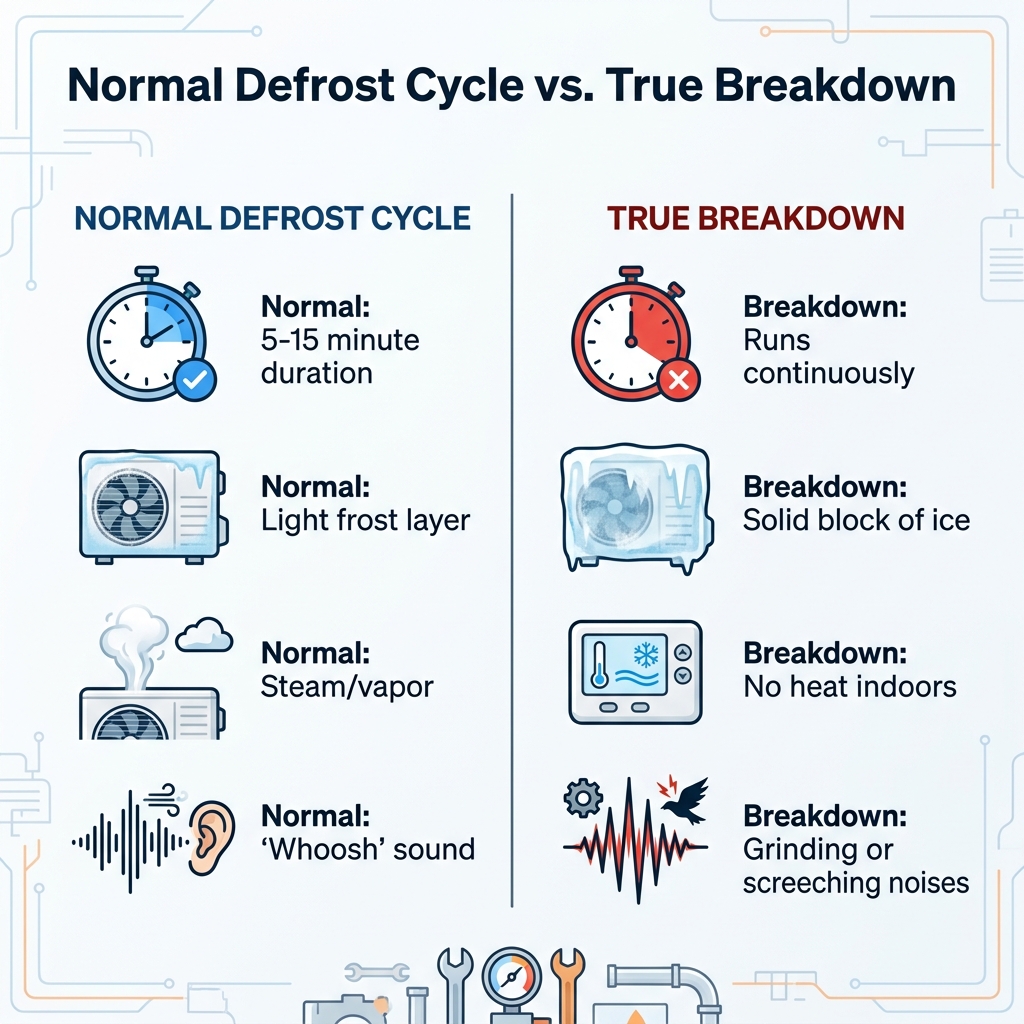
• Ice Accumulation — Normal Defrost Cycle: A thin, white layer of frost that melts away completely within 15 minutes. — Genuine Breakdown (Red Flag): A thick, solid block of ice encasing the entire unit, looking like a glacier.
• Cycle Duration — Normal Defrost Cycle: The entire process starts and finishes in 5 to 15 minutes. — Genuine Breakdown (Red Flag): The system runs continuously for hours but the ice never melts.
• Auditory Clues — Normal Defrost Cycle: A pressurized 'whoosh' or hiss when the cycle starts and stops. — Genuine Breakdown (Red Flag): Harsh grinding, metal-on-metal screeching, or loud banging noises.
• Indoor Comfort — Normal Defrost Cycle: A brief cool draft followed by warm auxiliary heat. — Genuine Breakdown (Red Flag): The indoor temperature steadily drops and the system blows cold air for hours.
When Defrost Components Fail
If your system exhibits any of the red flags listed above, it means the automated defrost sequence has failed. This usually points to a specific component breakdown. The defrost thermostat or the electronic control board may have shorted out, meaning the system never receives the signal to melt the ice. Alternatively, your system might be suffering from a slow refrigerant leak. Low refrigerant levels cause the coils to freeze much faster and deeper than normal, creating a block of ice so thick that the standard defrost cycle cannot overcome it.
When these components fail, professional diagnostics are required to test the electrical signals and measure the refrigerant pressures safely. Just as one local customer discovered this past fall when we repaired a pressure regulator and identified an unknown safety issue on their hot water tank, having a trained professional evaluate your equipment can uncover hidden problems before they escalate into dangerous situations. Staying proactive with routine HVAC maintenance is the most effective way to ensure your sensors, control boards, and refrigerant levels are ready to handle the winter workload.

The 15-Minute Rule: Saving Yourself an Unnecessary Service Call
As a homeowner, your priority is keeping your family comfortable without wasting money on unnecessary emergency repairs. Because the symptoms of a normal defrost cycle are so dramatic, HVAC companies frequently receive panicked phone calls at dawn from homeowners convinced their system is on fire or entirely broken. We want to save you the cost of a diagnostic visit if your system is actually functioning perfectly.
The next time you see vapor rising from your outdoor unit or hear that loud shifting noise, apply the 15-minute rule. Step back, look at your watch, and simply observe the unit for 15 minutes. Do not touch your thermostat.
One of the biggest mistakes homeowners make is rushing to the thermostat and turning the system off to "save" it. By interrupting the cycle, you shut down the melting process. The ice remains on the coil. When you turn the system back on later, it has to start heating with a coil that is already frozen, which forces it to work harder and eventually freeze into a solid block of ice that a normal cycle can no longer clear.
Let the system run. If 15 minutes pass and the fan turns back on, the steam stops, and warm air returns to your vents, you just saved yourself a service call. If 15 minutes pass and the system is still blowing cold air while encased in solid ice, it is time to take action. Take a quick photo of the ice buildup with your phone and note any harsh grinding noises you hear—this information is incredibly helpful for a technician diagnosing the root cause.
Frequently Asked Questions About Heat Pump Defrosting
How do I know if my heat pump is in defrost mode?
You will know your system is in defrost mode if the outdoor fan stops spinning while the compressor continues to hum. You will also likely hear a loud swoosh sound as the cycle begins, and you may see steam rising from the outdoor unit. Inside, the air coming from your vents might feel slightly cooler for a moment before the auxiliary heat engages.
Is it normal for a heat pump to smoke in cold weather?
It is completely normal, but it is actually steam, not smoke. When early autumn mornings in Bridgeville PA cause frost to form on the coils, the system heats the coil to melt it. As the ice turns to water and hits the freezing air, it creates a visible cloud of water vapor that homeowners frequently mistake for smoke.
How long should a heat pump defrost cycle last?
A healthy defrost cycle should only last between 5 and 15 minutes. The exact time depends on how much frost has accumulated and the current temperature outside. Once the sensors detect that the coil has warmed up to roughly 57 degrees, the cycle terminates automatically.
Why is my heat pump making a loud whoosh sound?
That loud whoosh or hissing sound is caused by the system's reversing valve changing position. The valve shifts the flow of pressurized refrigerant to temporarily turn your heater into an air conditioner, which moves warm refrigerant outdoors to melt the ice. The sound is entirely normal and indicates the valve is functioning.
What should I do if my heat pump is completely encased in solid ice?
If your outdoor unit looks like a solid block of ice rather than having a light dusting of frost, you should turn the system off to prevent damage to the compressor. Solid ice indicates that the defrost cycle has failed, often due to a bad sensor, a faulty control board, or low refrigerant. Leave the system off and contact a professional technician for a thorough diagnostic.
Get Honest Diagnostics for Your Heating System
Ultimately, understanding the difference between a heat pump defrost cycle and a breakdown ensures your home stays warm without the stress of false alarms. While seeing steam and hearing a loud whoosh on a cold morning is a sign of a healthy system doing its job, persistent ice buildup and a lack of indoor heat are clear indicators that your equipment needs professional attention. If your system fails the 15-minute test, reaching out for expert heating services will give you an honest, accurate assessment. A proper diagnostic will pinpoint the exact failing component, allowing you to restore your system's efficiency and enjoy reliable warmth all winter long.




.svg)
.avif)


