

The Hidden Connection Between Your Home's Plumbing and AC Leaks
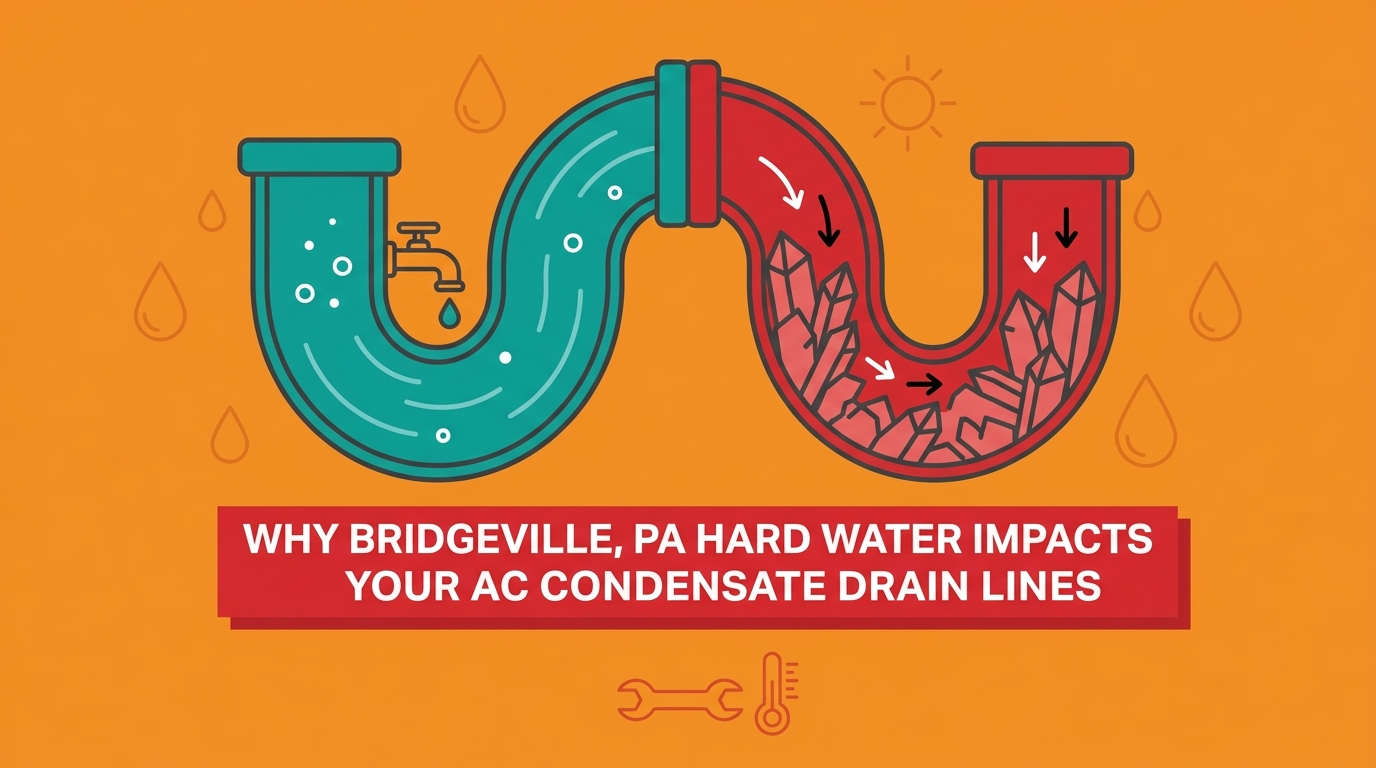
You walk downstairs to find a growing puddle of water pooling around your indoor air handler. The system is running constantly, but instead of just cooling the house, it is creating a mess on your utility room floor. Most homeowners immediately assume the air conditioner is failing. However, understanding how Bridgeville's hard water impacts your AC condensate drain lines is often the missing piece of the puzzle. At Sureway Heating Cooling Plumbing, our team typically sees that when the water stops flowing away from the unit, the root cause isn't always a mechanical failure inside the HVAC system itself.
For comprehensive Air Conditioning Services, ensuring your system drains properly is just as critical as keeping it cooling efficiently under a heavy summer load.
In our years of experience running dual plumbing and HVAC service calls throughout Bridgeville PA, we've found that repeat condensate backups are frequently tied directly to a home's shared drainage plumbing. Air conditioning systems don't just cool the air; they pull massive amounts of moisture out of it to improve indoor air quality. That moisture has to go somewhere, and in many local homes, the AC condensate line routes directly into a shared plumbing drain, utility sink, or floor drain.
This is where the unique local challenge arises. Municipal hard water creates heavy mineral scale inside those shared pipes. Over time, the scale builds up, narrowing the interior diameter of the plumbing lines. When the AC unit dumps gallons of water into a pipe that is already choked with hard water deposits, the system backs up. As a homeowner, this leaves you at a distinct decision point: do you opt for a temporary HVAC fix that just blows out the immediate AC line, or do you have our team diagnose the root plumbing restriction that is actually causing the overflow?
• Water pooling around indoor unit — Standard AC Issue: Cracked drain pan or clogged internal PVC line — Shared Plumbing Restriction: Floor drain or utility sink backing up under load
• Frequency of backups — Standard AC Issue: Rare, usually fixed permanently with a quick blowout — Shared Plumbing Restriction: Repeat occurrences, often multiple times a summer
• Other household signs — Standard AC Issue: None; the issue is isolated to the HVAC system — Shared Plumbing Restriction: Slow draining sinks, chalky buildup on plumbing fixtures
Why Peak Humidity Overwhelms Shared Drainage Systems
To understand why these backups happen so aggressively, we have to look at the sheer volume of water your cooling system handles. When the peak heat of July arrives in western Pennsylvania, our technicians see firsthand how the intense high humidity maximizes AC condensate production. Your system acts like a massive dehumidifier, pulling sticky moisture from the indoor air, condensing it into liquid water on the cold evaporator coils, and funneling it away to maintain cooling performance.
Because of this constant operation, integrating Professional Plumbing Solutions into your home maintenance strategy becomes necessary to handle the heavy fluid load.
The Hidden Volume of Summer Condensation
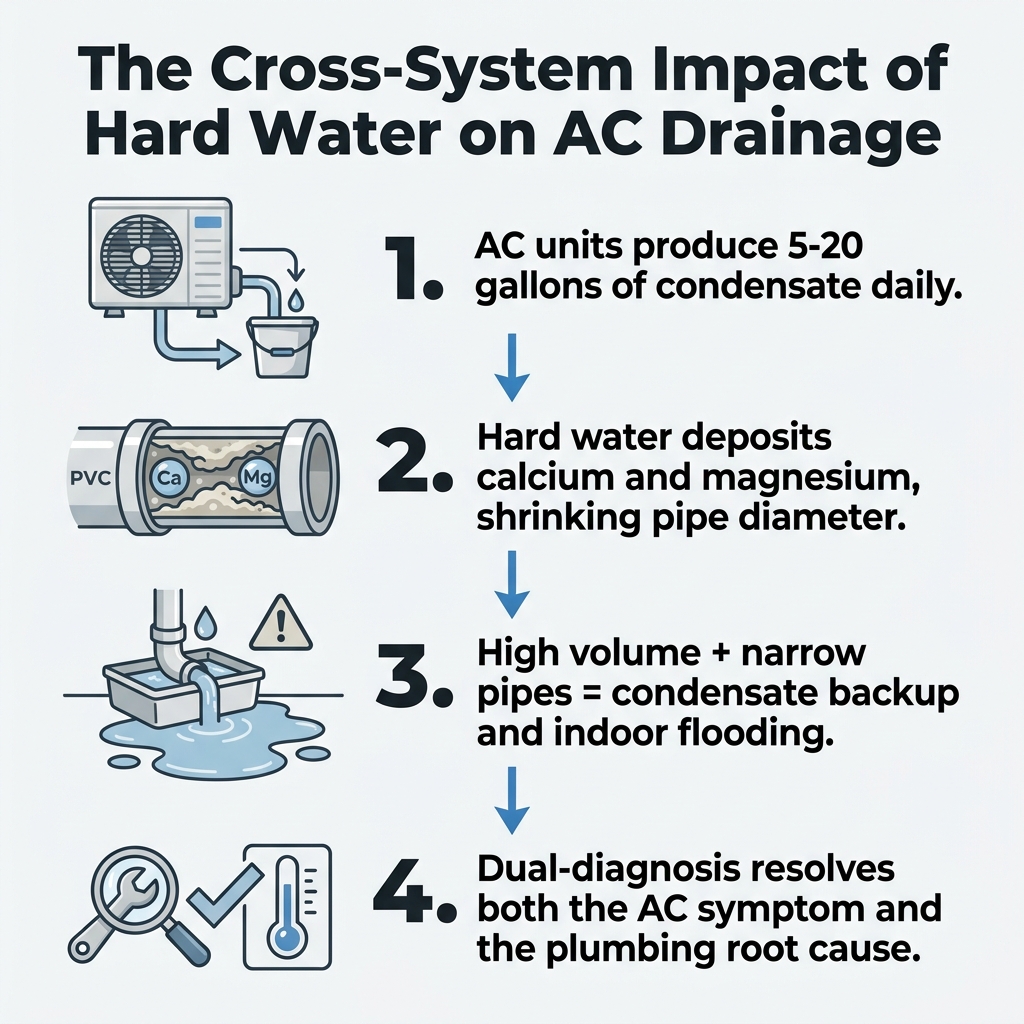
Most people are shocked to learn just how much water an air conditioner generates. According to EPA data, a standard residential AC unit can produce between 5 to 20 gallons of condensation per day during high-humidity periods. That is the equivalent of dumping four large buckets of water down your drain every single day, just from running your air conditioner.
During peak summer AC usage, this constant flow of water creates a highly demanding environment for your drainage pipes. The moisture is relentless. If the pipe cannot handle the flow rate, the water simply reverses course, traveling back up the path of least resistance until it overflows the condensate pan and floods your floor.
Where the AC Condensate Meets the Plumbing
The journey of that 20 gallons of water involves several intersection points, each representing a potential vulnerability if the plumbing is restricted.
• The Evaporator Coil: Water drips off the cold metal coils into a shallow primary drain pan sitting directly beneath the unit.
• The Primary Drain Line: A narrow PVC pipe carries the water away from the air handler using gravity.
• The Condensate Pump (Optional): If gravity isn't enough, a small electric pump pushes the water upward and outward toward a drain.
• The Shared Plumbing Tie-In: The PVC line eventually empties into a utility sink, a basement floor drain, or a main plumbing stack tied to the rest of the house.
When the shared plumbing tie-in is compromised by hard water, the entire chain breaks down. The AC unit is functioning perfectly, but the plumbing infrastructure simply refuses to accept the water.
The Science of Mineral Scale in Local Water Systems
The core of this drainage conflict lies in the water chemistry of the region. Based on USGS data regarding water hardness, western Pennsylvania is known for high concentrations of dissolved minerals in both municipal supplies and groundwater. The two primary culprits are calcium and magnesium.
When hard water flows through your home's plumbing day after day, year after year, it doesn't just pass through cleanly. It leaves microscopic traces behind. Through a chemical precipitation process, these dissolved minerals separate from the water and adhere to the interior walls of your pipes, creating a solid, rock-like scale.
Calcium and Magnesium Accumulation
When our plumbers cut open a scaled pipe during a service call in Bridgeville PA, we rarely see a soft, easily removable clog like hair or grease. Instead, we see a thick, chalky, white or gray crust lining the entire circumference of the pipe. This buildup is a gradual, often unseen process. Homeowners rarely notice it happening until a high-volume event occurs.
Common signs of hard water accumulation include:
• Crusty fixtures: White buildup around showerheads and sink aerators.
• Soap scum: Difficulty getting soap to lather, leaving a sticky film on tubs.
• Appliance wear: Dishwashers and water heaters failing prematurely due to internal scaling.
• Slow drainage: Water taking noticeably longer to clear out of basins.
Creating a Drainage Bottleneck
Think of a scaled pipe like a clogged artery. A drain pipe that was originally two inches wide might be reduced to a narrow, half-inch channel by decades of mineral buildup. Under normal circumstances, this severely diminished flow capacity might still allow a bathroom sink to drain, albeit slowly. The small amount of water from washing your hands eventually makes its way through the bottleneck.
However, when you introduce the sudden influx of 20 gallons of summer AC condensate, that narrow channel is completely overwhelmed. The continuous, heavy flow from the air conditioner exceeds the drainage rate of the scaled pipe, causing the water level to rise rapidly and back up into the HVAC system.
Why a Simple AC Drain Blowout Isn't a Permanent Fix
When water pools around the furnace or air handler, the standard reaction is to call for an HVAC repair. The technician arrives, sees the backed-up condensate pan, and performs a standard single-trade procedure: using compressed air, nitrogen, or a powerful shop vacuum to clear the immediate AC drain line.
While this might temporarily clear standing water out of the PVC pipe, our team knows it often fails to provide a permanent solution. If you are curious about comprehensive system care, reviewing what your technician should check during an AC tune-up can help you understand the difference between a quick fix and a thorough inspection.
Treating Symptoms vs. Root Causes
Blowing out the AC line only treats the symptom (the backed-up air conditioner). It completely ignores the root cause (the heavily scaled shared plumbing drain). Compressed air is highly effective at clearing soft algae or dust out of a plastic AC tube, but it does absolutely nothing to dissolve solid calcium rock inside a cast iron or PVC plumbing stack.
The risks of relying solely on an AC blowout include:
• Guaranteed repeat failures: Leaving the hard water scale intact means the bottleneck is still there, guaranteeing a future backup, often within the exact same cooling season.
• Ongoing water damage: Every time the system overflows, it puts your basement flooring, drywall, and surrounding structural wood at risk of rot and mold.
• Wasted money on repeat calls: Paying for multiple emergency HVAC visits to clear the line costs significantly more than fixing the plumbing once.
As a dual HVAC and plumbing service provider, the Sureway team frequently encounters homeowners who are frustrated by repeat service calls for the exact same flooding issue, simply because the underlying plumbing restriction was never addressed by a previous single-trade technician.
The Value of Expert Cross-System Diagnostics
Resolving complex, cross-system issues requires comprehensive expertise. In our experience running dual plumbing and HVAC service calls, we see the full picture that isolated trades often miss. An HVAC-only technician might not have the tools or training to descale a main plumbing line, while a plumbing-only technician might not understand the specific drainage requirements of a high-efficiency evaporator coil.
Because Sureway Heating Cooling Plumbing brings dual expertise in both plumbing and HVAC, our technicians are able to diagnose and resolve both the AC backup and the hard water scale in a single, unified approach. During a recent peak July heatwave, our team responded to a homeowner reaching out for plumbing issues. Because our technicians are trained across both trades, we were able to quickly diagnose related AC drainage problems and ultimately installed a new central air conditioning unit in a timely manner, ensuring the new system had a perfectly clear, unscaled path to drain.
Seeing the Full Picture
Our diagnostic methodology goes far beyond looking at the immediate leak. When we evaluate a condensate backup, we check the AC condensate pan for cracks or algae, test the electric condensate pump for proper operation, and simultaneously inspect the main plumbing drain for hard water scaling.
Understanding both the airflow and moisture dynamics of the HVAC system, alongside the fluid dynamics of the home's plumbing network, leads to highly accurate diagnoses. Resolving a plumbing restriction doesn't just stop the floor from flooding; it often paves the way for optimal AC energy efficiency, prevents premature rust on the furnace cabinet, and ensures safe installations for new equipment.
Long-Term Solutions for Clear Condensate and Plumbing Lines
Stopping the cycle of summer flooding requires a proactive approach that addresses both the equipment and the water quality. Rather than waiting for the floor to get wet again, there are professional steps we recommend taking to permanently protect your home.
Preventative System Maintenance
Routine, dual-system maintenance before the hottest months arrive is the most effective defense against unexpected breakdowns. A comprehensive check of both the AC drain and the plumbing connection allows our professionals to catch bottlenecks early.
1. Professional Descaling and Hydro-Jetting: If your shared plumbing lines are heavily restricted by calcium, standard snaking won't clear the walls of the pipe. Hydro-jetting uses high-pressure water to scour the interior of the pipe, breaking apart the rock-hard scale and restoring the pipe to its original diameter.
2. Routine HVAC Drainage Checks: Before peak summer AC usage begins, testing the primary and secondary drain lines ensures water flows freely. We verify that gravity slopes are correct and that condensate pumps are firing properly.
3. Avoid DIY Chemical Cleaners: We strongly advise against pouring over-the-counter chemical drain cleaners down your condensate line or utility sink. These caustic chemicals can melt thin PVC, damage older metal pipes, and they consistently fail to dissolve solid mineral rock.
Scheduling comprehensive HVAC and Plumbing Maintenance ensures that all interconnected systems are evaluated simultaneously, preventing one system's failure from damaging another.
Addressing Water Quality at the Source
To truly stop the problem from recurring over the next decade, you have to address the water chemistry itself. Treating the home's water quality protects the entire plumbing infrastructure, which indirectly safeguards the HVAC system's drainage capabilities.
Installing a whole-home water conditioning or softening system stops calcium and magnesium precipitation at the source. By removing the hard minerals before they ever enter your home's pipes, you prevent the scale from forming in the first place. This not only keeps your AC condensate draining freely, but it also extends the life of your water heater, washing machine, and dishwasher.
Frequently Asked Questions About AC Drains and Hard Water
Why does my AC drain line keep clogging?
Your AC drain line keeps clogging because the underlying cause of the restriction hasn't been permanently removed. While blowing out the line removes soft blockages like algae and dust, it does not clear hard water scale from the shared plumbing pipes. Until that mineral buildup is professionally descaled, the line will continue to back up under heavy summer use.
Can hard water cause AC problems?
Yes, hard water can absolutely cause AC problems when the system's condensate line ties into the home's plumbing network. The calcium and magnesium in hard water create thick scale inside the pipes, acting as a bottleneck. When the AC tries to drain gallons of condensation into that narrowed pipe, the water overflows and floods the indoor HVAC unit.
Where does the AC condensate line drain to?
The AC condensate line typically drains to a shared utility sink, a basement floor drain, or directly into the main plumbing stack of the house. In some homes, it may drain straight outdoors, but in areas like Bridgeville PA, indoor plumbing tie-ins are very common. The specific destination depends on your home's layout and local building codes.
How do you stop an AC drain line from backing up?
To stop an AC drain line from backing up permanently, you must ensure the entire drainage path is clear, not just the initial PVC pipe. This involves scheduling routine HVAC maintenance to clear the primary pan and pump, alongside professional plumbing services to descale any hard water buildup in the shared drainage lines.
Why is my AC leaking water inside the house during peak summer?
During peak summer, your AC removes a massive amount of humidity from the air, producing up to 20 gallons of water a day. If your AC is leaking inside, it means this high volume of water is overwhelming a restricted drain line. The restriction forces the water to back up into the drain pan and spill over onto your floor.
Do I need a plumber or an HVAC technician for a clogged condensate line?
If the clog is isolated to the small PVC pipe attached to the air handler, an HVAC technician can clear it. However, if the water is backing up from a floor drain or utility sink where the AC drains into, you need plumbing expertise to clear the hard water scale. Hiring a company like Sureway Heating Cooling Plumbing that specializes in both trades ensures the root cause is correctly identified and resolved.
Stop Repeat AC Flooding with Expert Cross-System Diagnostics
Ultimately, a puddle around your indoor air handler is often just the visible symptom of a much deeper plumbing issue. Treating the HVAC system in isolation leaves your home vulnerable to repeat flooding and ongoing water damage.
True confidence comes from diagnosing and fixing both the condensate line and the hard water scale simultaneously. As a dual HVAC and plumbing service provider, our Sureway team is equipped to handle the full scope of the problem. Don't wait for another summer backup—schedule a comprehensive evaluation today to ensure your systems run cleanly and drain perfectly all season long.




.svg)
.avif)


