


That Alarming First-Run Odor: What's Happening in Your Vents?
You switch the thermostat to "heat" for the first time this season, and within minutes, the unmistakable scent of something burning fills your living room. The immediate panic sets in. Here at Sureway Heating Cooling Plumbing, explaining why your heating system smells like burning dust on the first autumn run is one of the most common conversations our team has with homeowners when that initial September early fall chill arrives. Your first instinct is likely to worry about an electrical fire, a failing motor, or a dangerous malfunction inside your ductwork.
That sudden burst of a hot, singed odor forces a rapid decision point: is this a harmless seasonal quirk, or is your home in immediate danger? We find that most homeowners have no idea what happens inside their HVAC cabinet after months of inactivity. When the furnace fires up, the sudden blast of heat interacts with everything that has settled inside the system over the summer.
Fortunately, in the vast majority of cases we see in the field, this alarming scent is a completely normal physical reaction. It is simply the system clearing its throat, so to speak, after a long hibernation. When you rely on professional heating services, you quickly learn from technicians that a brief, dusty odor is rarely a cause for evacuation. However, knowing exactly what is burning, why it is burning, and how long the smell should last is the key to protecting your home and your peace of mind.
The Anatomy of the First Start-Up
To understand the smell, our technicians always explain how your furnace generates heat. When your thermostat signals the system to turn on, the burners ignite or the heating elements power up. The core component responsible for transferring this warmth into your home's air is called the heat exchanger. This metal component gets incredibly hot—often reaching hundreds of degrees within seconds.
Because the heat exchanger sits directly in the path of the airflow, any microscopic debris resting on its surface is instantly incinerated. This rapid combustion of household dust is what produces that dry, earthy, hot-iron smell coming through your vents. It is a surface-level burn-off, not a systemic fire risk, provided your equipment is in good condition.
The Science Behind the September Dust Burn-Off
Your heating system does not exist in a vacuum. Even when the furnace is turned off for 4 to 6 months during the spring and summer, the air inside your home continues to circulate. If you have a central HVAC system, your air conditioner uses the same ductwork and blower motor as your furnace. As air moves through the house, it carries microscopic particles with it.
These particles include pet dander, skin cells, fabric fibers, pollen, and cooking oils. While your air filter catches the majority of this debris, a small percentage always makes it through. Over a long summer, this organic material settles deep inside the dormant heating components.
The Role of Local Climate and Humidity
The local climate plays a massive role in how severe this first-run odor will be. In our years of servicing HVAC systems across Bridgeville PA, we've seen firsthand how summer moisture changes the consistency of household dust. Instead of remaining dry and loose, the high humidity causes airborne particulates to cake and stick onto the dormant metal surfaces of your heat exchanger and burners.
Common sources of summer dust buildup our team frequently encounters:
• Pet dander and hair: Shedding increases in warmer months, sending more proteins into the air return vents.
• Cooking aerosols: Vaporized oils from summer cooking settle on cool metal surfaces, acting as an adhesive for other dust.
• Pollen and outdoor allergens: Open windows bring in fine particulates that eventually find their way into the HVAC cabinet.
• Indoor humidity: Moisture in the air turns light dust into a sticky film that clings stubbornly to the heat exchanger.
When the first crisp night of the season finally arrives and the furnace kicks on, that caked-on layer of summer dust is subjected to intense, immediate heat. Because the humidity has essentially glued the dust to the metal, the resulting burn-off smell is much more pronounced and noticeable than it would be in a perfectly dry climate.
Exactly How Long Will the Burning Smell Last?
The most pressing question when your house smells like a hot iron is exactly when the odor will go away. Having a concrete timeline is the best way to reduce anxiety and determine if you need to take further action.
Under normal conditions, our technicians advise expecting exactly 15 to 30 minutes of burn-off duration. The smell will be strongest during the first five minutes as the heat exchanger reaches its maximum operating temperature and incinerates the bulk of the settled debris. After that initial peak, the odor should steadily fade as the blower motor pushes the remaining scent out of the ductwork and into the room.
Steps to Manage the Initial Burn-Off
You do not have to simply sit and suffer through the smell. There are practical steps you can take to clear the air faster and make the initial start-up more comfortable for your family.
1. Open windows for cross-ventilation: Crack a few windows on opposite sides of the house to create a draft that pulls the dusty air outside.
2. Turn on ceiling fans: Keep the air moving in your main living spaces so the odor does not settle in one room.
3. Run exhaust fans: Turn on the ventilation fans in your kitchen and bathrooms to help pull the stale air out of the house.
4. Monitor the clock: Note the exact time you turned the thermostat to "heat." This gives you an objective measurement of how long the smell has been active.
5. Check your air filter: Ensure you have a clean filter installed so the system isn't pulling in fresh dust while trying to burn off the old dust.
If the smell persists beyond that 30-minute window, or if it disappears and then returns every time the furnace cycles on later in the week, our team considers that a clear indicator that you are no longer dealing with a simple seasonal dust burn-off. Persistent odors point to deeper maintenance needs, such as a severely clogged system or a failing component.
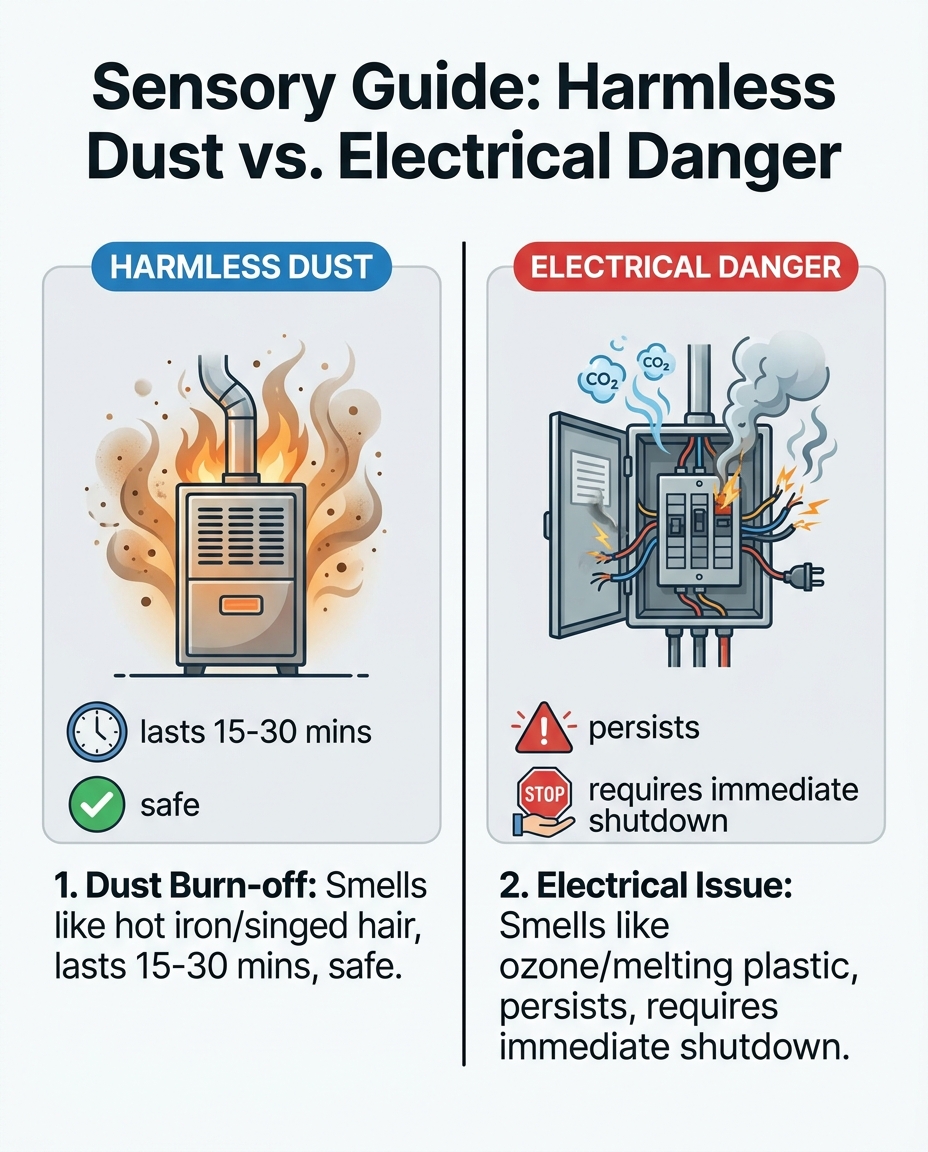
Sensory Guide: Harmless Dust vs. Electrical Danger
Because your sense of smell is highly subjective, it helps to have a specific vocabulary to describe what you are experiencing. Distinguishing between a harmless seasonal quirk and a true hazard comes down to identifying the specific notes in the odor.
The smell of burning dust during a September early fall start-up has a very distinct profile. It is dry, earthy, and warm. By contrast, an electrical fire or failing motor produces a sharp, chemical scent that immediately irritates the nose and throat.
Comparing Furnace Odors
• Primary Scent — Harmless Dust Burn-Off: Hot clothes iron, singed hair, dry earth — Dangerous Electrical Issue: Melting plastic, sharp ozone, fishy chemical smell
• Physical Sensation — Harmless Dust Burn-Off: Mildly annoying, dusty, dry — Dangerous Electrical Issue: Acrid, burns the nostrils, causes coughing
• Duration — Harmless Dust Burn-Off: Fades completely within 15 to 30 minutes — Dangerous Electrical Issue: Persists or gets worse the longer the system runs
• Visibility — Harmless Dust Burn-Off: No visible smoke (rarely a faint haze at the vent) — Dangerous Electrical Issue: Visible dark smoke, sparks, or flickering lights
• Action Required — Harmless Dust Burn-Off: Wait it out, ventilate the home — Dangerous Electrical Issue: Shut down immediately and call a professional
When an electrical component fails, it usually involves the rubber insulation around wires melting, or the protective coating on a blower motor scorching. These materials release toxic, sharp-smelling gases that are impossible to confuse with standard household dust once you know what to look for.

When to Shut Down Your System Immediately
While patience is the best approach for a dusty smell, there are specific triggers that mean you should stop waiting and take immediate action. Safety must always be the priority when dealing with heavy heating equipment.
If you detect the sharp, acrid smell of ozone, melting plastic, or burning rubber, walk directly to your thermostat and turn the system to the "OFF" position. Do not wait to see if the smell improves. Electrical issues do not resolve themselves; they only generate more heat and cause more damage the longer the system draws power.
The Dangers of DIY Investigations
Once the system is powered down, you might be tempted to grab a flashlight and look inside the furnace cabinet to find the source of the melting plastic smell. Do not open the furnace cabinet to check wiring or electrical panels.
Modern heating systems carry high voltage and contain complex safety switches, gas valves, and capacitors that hold electrical charges even after the system is turned off. Diagnosing scorched wiring or a seized blower motor requires specialized tools and a licensed professional.
A recent local homeowner in Bridgeville PA, who relies on our ongoing service for various plumbing and heating jobs, found that bringing in our team to strategize and weigh options provided immense relief rather than guessing about system safety. Guessing whether a wire is safe to touch is never worth the risk. A professional technician knows exactly how to test the electrical draw of a motor and safely identify which component is overheating.
Preventing the Odor: The Value of Pre-Season Maintenance
The best way to deal with the anxiety of a burning smell is to prevent it from happening in the first place. You do not have to accept that first-run panic as an inevitable part of homeownership. Transitioning smoothly from cooling season to heating season requires proactive care.
A comprehensive pre-season tune-up addresses the root cause of the dust burn-off. Before the cold weather sets in, our technicians open the system, inspect the burners, and physically clean the heat exchanger. By removing the caked-on summer debris manually, there is nothing left to incinerate when you finally turn the thermostat up.
What Happens During a Safety Inspection?
Beyond just cleaning away the dust, professional maintenance is fundamentally about risk prevention. You want the assurance that when you smell something odd, it truly is just dust and not a hidden hazard.
A thorough pre-season inspection from our team includes:
• Heat exchanger verification: Checking for microscopic cracks that could leak carbon monoxide into the home.
• Electrical testing: Measuring the voltage and amperage of the blower motor to ensure it is not overdrawing power and overheating.
• Wire inspection: Checking all internal wiring harnesses for signs of fraying, loose connections, or degraded insulation.
• Burner alignment: Ensuring the gas ignites smoothly and cleanly without rollout or delayed ignition.
Working with Sureway Heating Cooling Plumbing's expert technicians means your system is safely inspected to ensure that any burning smells are just normal dust and not serious electrical hazards. Another customer requiring winter diagnosing, repair, and installation services received a fair and accurate remedy simply by having our experts evaluate their equipment before a major breakdown occurred. Investing in professional HVAC services guarantees that you get a full 15 to 30 minutes of burn-off duration safely eliminated before you ever have to smell it.
Frequently Asked Questions About Fall Furnace Odors
Our customers naturally have a lot of questions when their house suddenly smells like a campfire. Addressing these common concerns directly can help you make smart decisions about your heating system as the weather cools down.
How long should a furnace smell like burning dust?
Under normal circumstances, the burning dust odor should last exactly 15 to 30 minutes during the very first time you run the system in the fall. The smell will peak in the first five minutes and gradually fade. Opening windows and running ceiling fans will help clear the air much faster.
What does an electrical fire in a furnace smell like?
An electrical issue produces a sharp, acrid scent that is often compared to melting plastic, burning rubber, or a fishy, ozone-like chemical odor. Unlike dry dust, this smell is highly irritating to the nose and throat. It indicates that wire insulation or motor components are actively melting.
When should I turn off my furnace if it smells?
You should turn off your furnace immediately at the thermostat if the smell resembles melting plastic or ozone, or if the dusty smell persists well past the 30-minute mark. If you ever see visible smoke coming from the vents or the furnace cabinet, shut the system down instantly and call for professional help.
Can a dusty furnace cause a fire?
Surface dust on a heat exchanger is generally harmless and simply burns off as a temporary odor. However, heavy lint buildup near the ignition sources or burners can pose a fire hazard if the system is neglected for years. This is why regular cleaning and inspecting the cabinet is vital for home safety.
Is it normal for a heater to smell like burning plastic?
No, it is never normal for a heating system to smell like burning plastic. A plastic odor means a foreign object has fallen into the ductwork, or internal electrical components are actively melting down. This requires an immediate system shutdown and a professional inspection to safely restart a furnace that has been dormant.
Ensure a Safe, Odor-Free Start to Your Heating Season
That initial blast of burning dust on a chilly September early fall evening is enough to make anyone nervous. While we know it is usually just harmless summer debris clearing off the heat exchanger, your peace of mind is what truly matters. You should never have to guess whether your family is safe or if a hidden electrical issue is melting away inside your utility closet.
Taking a proactive approach removes the guesswork entirely. By scheduling a professional inspection with our team for your home in Bridgeville PA, you can rule out hazards, optimize your energy efficiency, and enjoy the warmth without the worry. Don't let a questionable odor ruin your comfort; schedule your heating system maintenance with Sureway Heating Cooling Plumbing today and start the season with total confidence.




.svg)
.avif)


