


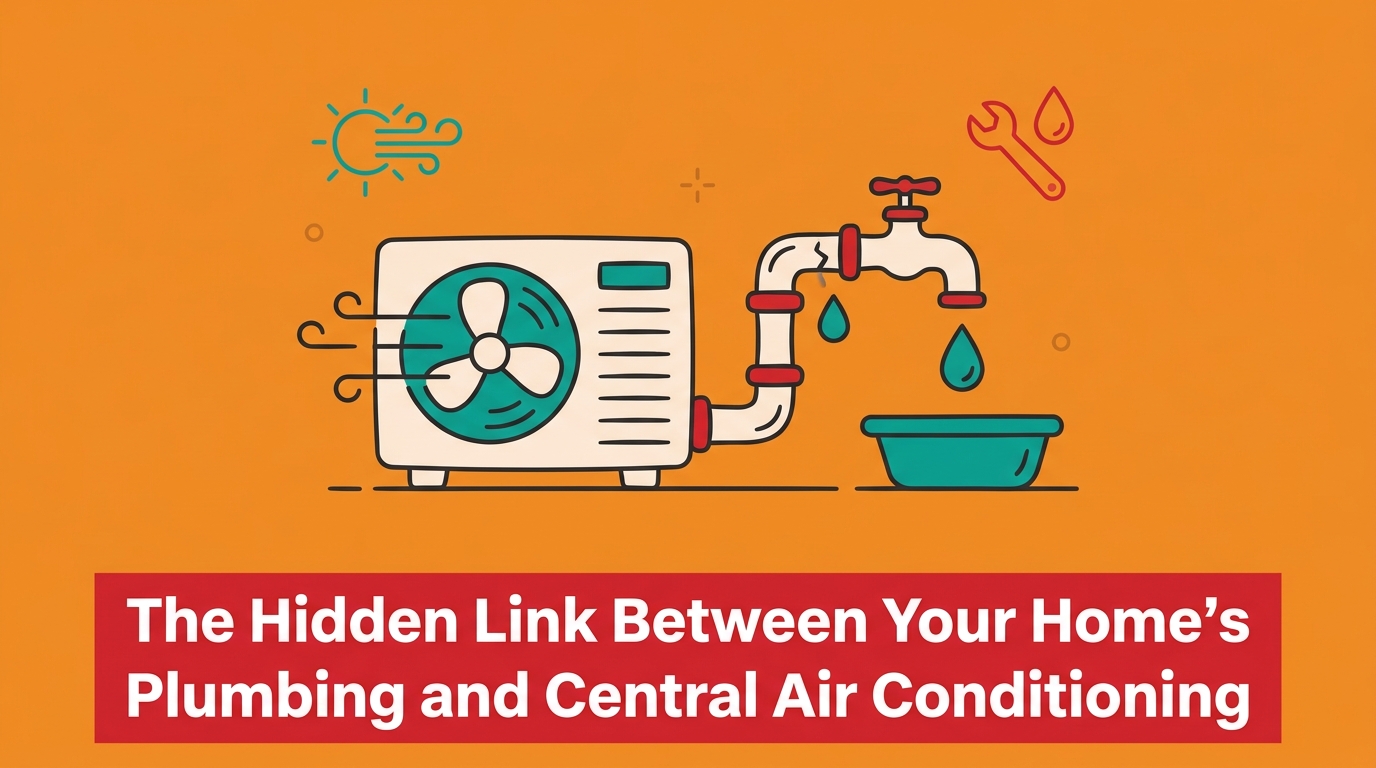
Solving Mysterious Summer Leaks and Electrical Trips
Your central air unit is running nonstop to beat the summer heat, but instead of just enjoying a cool house, you are dealing with a mysterious puddle near the basement floor drain. The hidden link between your home's plumbing and central air conditioning is often the exact reason these frustrating, overlapping symptoms happen during peak cooling season. When you notice intermittent breaker trips or unexplained water pooling precisely when your AC works its hardest, the root cause rarely sits in just one system. Modern homes operate as deeply interconnected ecosystems. A symptom showing up in your basement drain might actually originate inside your ductwork.
To protect your home from cross-system failures and avoid wasted service calls, explore our HVAC and plumbing services to see how a unified approach keeps your home running smoothly.
Why Isolated Fixes Often Fail
Many homeowners assume that a water leak in the basement is strictly a plumbing issue, or that a tripped breaker is purely an electrical or HVAC fault. The reality is much more complex. During July peak cooling, your home's infrastructure is under maximum stress. If you treat a cross-system issue as an isolated problem, you are likely just putting a bandage on a larger structural conflict.
Understanding this hidden connection is the key to protecting your property from ongoing water damage and electrical hazards. When you know how these systems interact, you can make informed decisions about when to call a professional and avoid paying for multiple, incomplete service calls.
The Heavy Lifting of Summer Cooling: Condensation Mechanics
The problem: During the hottest months of the year, your home feels comfortable, but your air conditioner is secretly managing a massive amount of water. Most homeowners do not realize that central AC systems do much more than just push cold air through the vents; they are also powerful dehumidifiers. When the humidity is high, the sheer volume of moisture your system extracts can overwhelm older or poorly maintained drainage pathways.
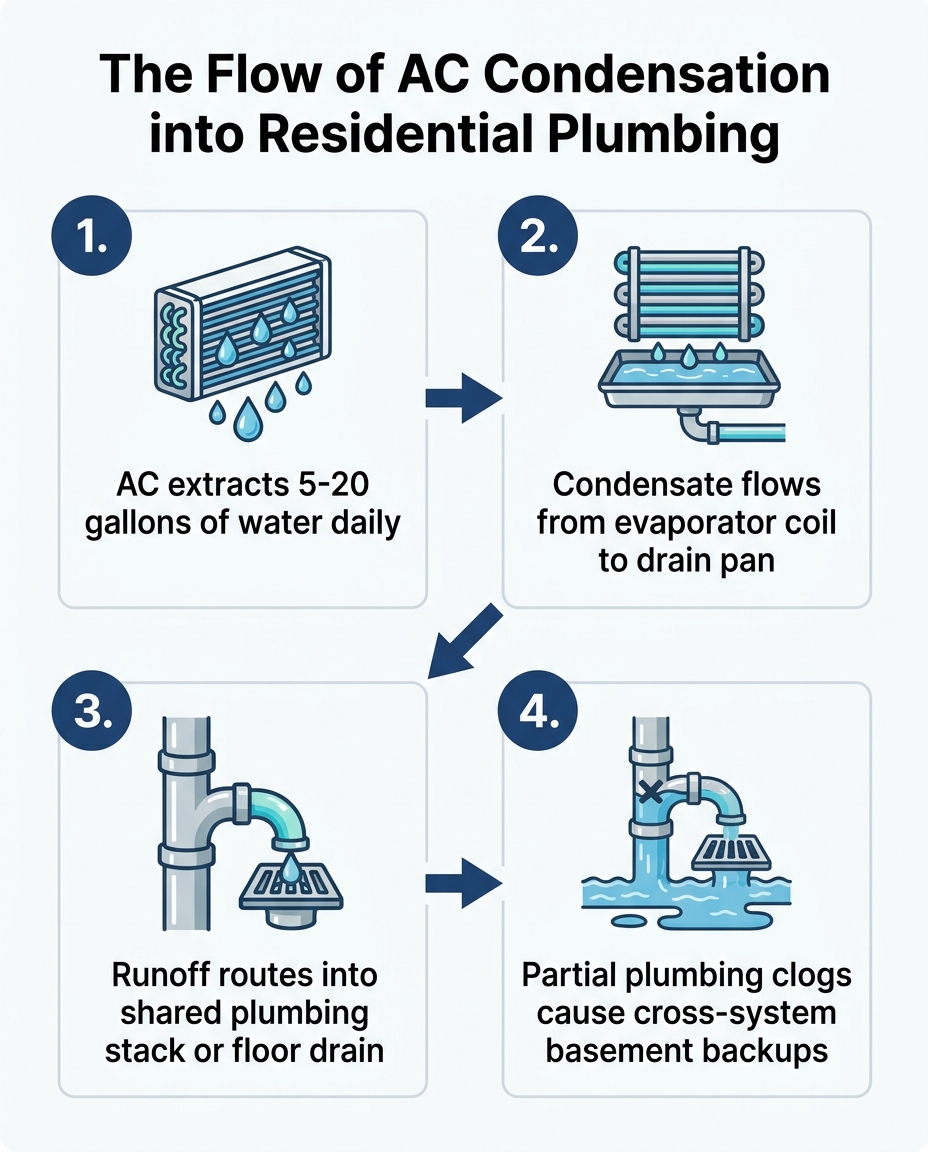
The cause: As warm, sticky indoor air blows over the freezing cold evaporator coil inside your indoor air handler, the moisture in the air condenses into liquid water. This is the exact same physical process that causes water droplets to form on the outside of a cold glass of iced tea on a hot day. In regions with high summer humidity, like Bridgeville PA, local central AC units are forced to work overtime. Under heavy load, a standard residential unit can produce anywhere from 5 to 20 gallons of condensation per day. All of this water drips down into a primary condensate drain pan located beneath the coil.
The solution: Managing this continuous, heavy flow requires a robust and completely unobstructed exit path. The water must travel from the drain pan, through a PVC condensate line, and safely out of your home. If any part of this journey is compromised, you face immediate overflow and potential property damage. Ensuring that your air conditioning systems have clear, well-maintained drainage lines is the first step in preventing peak-summer water disasters.
When Drainage Systems Collide: The Root of Basement Backups
To understand why an AC issue can look exactly like a plumbing failure, you have to look at where the water goes after it leaves the indoor air handler. In many modern and retrofitted homes, AC condensate lines are routed directly into basement floor drains, utility sink basins, or shared residential plumbing stacks. This creates a direct mechanical intersection between your HVAC equipment and your home's main plumbing infrastructure.
The Mechanics of a Shared Drain
When the condensate line ties into a shared plumbing stack, it relies on the main sewer line to carry the water away. During normal, everyday use—like washing hands or running the dishwasher—a partial clog in the main plumbing line might go completely unnoticed. The water drains just fast enough to avoid backing up into the sink or shower.
However, when a condensate drain line backup occurs, it is often because that same partial plumbing clog is suddenly hit with a continuous, slow-drip flow of 10 to 20 gallons of AC runoff. The partially blocked pipe cannot handle the sustained volume, causing the water to seek the lowest point of exit. Very often, that lowest point is the basement floor drain.
Diagnosing the True Source of the Water
The resulting water damage looks identical to a primary plumbing failure, but the trigger is the HVAC system. This is why maintaining both the primary AC drain pan and the shared plumbing exit point is absolutely critical. If you only clean the AC line but ignore the slow main drain, the backup will return the next day.
• AC Drain Pan Overflow — What It Looks Like: Water pooling directly under the indoor furnace or air handler — True Root Cause: Clogged primary PVC condensate line on the AC side.
• Floor Drain Backup — What It Looks Like: Puddle forming around the basement drain grate during AC use — True Root Cause: Partial blockage in the shared main plumbing line.
• Slow Draining Sinks — What It Looks Like: Gurgling noises from drains when the AC blower kicks on — True Root Cause: Shared venting issues restricting airflow in plumbing pipes.

Shared Electrical Grounds: Why Your AC and Plumbing Might Trip the Same Breaker
The problem: You hear a sudden click, the cool air stops flowing, and you realize the breaker has tripped again. You reset it, but a few hours later, the exact same thing happens. Intermittent power losses are incredibly frustrating, especially when they seem to happen randomly. But if you pay close attention, you might notice the breaker trips right when the AC condenser kicks on at the same time as a major plumbing appliance.
The cause: Major household appliances require a massive amount of electricity to start up. Devices like your outdoor AC condenser, an electric water heater, or a well pump often share electrical grounding pathways, or they are wired in close proximity within the main breaker panel. Because these systems are electrically intertwined, an intermittent electrical fault in a plumbing appliance can sometimes manifest as a surge when the AC kicks on, and vice versa. The electrical load temporarily exceeds the circuit's safety limit, forcing the breaker to trip to prevent overheating.
The solution: The most important rule of electrical safety is to never repeatedly reset a tripped breaker without identifying the underlying cause. If your AC circuit breaker keeps tripping, it is a clear warning sign that the cross-system electrical load is unbalanced or shorting out. Diagnosing these electrical anomalies requires a deep understanding of the power draw of both HVAC and plumbing systems. Always rely on a professional to test the grounding pathways and separate the loads safely.
The Finger-Pointing Dilemma: Why Single-Trade Diagnoses Fall Short
One of the most frustrating experiences for a homeowner is getting caught in the middle of contractor finger-pointing. When you hire a single-trade technician to look at a mysterious basement puddle, they often view the home through a very narrow lens. An HVAC technician might clear the AC drain line, see that the water is flowing out of the unit, and declare the job done—blaming the plumber for the blocked floor drain. The next day, you call a plumber who snakes the drain, finds it mostly clear, and blames the HVAC technician for excessive AC runoff.
The Cost of Narrow Perspectives
This cycle of misdiagnosis leads to multiple dispatch fees, prolonged home damage, and immense frustration. The core issue is that neither technician is looking at the home as a single, holistic ecosystem. They are only trained to fix their specific half of the equation.
The Value of Dual-Trade Expertise
A typical pattern we see occurs when homeowners face overlapping issues that require a broader perspective. For instance, during a recent summer, a homeowner dealt with severe plumbing drainage issues right when they needed a new central air conditioning unit installed. Rather than coordinating multiple contractors who might blame each other for delays, a dual-trade team addressed the plumbing restrictions first. They ensured the home's infrastructure was ready to handle the moisture load, and then successfully installed the new AC unit in a single, streamlined process.
Working with a company that offers dual-trade expertise is the definitive solution for ambiguous, cross-system leaks. By overseeing both the plumbing and the HVAC systems, comprehensive oversight prevents misdiagnosis, saves you from paying multiple dispatch fees, and ensures the root cause is permanently resolved.
Identifying Cross-System Stress in Your Home
Catching these interconnected issues early can save you from major water damage or electrical wear and tear. Because the symptoms span multiple systems, you need to know exactly what to look for. Here are the most common signs that your plumbing and HVAC systems are interacting poorly during the summer months:
1. Unexplained pooling water near basement floor drains: If the floor around your basement drain is bone dry all winter but consistently wet during July, the issue is likely AC condensate runoff backing up against a partial plumbing clog. Monitor the drain specifically when the air conditioner has been running for several hours.
2. Gurgling sounds from sinks or toilets: Your plumbing system uses vent pipes to equalize air pressure. If the HVAC blower engages and you suddenly hear gurgling or bubbling noises coming from a nearby bathroom sink, it indicates that the systems are sharing a compromised venting pathway. The blower's pressure is forcing air backward through the plumbing P-traps.
3. Intermittent power losses or breaker trips: Pay attention to the timing of your electrical issues. If the breaker trips specifically during peak appliance usage times—such as when the AC is running and someone is taking a shower using an electric water heater—you likely have a shared electrical ground or an overloaded circuit panel.
4. Musty odors emanating from vents: A persistent damp, musty smell coming from your supply vents often indicates standing water. If the shared drainage area is backed up, the AC's drain pan cannot empty properly. This trapped water becomes a breeding ground for biological growth, which the blower then circulates throughout the house.
What to Do When You Spot These Signs
If you notice any of these symptoms, do not wait for a complete system failure. Proactive care is the best way to protect your home's infrastructure. Scheduling professional HVAC and plumbing maintenance ensures that both sides of the equation are inspected, cleaned, and optimized to work together safely.
Frequently Asked Questions About HVAC and Plumbing Intersections
Is my AC drain connected to my home's plumbing?
Yes, in many homes, the AC condensate line routes directly into a shared plumbing stack or basement floor drain to safely remove extracted humidity. This design prevents water from pooling around the foundation of the house. However, it also means that your AC relies on your plumbing system being clear and functional to avoid backups.
Can a clogged AC drain cause a plumbing backup?
While an AC drain clog usually causes the AC pan to overflow internally, a clog in the shared main plumbing line can cause the AC's runoff to back up into the basement. The AC unit itself does not clog the plumbing, but the sheer volume of water it produces will expose any existing restrictions in the plumbing pipes. This is why a slow drain suddenly becomes a major puddle in the summer.
Why is water backing up from my AC into the basement?
This typically happens when the volume of condensation exceeds the capacity of a partially blocked floor drain or shared plumbing vent. During peak humidity, an AC can produce up to 20 gallons of water a day. If the basement floor drain has a partial blockage from dirt or debris, that heavy, continuous flow has nowhere to go but out onto the floor.
Why does my AC trip the breaker when the plumbing is used?
This can indicate a shared electrical ground issue or an overloaded circuit shared by the AC condenser and a heavy-draw plumbing appliance like a water heater or well pump. When both high-demand units turn on simultaneously, the combined power surge exceeds the breaker's safety limit. A professional needs to inspect the panel to separate these heavy electrical loads.
Do I need a plumber or an HVAC technician for a condensate leak?
Because the issue could stem from either the AC's internal drain pan or the home's main plumbing stack, hiring a dual-trade technician is the most efficient way to diagnose the true root cause. A single-trade technician might only look at half the problem, leading to incomplete repairs. A dual-trade expert can evaluate both systems at once, saving you time and diagnostic fees.
Streamline Your Home's Care with a Dual-Trade Expert
Treating your HVAC and plumbing as completely isolated systems often leads to missed warning signs and incomplete repairs. As we have seen, the hidden link between your home's plumbing and central air conditioning becomes incredibly obvious during the peak heat of summer. When condensation lines tie into plumbing stacks, and heavy appliances share electrical panels, a problem in one area will inevitably stress the other.
Proper home maintenance requires a deep understanding of how these systems interact under pressure. By taking a holistic approach, you can avoid the frustration of contractor finger-pointing and ensure that your home remains comfortable and dry. If you are dealing with mysterious leaks or electrical trips, rely on a team that understands the whole picture, providing a clear explanation and a single, definitive solution for your interconnected systems.



.svg)
.avif)


