


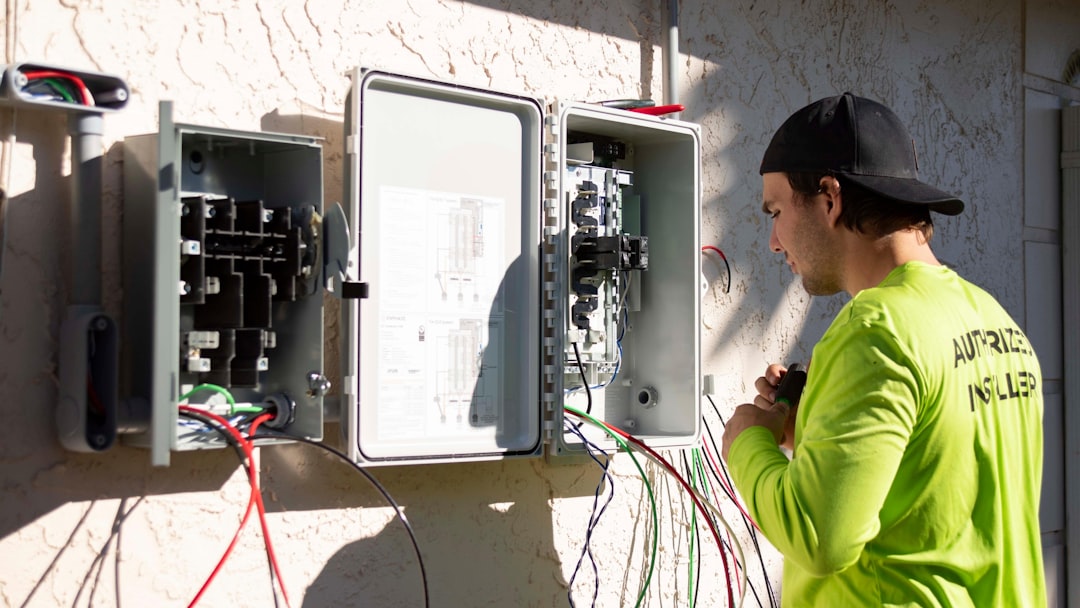
AC Circuit Breaker Keeps Tripping: What It Means & Pro Troubleshooting Tips
When your AC circuit breaker keeps tripping, what it means is simple: your home's electrical system detected more current than the circuit can safely handle, and it shut everything down to protect you. This is not a malfunction — it is the breaker doing exactly what it was designed to do.
In this handy tips and tricks guide, we will explore the most common reasons your AC breaker keeps tripping and how you can resolve them:
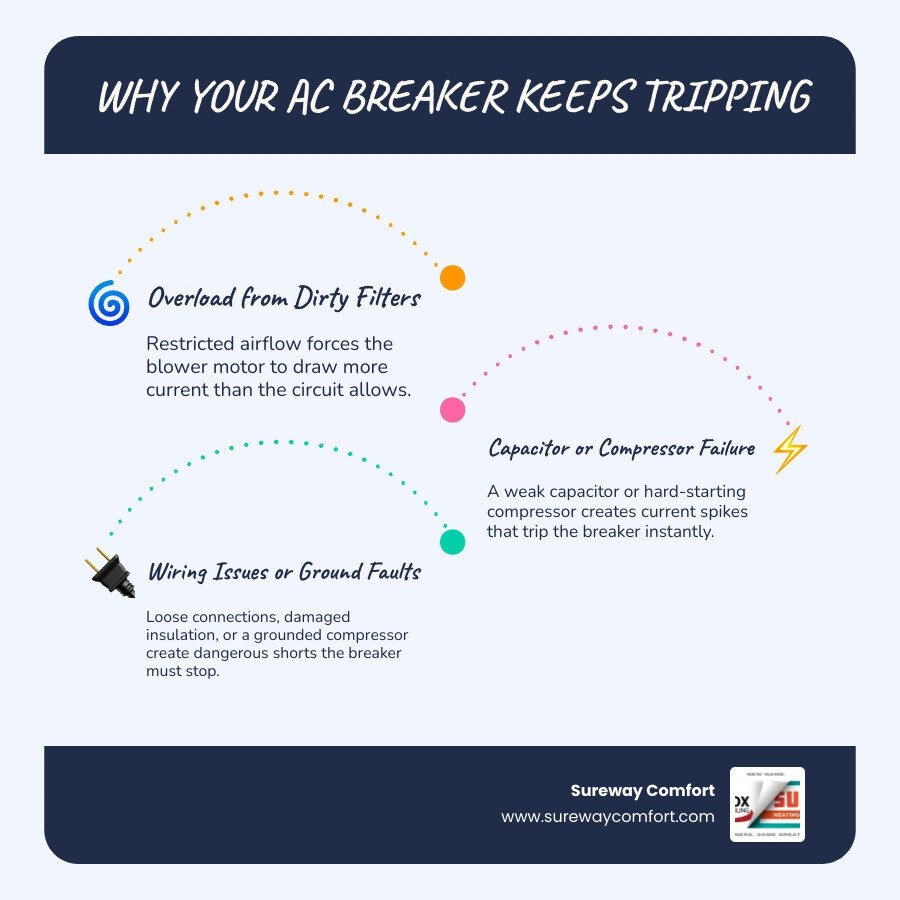
• Dirty air filter — restricts airflow, forcing the blower motor to work harder and draw more current
• Dirty condenser coils — trap heat and cause the compressor to run longer and pull more amps
• Failing capacitor — causes the compressor to struggle on startup and spike electrical draw
• Loose or damaged wiring — creates arcing or shorts that trigger an immediate trip
• Hard-starting or grounded compressor — the most serious cause, often pulling dangerously high current
• Worn-out breaker — an aging breaker may trip at lower amperage than it should
• Overloaded circuit — the AC is sharing a circuit that cannot handle its electrical load
That said, a breaker that trips once and resets without issue is very different from one that keeps tripping every time you run your AC. Repeated trips are a warning sign you should not ignore. Each time the breaker trips, your system is telling you something is wrong — and continuing to reset it without finding the cause can turn a straightforward repair into a serious safety hazard, including overheated wiring and, in the worst cases, an electrical fire.
Below, we will walk you through what causes this problem, share practical troubleshooting tricks you can safely try yourself, and explain when it is time to stop resetting that breaker and call a professional HVAC technician.
Quick ac circuit breaker keeps tripping what it means definitions:
• ac not turning on what to check first
• ac troubleshooting tips before calling a pro
When we talk about what it means when your air conditioner keeps tripping the breaker, we are looking at a system designed to protect your home. A circuit breaker is essentially a safety switch. Its job is to monitor the flow of electricity through your electrical panel. If the current flowing through a wire exceeds its safe rating, the breaker flips to the "off" position, instantly cutting the power supply.
If this happens once in a blue moon, it could be a simple power surge from the utility grid. However, if your ac circuit breaker keeps tripping what it means is that there is an active, unresolved issue within the air conditioning system itself or the electrical circuit feeding it.
When your air conditioner runs, it relies on a dedicated double-pole circuit breaker (usually 30 to 40 amps for central AC systems, and sometimes 20 amps for larger window units). This breaker is designed to handle the specific electrical load of your equipment. For example, a 20-amp breaker will trip if the AC pulls 30 amps. This is a critical protection mechanism because overcurrent converts electricity into intense thermal energy. Without the breaker cutting power, this heat would quickly melt plastic wire insulation, ruin expensive system components, and potentially spark a fire inside your walls.
Understanding how your AC interacts with your home's electrical panel is key to diagnosing the issue. In some cases, a severe electrical problem can even lead to broader household power issues. If you want to learn more about how electrical faults in your cooling system can affect your entire home, check out our guide on AC Causing Power Outages.
Understanding the Difference Between Overload and Short Circuit
To truly understand why your breaker is acting up, we have to look at the two primary types of electrical issues that cause trips: overloads and short circuits.
• Electrical Overload: This occurs when a circuit is asked to carry more amperage than it is rated to handle. In the context of an AC unit, this is usually a gradual process. Mechanical issues—such as a dirty filter or a struggling motor—increase electrical resistance. The motor has to work much harder to spin, which forces it to draw more and more current (amperage). Once that current draw creeps past the breaker's limit (for example, exceeding 20 amps on a 20-amp circuit), the internal bimetallic strip inside the breaker heats up and trips. This type of trip typically happens after the AC has been running for 10, 20, or 30 minutes.
• Short Circuit or Ground Fault: This is an immediate, high-energy event. A short circuit happens when a hot wire directly touches a neutral wire, while a ground fault occurs when a hot wire touches a grounded component, such as the metal frame of the AC unit. This bypasses the normal electrical resistance of the system, allowing an unrestricted flow of electrical current. The amperage instantly spikes to hundreds of amps. The breaker detects this massive, sudden surge magnetically and trips instantly—often with a loud click or pop—the second the AC attempts to start.
Common Mechanical Causes of a Tripping AC Breaker
It might surprise you to learn that the root cause of an electrical breaker trip is very often a mechanical problem. When your air conditioner's physical components are dirty, worn, or restricted, the system must work harder to cool your home. That extra work translates directly into higher energy consumption and increased amperage draw.
If you are experiencing issues but are not quite sure where to start, you can review some initial steps in our article on AC Troubleshooting Tips Before Calling a Pro. Below, we break down the most common mechanical culprits behind repeated breaker trips.
How a Clogged Filter and Dirty Coils Force Overcurrent
A dirty air filter is the most common cause of an AC breaker trip. When your air filter is clogged with dust, pet dander, and debris, it acts like a physical barrier to airflow. This dramatically increases static pressure within your ductwork.
Because the indoor blower motor has to fight to pull air through this thick blanket of dirt, it experiences severe mechanical strain. This forces the motor to draw more electricity. If the filter is dirty enough, the blower motor will pull more amps than the circuit allows, causing the breaker to trip.
Similarly, dirty condenser coils in your outdoor unit create a massive electrical bottleneck. The outdoor unit's job is to release the heat absorbed from inside your home. If the condenser coils are coated in grass clippings, dirt, or cottonwood seeds, they are effectively insulated.
This prevents efficient heat transfer, forcing the compressor to run much longer and at significantly higher system pressures to cool your home. High pressure means the compressor must work harder, causing its amp draw to climb until the breaker trips—especially during peak summer heat.
Frozen Evaporator Coils and Airflow Obstructions
When airflow is severely restricted by a clogged filter or blocked indoor vents, another problem arises: frozen evaporator coils. Without enough warm air passing over the cold coils, the refrigerant inside cannot absorb heat properly. The temperature of the coils drops below freezing, and the moisture in the air condenses and freezes directly onto them.
Once ice builds up on the evaporator coils, it blocks the remaining airflow entirely. The blower motor continues to run, drawing excessive power as it tries to force air past a solid block of ice.
Additionally, frozen coils can cause liquid refrigerant to flood back into the compressor. Since compressors are designed to compress gas, not liquid, this puts extreme mechanical stress on the compressor, causing it to draw dangerous amounts of current and trip the breaker.
Electrical Component Failures That Cause Breaker Trips
If your AC system is mechanically clean but the breaker continues to trip, the issue is likely an electrical component failure. Over time, heat, vibration, and general wear and tear can degrade the electrical parts that keep your air conditioner running safely.
To help you distinguish between these two types of issues, we have put together a quick comparison table:
• Timing of Trip — Mechanical Issue: Typically trips after running for 10 to 30 minutes. — Electrical Issue: Often trips instantly when the outdoor unit kicks on.
• System Noises — Mechanical Issue: May run quietly but struggle to cool; air feels weak. — Electrical Issue: Loud humming, clicking, or buzzing before the trip.
• Breaker Temperature — Mechanical Issue: Breaker may feel warm to the touch after tripping. — Electrical Issue: Breaker is usually cool or trips too fast to heat up.
• Visual Indicators — Mechanical Issue: Frozen indoor coils or heavily soiled outdoor coils. — Electrical Issue: Burned wires, melted plastic, or charred terminals.
If you hear strange sounds coming from your system before it trips, you may want to read about How to Solve AC Buzzing Issues to help identify the source.
Failing Capacitors and Hard-Starting Compressors
Your air conditioner relies on capacitors to start and run its motors. The start capacitor provides an electrical "boost" to get the compressor spinning, while the run capacitor keeps it running smoothly. Run capacitors typically last about 8 to 12 years, but extreme summer heat and power surges can shorten their lifespan.
When a capacitor begins to fail, it can no longer store or deliver the correct electrical charge. Without this help, the compressor struggles to start. It will sit and hum loudly, drawing a massive amount of current known as Locked Rotor Amps (LRA).
While a compressor might normally draw 15 to 20 amps during a normal startup, a hard-starting compressor with a bad capacitor can pull 3 to 5 times its running amperage—sometimes spiking to 60+ amps of inrush current. This massive surge instantly trips the breaker. To learn more about identifying compressor issues, check out the Signs Your AC Compressor Is Failing.
Grounded Compressors and Shorted Motor Windings
A grounded compressor is the worst-case scenario for AC breaker trips. Inside your compressor, there are electrical motor windings protected by a thin layer of specialized insulation. Over time, extreme heat, acid buildup in the refrigerant lines, or mechanical wear can cause this insulation to break down.
When the insulation fails, the live electrical windings inside the motor come into direct contact with the metal housing of the compressor. This creates a direct short to ground. Because electricity always takes the path of least resistance, a massive amount of current bypasses the motor and flows directly into the ground wire.
This causes an immediate, violent trip the exact millisecond the compressor receives power. Unfortunately, a grounded compressor cannot be repaired; it requires a full compressor replacement or, in many cases, a complete replacement of the outdoor unit.
Pro Tips: How to Safely Troubleshoot a Tripping AC Breaker
When your air conditioner shuts down and you find a tripped breaker, it is natural to want to get your cooling back online as quickly as possible. However, because electricity is highly dangerous, you must follow a strict, safety-first protocol. Here are our top tips and tricks for troubleshooting this issue safely.
The One-Reset Rule for Electrical Safety
If your AC breaker trips, we strongly advise following the "One-Reset Rule."
You can safely attempt to reset the breaker exactly once after performing a few basic visual checks. If you reset the breaker and it immediately trips again, or if it trips shortly after the cooling cycle begins, stop resetting it.
Repeatedly resetting a tripping breaker is incredibly risky. Each time you force the breaker back on, you are sending high currents through a faulted circuit. This can quickly degrade the breaker's internal mechanism, damage your home's hidden wiring, melt insulation, and create a severe electrical fire hazard. Treat the second trip as a firm warning that it is time to call in the professionals.
Step-by-Step Homeowner Troubleshooting Tricks
If your breaker has tripped for the first time, follow this step-by-step troubleshooting process:
1. Turn Off the Thermostat: Go to your thermostat and turn the system completely "Off." This prevents the AC from trying to start up the moment you restore power, which can cause a spark at the breaker panel.
2. Inspect the Air Filter: Check your indoor air filter. If it is dark, dusty, or clogged, replace it immediately with a fresh one.
3. Check the Outdoor Unit: Walk outside and look at your condenser unit. Ensure there are at least two feet of clear space around it. Remove any leaves, grass clippings, or debris that might be blocking airflow through the coils.
4. Inspect Your Vents: Make sure your indoor supply registers and return vents are open and unblocked by furniture or rugs.
5. Locate and Reset the Breaker: Go to your electrical panel. Find the breaker labeled "AC" or "HVAC." It will likely be in the middle "tripped" position (or fully off). Push the switch firmly to the "Off" position first until you hear a click, and then flip it to the "On" position.
6. Wait and Restore Power: Wait about 15 to 30 minutes to allow the system pressures to equalize. Then, turn your thermostat back to "Cool" and set it a few degrees below the room temperature. Monitor the system closely to see if it runs normally or trips again.
Frequently Asked Questions About Tripping AC Breakers
Why does my ac circuit breaker keeps tripping what it means when it only happens on hot days?
When your AC breaker only trips during extreme heat, it is usually because the high outdoor temperatures force your system to work at its absolute limit. High outdoor temperatures increase the pressure of the refrigerant inside the condenser coils.
To pump refrigerant against this higher pressure, the compressor has to draw more amperage. If your coils are slightly dirty, your air filter is older, or your run capacitor is weak, this extra summer load becomes the tipping point that pushes the electrical draw past the breaker's rated limit.
If my ac circuit breaker keeps tripping what it means, is it safe to keep resetting it?
Absolutely not. Continuing to reset a breaker that repeatedly trips is highly dangerous. The breaker is tripping because it is detecting a hazard.
Forcing it to reset can overheat the wiring inside your walls, damage the delicate electrical components of your AC, and ruin the breaker itself. This can turn a simple, affordable repair—like replacing a bad capacitor—into an expensive emergency involving scorched wiring and potential fire damage.
Can a refrigerant leak cause my AC circuit breaker to trip?
Yes, a refrigerant leak can indirectly cause your breaker to trip. When your system is low on refrigerant, it cannot absorb and release heat efficiently. This causes the system to run continuously without ever reaching your thermostat's set temperature.
The extended run times cause the compressor to overheat. As the compressor's temperature rises, its electrical resistance changes, causing it to draw more current until the thermal overload switch or the circuit breaker trips to prevent burnout.
Conclusion
When your ac circuit breaker keeps tripping, what it means is that your system is calling for help. Whether it is a simple airflow restriction like a clogged filter, a failing run capacitor, or a more serious issue like a grounded compressor, ignoring the warning signs can lead to costly damage and safety hazards.
At Sureway Comfort, we are your neighbors in Bridgeville, PA, and the surrounding communities, including McDonald, Mt Lebanon, Bethel Park, Canonsburg, Collier, South Fayette, Upper St. Clair, Carnegie, Green Tree, Scott Township, Brookline, and Oakdale. We believe in honest diagnostics, responsive scheduling, and keeping your home comfortable and safe in every season.
Don't risk your home's safety by repeatedly resetting a stubborn breaker. If your cooling system is giving you trouble, let our experienced, local technicians get it done right. Contact us today to schedule your professional diagnostic visit or to sign up for one of our preventative maintenance plans to keep your system running smoothly all year long!
Schedule Your Professional Air Conditioning Service with Sureway Comfort




.svg)
.avif)


