


Navigating the Shift from Cooling to Heating in October
When the autumn air finally arrives, keeping your system running safely requires a solid grasp of home maintenance tips and troubleshooting, especially during that first crucial heating cycle. October cold snaps often force homeowners to switch on their heating systems for the first time in months. You walk over to the thermostat, make the switch, and within a few minutes, an unfamiliar burning odor fills the hallway. Experiencing burning odors or unusual noises during this initial cycle is a common, yet unsettling, concrete problem that leaves many families wondering if their equipment is safe to operate.
The critical decision point is determining whether these symptoms are a normal result of summer dust accumulation or a mechanical issue requiring a professional pre-winter inspection. A mid-fall heating startup places unique demands on your home's infrastructure. Components that have sat completely dormant since early spring are suddenly exposed to high heat and rapid thermal expansion. Transitioning smoothly requires ensuring both the cooling and heating components are evaluated safely, which is why wrapping up your seasonal air conditioning services and shifting focus to furnace health is so important right now.
Understanding the mechanics behind that initial burning smell helps you make informed decisions about your household's safety. When a heating system sits unused, it acts as a passive filter for the air circulating through your home. Pet dander, lint, and household debris settle on the internal heat exchanger. The moment the burners ignite, these accumulated particles are instantly incinerated, sending a distinct odor through your ductwork. Knowing how to differentiate this harmless burn-off from a serious electrical hazard is the first step in responsible seasonal home management.
Summer Strain vs. Fall Furnace Odors: Understanding the Transition
During peak summer heat, electrical strain is a primary concern for most households. Air conditioners run for hours on end, fighting against high outdoor temperatures and heavy humidity. This intense workload often results in situations where an overheating system draws too much amperage, leading homeowners to ask, "Does a tripping AC breaker always mean a bad compressor?" As the season changes, the diagnostic focus shifts entirely away from overworked cooling components and toward dormant heating systems.
In Bridgeville PA, the hot, humid summers cause dormant furnaces to accumulate a specific type of sticky dust and moisture. Because the indoor blower motor pushes humid, conditioned air over the outside of the dormant heat exchanger all summer, particles adhere more strongly to the metal surfaces. When October arrives and the furnace fires up, this baked-on layer of summer dust makes the first startup smell much more pronounced than it might be in drier climates.
Unlike an electrical short in a compressor during July, the most common fall startup issue is simply this environmental buildup within the unit. Understanding this shift helps homeowners avoid panic when the system behaves differently than it did during the cooling season. The table below outlines the distinct differences between summer electrical strain and fall mechanical startup behaviors.
• Primary Symptom — Summer Cooling Strain: System shutting down entirely, warm air from vents. — Fall Heating Startup: Brief burning odors, popping noises from vents.
• Root Cause — Summer Cooling Strain: Overworked electrical components, failing capacitors. — Fall Heating Startup: Incineration of settled dust on the heat exchanger.
• Duration of Issue — Summer Cooling Strain: Persistent until repaired by a professional. — Fall Heating Startup: Temporary; usually resolves within one hour.
• Immediate Action — Summer Cooling Strain: Check the circuit breaker and schedule a repair. — Fall Heating Startup: Monitor the odor and ensure proper home ventilation.
By recognizing the differences between these seasonal challenges, you can better monitor your equipment and know exactly when a symptom requires immediate professional intervention versus a little patience.
How Long Should the 'Burning Dust' Smell Last?
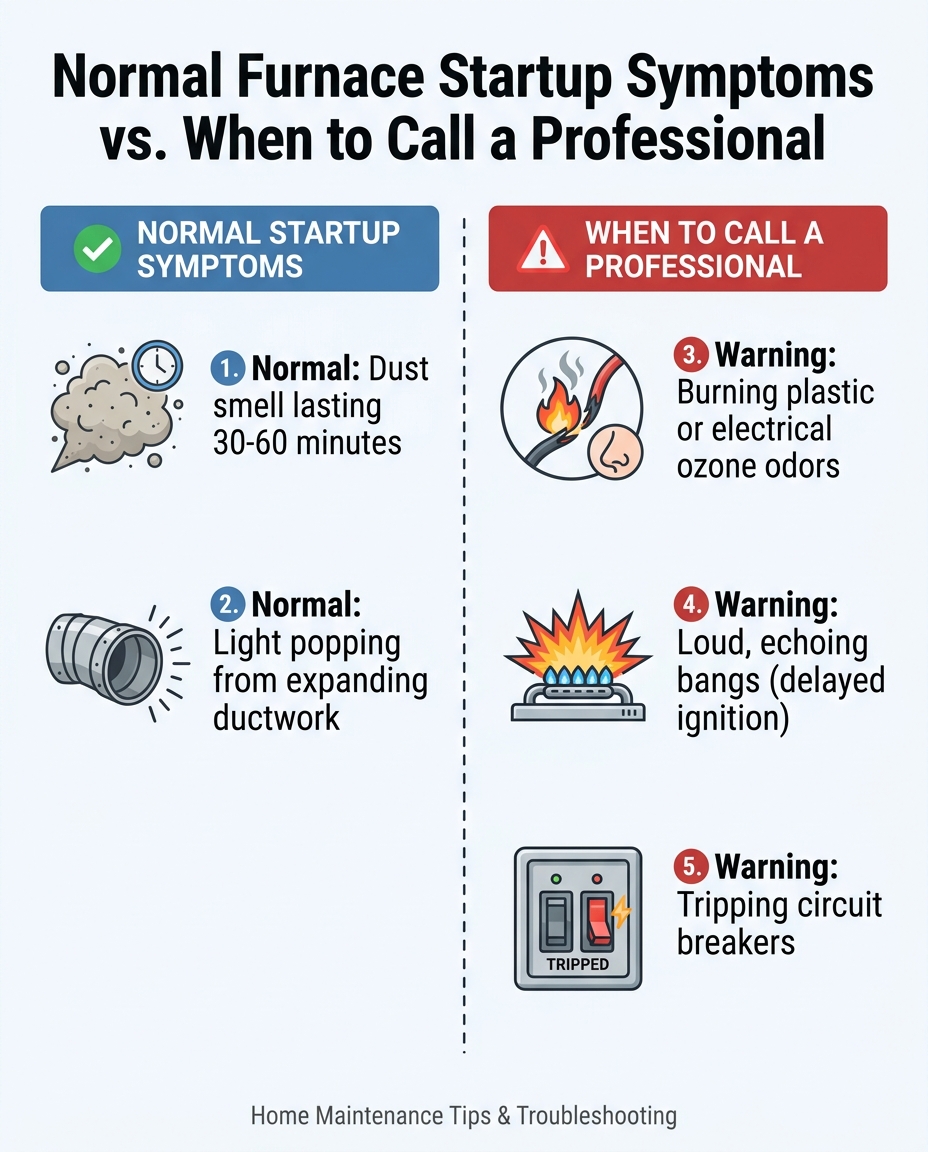
Dust accumulation on the heat exchanger is the primary cause of harmless burning odors during the first seasonal startup. When the thermostat calls for heat, the gas burners ignite, rapidly heating the metal heat exchanger to hundreds of degrees. Any organic material resting on that metal is instantly burned away. The resulting smell is often described as a dusty, slightly smoky odor that quickly travels through the supply vents and into your living spaces.
According to residential heating guidelines, normal dust burn-off odors typically dissipate within 30 to 60 minutes of continuous operation. During a mid-fall heating startup, this is a perfectly standard timeframe. To manage this brief period effectively, follow these straightforward steps to clear the air and monitor the system's performance:
1. Open nearby windows: Provide cross-ventilation to help the initial wave of dusty air escape your home quickly.
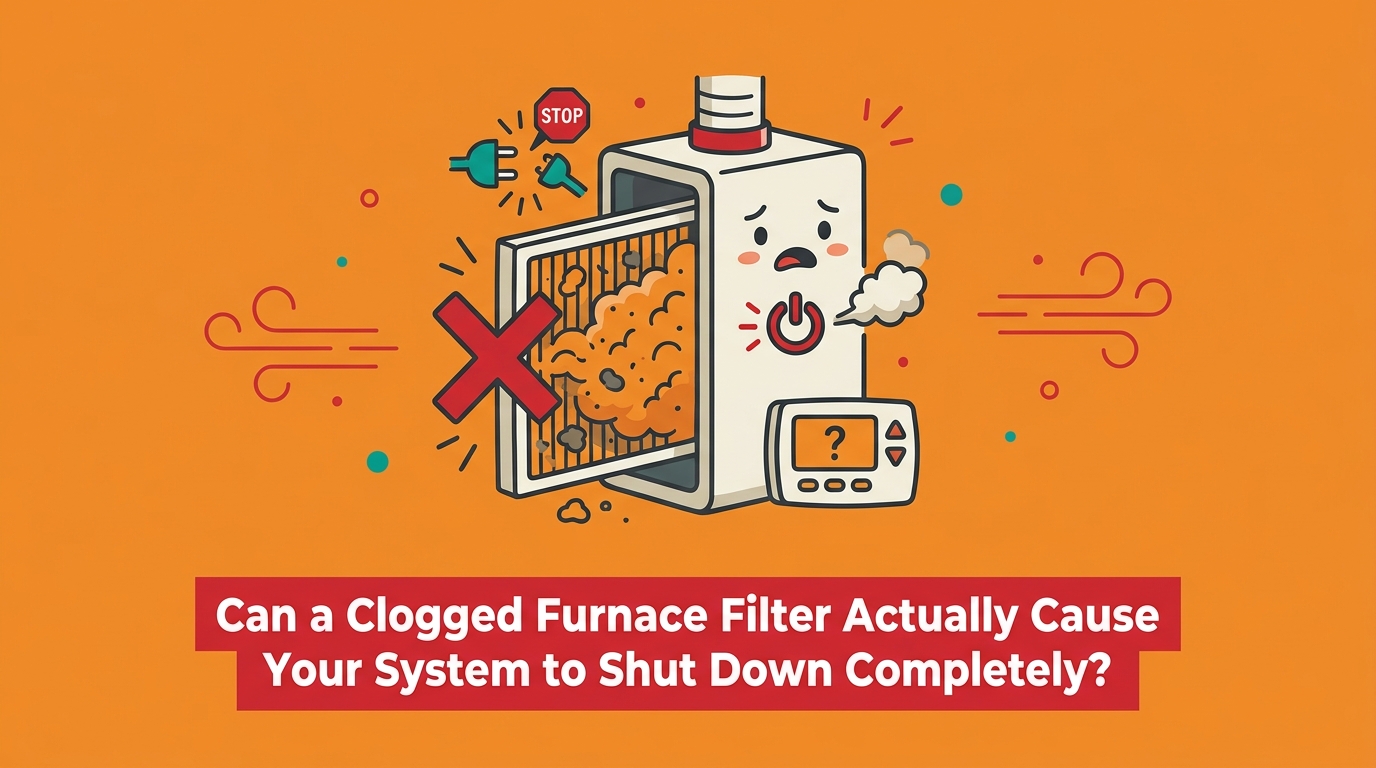
2. Check the air filter: Ensure you have installed a clean, high-quality filter before turning on the heat. A clogged filter restricts airflow, which can trap odors in the system and cause the unit to overheat prematurely.
3. Run a continuous cycle: Allow the furnace to run a full, uninterrupted heating cycle so the heat exchanger reaches its maximum temperature and burns off all remaining debris.
4. Monitor the clock: Note the exact time the system turned on. If the smell persists well beyond the 60-minute mark, turn the thermostat off immediately.
Ensuring proper ventilation and checking the air filter can help clear the indoor air more quickly, making the process much more comfortable for your family. However, if the smell persists beyond this window, it transitions from a normal symptom to a potential hazard that requires expert attention.
When Dust Odors Become a Warning Sign
While a dusty smell is expected, certain odors are never part of a normal mid-fall heating startup. If you notice any of the following warning signs, shut down the system at the thermostat right away:
• Chemical or plastic smells: Odors that smell like melting plastic or electrical ozone indicate wire insulation or internal components are overheating.
• Visible smoke: Smells accompanied by visible smoke or dark soot coming from the vents point to a serious combustion issue.
• Alarm activation: Any odor or startup sequence that triggers your carbon monoxide detectors is a severe emergency requiring immediate evacuation and professional help.

Decoding Furnace Noises: Harmless Pops vs. Hazardous Bangs
Just as odors can be alarming, the sounds a heating system makes during its first autumn cycle often cause concern. A harmless pop is usually just ductwork expanding as it suddenly fills with hot air. In homes throughout Bridgeville PA, ductwork is often routed through unconditioned spaces like attics or crawlspaces. When 120-degree air hits cold, thin sheet metal, the metal expands rapidly, creating a distinct ticking or popping noise. This thermal expansion is completely normal and poses no threat to your equipment.
On the other hand, a loud, echoing bang upon startup can indicate delayed ignition. In a properly functioning furnace, the gas valve opens and the burners ignite instantly. However, if the burners are dirty, rusted, or misaligned from months of inactivity, the gas may not ignite right away. Instead, gas builds up inside the combustion chamber. When the flame finally catches, it ignites a larger volume of gas all at once, creating a small, contained explosion that sounds like a loud boom or bang.
Delayed ignition is a severe safety risk that requires immediate professional intervention. Over time, the force of these small explosions can crack the heat exchanger, creating a direct path for carbon monoxide to enter your home's air supply. Homeowners should never attempt DIY inspections of the burner assembly to investigate these noises. Accessing the combustion chamber requires specialized tools and training. If you hear a booming sound when the heat kicks on, shut the system down and schedule professional HVAC repair to address the underlying gas and ignition faults safely.
Electrical and Blower Motor Warning Signs
Beyond combustion issues, the electrical components of your heating system also face significant stress during a mid-fall heating startup. The blower motor, which is responsible for pushing warm air through your home, relies on electrical capacitors and clean bearings to function smoothly. When these components begin to fail, they give off distinct auditory and olfactory warning signs that should never be ignored.
A humming or buzzing noise often points to a struggling blower motor or a failing capacitor. If the motor tries to start but lacks the electrical boost from the capacitor, it will sit in place and vibrate, creating a loud hum. This draws excessive electrical current and generates intense heat, which can quickly melt wire insulation and produce an electrical ozone smell.
To keep your home safe, watch for these specific electrical warning signs during the first few weeks of the heating season:
• Tripping circuit breakers: Electrical faults in a heating system can trip circuit breakers, similar to summer AC issues. If the furnace breaker trips immediately upon startup, there is a direct short that needs professional testing.
• Repeated resets: Repeatedly resetting a tripped breaker without addressing the root cause is a significant fire hazard. The breaker is a safety device designed to protect your home's wiring from melting.
• Flickering lights: If the lights in your home dim significantly or flicker every time the blower motor engages, the motor is drawing too much amperage and may be nearing the end of its lifespan.
• Squealing noises: A high-pitched squeal usually indicates a worn-out blower motor belt or dry bearings that lack proper lubrication.
Only a licensed professional should access and test internal electrical components. Attempting to bypass a safety switch or replace a high-voltage capacitor without proper training can result in severe injury or further damage to the system.
The Value of Precise Diagnostics for Fall Maintenance
Thorough pre-winter inspections catch minor electrical and mechanical issues before they cause system failures during freezing temperatures. When a highly trained technician evaluates your equipment, they look far beyond the basic air filter. They measure the electrical draw of the blower motor, inspect the heat exchanger for hairline cracks, and test the gas pressure to ensure the burners are firing safely and efficiently.
Accurate diagnostics prevent homeowners from replacing expensive parts unnecessarily due to a simple startup noise. Sureway Heating Cooling Plumbing offers precise, comprehensive HVAC diagnostic services to accurately pinpoint electrical versus mechanical failures. By relying on factual data rather than guesswork, professionals can determine whether a loud noise is simply a loose duct bracket or a dangerous delayed ignition issue. This level of detail protects your investment and ensures your equipment operates exactly as the manufacturer intended.
Consider the experience of a local homeowner who recently needed a comprehensive system upgrade, requiring both a new furnace and condenser. Because the equipment would be tested through the extreme demands of both winter heating and summer cooling, the technician reviewed the entire HVAC system holistically. They explored multiple solutions and educated the customer on proper operation. The outcome was a perfectly balanced system that provided consistent temperatures while saving money on utility bills.
A comprehensive review of the entire HVAC system ensures optimal efficiency and utility bill savings throughout the winter. Professional routine HVAC maintenance extends the lifespan of the equipment while prioritizing household safety, giving you confidence that your home is prepared for whatever the Bridgeville PA winter brings.
Frequently Asked Questions About Fall Heating Startups
How long should a furnace smell when first turned on?
A normal burning dust smell should dissipate within 30 to 60 minutes of continuous operation. When you initiate a mid-fall heating startup, the system needs a full cycle to incinerate the dust that has settled on the heat exchanger over the summer. If the odor continues past an hour, it is time to turn the unit off and investigate further. Lingering smells indicate that something other than surface dust is burning.
Is it safe to run my furnace if it smells like burning?
It is generally safe to run the system if the odor is a brief, dusty smell during the first use of the season. This is a standard part of the transition into fall. However, it is unsafe to continue running the equipment if it smells like melting plastic, electrical ozone, or if the smell is accompanied by visible smoke. In those instances, shut the system down immediately to prevent further damage or safety risks.
Why is my furnace making a loud banging noise on startup?
A loud banging noise can be caused by either harmless ductwork expansion or hazardous delayed ignition. As hot air rushes into cold metal ducts, the sudden temperature change causes the metal to expand and pop. Conversely, if the noise sounds like a localized boom from the furnace cabinet itself, it is likely delayed gas ignition. This is a serious issue that requires a professional to clean and align the burner assembly.
When should I worry about furnace smells?
You should worry when smells are chemical, electrical, accompanied by smoke, or persist after the first complete heating cycle. Standard dust burn-off smells slightly like toasted dirt and fades quickly. Acrid smells, rotten egg odors (indicating a gas leak), or metallic burning scents mean internal components are failing or overheating. Always rely on a trained technician to trace the source of chemical or electrical odors.
Can a dirty filter cause a burning smell?
Yes, a severely clogged filter restricts airflow, causing the internal components of the system to overheat and produce burning odors. The blower motor has to work twice as hard to pull air through a wall of dirt, which can cause the motor itself to overheat and smell like hot metal. Replacing the filter before your first mid-fall heating startup is one of the easiest ways to prevent these unnecessary odors and protect your equipment.
Make the Right Call for Your Comfort and Safety
Distinguishing between normal seasonal startup behaviors and signs of mechanical failure keeps your home safe and comfortable. The first chill in Bridgeville PA shouldn't bring anxiety about whether your heating system is operating correctly. By understanding the typical 30-to-60-minute window for dust burn-off and recognizing the warning signs of electrical or combustion issues, you can confidently manage that first transition from cooling to heating.
If a burning smell lingers, loud banging noises persist, or your breakers begin to trip, scheduling a professional inspection is the right next step. Trusting local experts ensures your system is evaluated safely and accurately, providing clear, non-alarmist criteria for your home's unique needs. Taking proactive steps today guarantees your equipment is fully prepared for the long winter months ahead.



.svg)
.avif)


