How to Choose the Right Water Heater for Your Home: In-Depth Guide
Learn how to choose the right water heater for your home with expert tips on types, sizing, efficiency, and installation.
Why Choosing the Right Water Heater for Your Home Matters More Than You Think
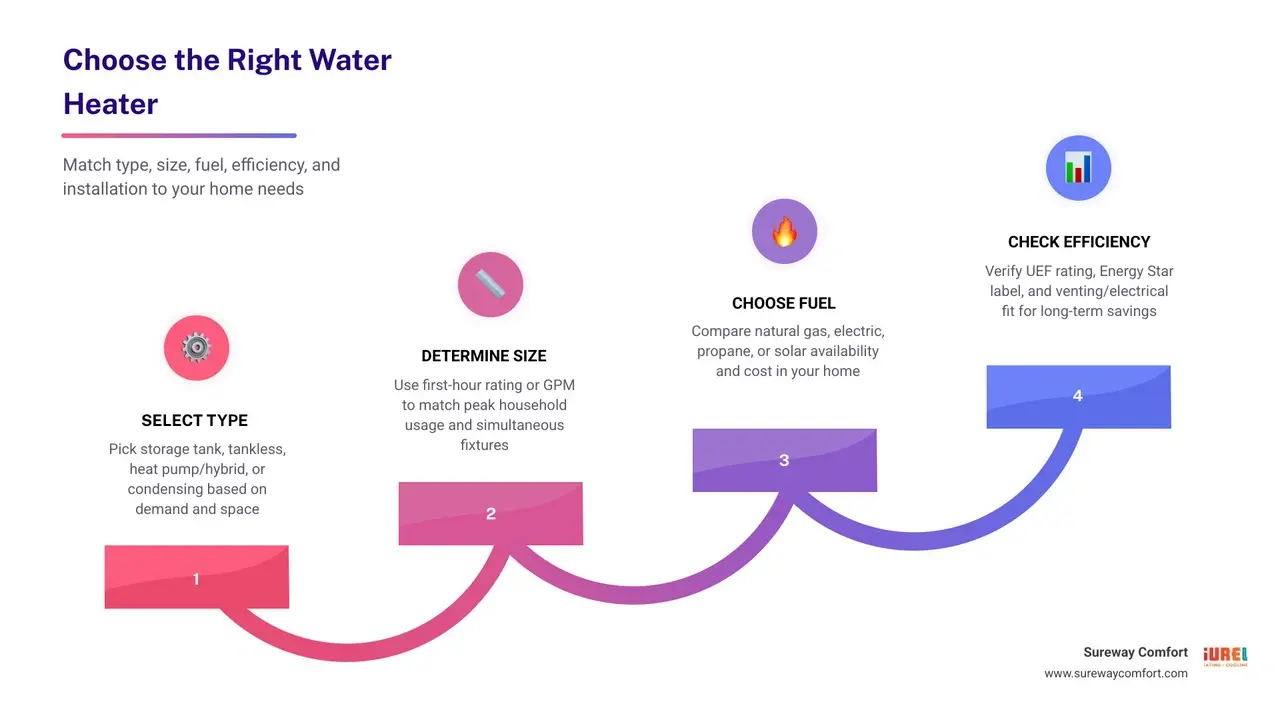
How to choose the right water heater for your home comes down to five key factors:
- Type - Storage tank, tankless, heat pump/hybrid, solar, or condensing
- Size - Matched to your household's peak hot water demand (First-Hour Rating for tanks, GPM for tankless)
- Fuel source - Natural gas, electric, propane, or solar, based on what's available in your home
- Efficiency - Look for the Uniform Energy Factor (UEF) and Energy Star certification on the EnergyGuide label
- Installation fit - Space, venting, and electrical requirements for your specific home
Most homeowners don't think about their water heater until they're standing in a cold shower or mopping up a leak. By then, the pressure to make a fast decision can lead to a choice that costs you money for years. Water heating accounts for roughly 18% of your home's total energy use — making it the second-largest energy expense in most households. That means the unit you pick has a real, lasting impact on your monthly bills and your daily comfort.
To help you navigate this decision, we have compiled our best tips and tricks for selecting, sizing, and maintaining your system. By applying these practical strategies, you can maximize your energy savings and ensure your household never runs out of hot water.
This guide walks you through everything you need to know to make a confident, well-informed decision — from comparing system types and sizing your unit correctly, to understanding fuel costs, efficiency ratings, and when it makes sense to repair versus replace.
Discover more about how to choose the right water heater for your home:
How to Choose the Right Water Heater for Your Home: Comparing System Types
Every home has unique hot water demands, layout constraints, and utility access. Selecting the right design begins with understanding the core technologies on the market today. Each type handles water heating differently, impacting how much hot water you have on tap, how much space the unit occupies, and how much energy it consumes.
To see how these options stack up side by side, review our comprehensive Different Types of Water Heaters overview and our detailed Tankless vs Tank Water Heater Comparison to weigh your choices.
Storage Tank Water Heaters
Traditional storage tank water heaters remain the most common option in our local neighborhoods, from Bridgeville to Bethel Park. These systems work by keeping a dedicated volume of water—typically 30 to 80 gallons—heated to a set temperature (usually 120°F) inside an insulated tank.
- How They Work: Cold water enters the bottom of the tank, is heated by either a gas burner or electric resistance elements, and waits until you turn on a hot water tap.
- The Standby Heat Loss Factor: Because the tank must keep the water hot 24/7, heat constantly escapes through the tank walls. This is known as standby heat loss. Even when you are sleeping or away on vacation, your water heater is cycling on and off to maintain that temperature.
- Recovery Rate: If your household drains the tank during a heavy-use hour, you have to wait for the system to heat a fresh batch of cold water. Gas storage models recover much faster than electric ones, but there is always a waiting period once the hot water reservoir is depleted.
Tankless On-Demand Systems
If you are tired of running out of hot water during back-to-back morning showers, a tankless system might be the perfect fit. Unlike storage tanks, tankless models do not store hot water. Instead, they heat water instantly as it flows through the unit.
- Space-Saving Design: Tankless units are roughly the size of a suitcase and mount directly to the wall. This frees up valuable floor space in tight basements or utility closets in homes throughout Mt Lebanon and Upper St. Clair.
- Endless Hot Water: When you turn on a hot water tap, a flow sensor activates a gas burner or electric heating element. The water is heated instantly as it passes through a heat exchanger, providing a continuous stream of hot water.
- No Standby Loss: Because there is no storage tank, standby energy loss is completely eliminated, making these units highly efficient.
To learn more about how these units operate in modern homes, check out our Tankless Water Heater Guide 2026.
Heat Pump and Hybrid Models
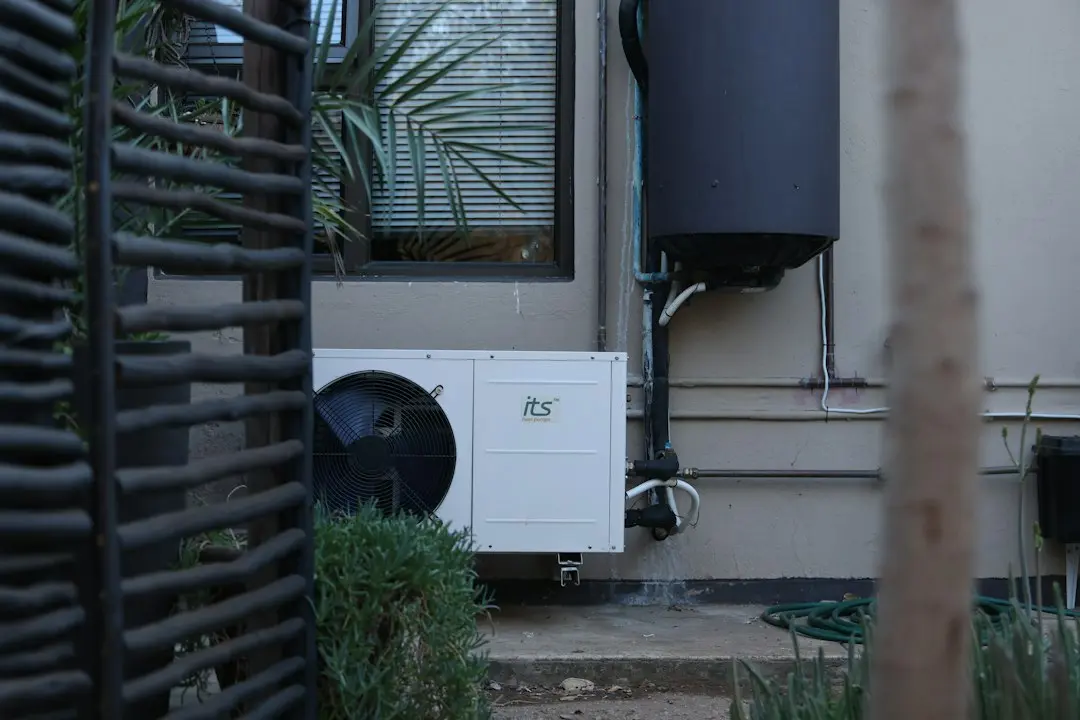
Heat pump water heaters—often called hybrid models—are the efficiency champions of the electric water heating world. Rather than generating heat directly through electric resistance elements, they pull heat from the surrounding air and transfer it into the water.
- How They Work: Think of a hybrid water heater as a refrigerator working in reverse. It utilizes a compressor and refrigerant system to capture ambient heat from the air in your utility room, basement, or garage, and uses that heat to warm the water.
- Hybrid Settings: These units are called "hybrid" because they also feature standard electric backup elements. If hot water demand spikes suddenly, the unit automatically switches to standard electric resistance mode to keep up, then returns to high-efficiency heat pump mode once demand stabilizes.
- Dehumidification and Cooling: As a side benefit, heat pump water heaters naturally dehumidify and slightly cool the air in the space where they are installed. This is incredibly helpful for damp basements in South Fayette and Canonsburg.
Sizing Your System for Peak Household Demand
Sizing a water heater is not about matching the physical dimensions of your old unit; it is about matching your household's peak hot water usage. An undersized unit leads to frustratingly cold showers, while an oversized unit wastes energy. The sizing method you use depends entirely on whether you choose a storage tank or a tankless system.
Sizing Storage Tanks: How to Choose the Right Water Heater for Your Home
For storage tank models, physical tank capacity (in gallons) is only part of the story. The critical metric to look for is the First-Hour Rating (FHR), which can be found in the top-left corner of the unit's yellow EnergyGuide label.
The FHR is the number of gallons of hot water the heater can reliably deliver in a single hour, starting with a fully heated tank. It combines the storage capacity with how quickly the heating elements can warm up incoming cold water (the recovery rate).
To calculate your household's peak hour demand, use this step-by-step process:
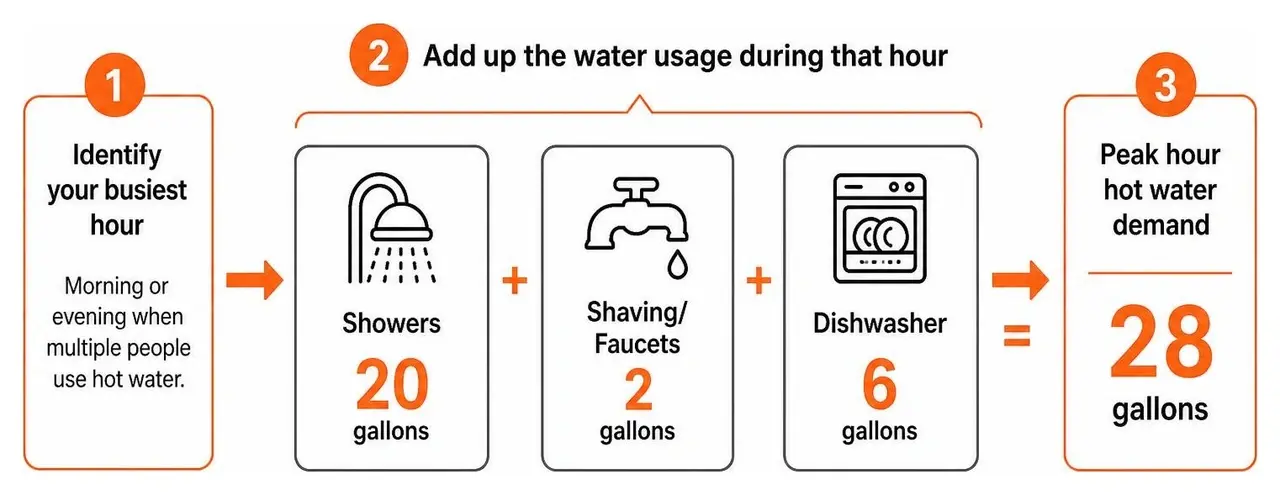
- Identify your busiest hour: For most families, this is in the morning when multiple people shower, or in the evening when the dishwasher and washing machine run.
- Add up the water usage:
- Shower: 20 gallons
- Shaving/Faucets: 2 gallons
- Dishwasher: 6 gallons
- Washing machine: 15 to 25 gallons (depending on whether it is a front-loader or older top-loader)
- Match to FHR: If your family uses a shower (20 gallons), runs the dishwasher (6 gallons), and starts a load of laundry (20 gallons) within the same hour, your peak demand is 46 gallons. You will need a water heater with an FHR of at least 46 gallons.
As a general rule of thumb for standard electric storage tanks:
- 1 to 2 people: 30-gallon tank
- 2 to 3 people: 40-gallon tank
- 3 to 4 people: 50-gallon tank
- 5 or more people: 80-gallon tank (or a hybrid heat pump)
Sizing Tankless Units: How to Choose the Right Water Heater for Your Home
Tankless water heaters are sized by Gallons Per Minute (GPM) capacity and the required temperature rise. Because they do not store water, they must be able to heat incoming cold water to your desired temperature instantly at peak flow.
To size a tankless unit, calculate your simultaneous flow rate:
- List simultaneous fixtures: Determine which hot water fixtures might run at the exact same time. For example, a shower and a kitchen faucet running simultaneously.
- Add their flow rates (GPM):
- Standard showerhead: 2.0 GPM
- Low-flow showerhead: 1.5 GPM
- Kitchen faucet: 1.5 GPM
- Bathroom faucet: 0.5 to 1.0 GPM
- Dishwasher: 1.0 to 1.5 GPM
- Calculate total GPM: If you want to be able to run a shower (2.0 GPM) and the kitchen sink (1.5 GPM) at the same time, your tankless unit must support a minimum of 3.5 GPM.
Next, you must account for temperature rise. This is the difference between the temperature of the cold groundwater entering your home and your desired hot water output (typically 120°F). In Southwestern Pennsylvania, winter groundwater temperatures can drop to around 40°F to 45°F. To reach 120°F, your tankless water heater must achieve a temperature rise of 75°F to 80°F.
Always check the manufacturer's specifications to ensure the tankless unit can maintain your required GPM flow rate at a high temperature rise. Gas tankless units generally provide a much higher GPM capacity in cold climates than electric tankless units.
Evaluating Fuel Sources and Efficiency Metrics
The fuel source available in your home dictates your operating costs, installation path, and overall system efficiency. In our local service areas like McDonald, Carnegie, and Green Tree, homeowners typically choose between electricity, natural gas, and propane.
| Fuel Type | Typical Efficiency Metric (UEF) | Recovery Rate | Key Advantages | Considerations |
|---|---|---|---|---|
| Electricity (Standard) | 0.90 to 0.95 | Slow | Low installation complexity; no venting required | Higher monthly operating costs |
| Electricity (Heat Pump) | 3.30 to 4.10 | Moderate | Extremely low operating costs; dehumidifies | Requires larger space and condensate drain |
| Natural Gas | 0.60 to 0.90 (Tank) / up to 0.98 (Tankless) | Fast | Quick recovery; lower operating costs | Requires venting and gas lines |
| Propane | 0.60 to 0.90 (Tank) / up to 0.98 (Tankless) | Fast | Great for rural areas without gas lines | Requires fuel delivery and tank storage |
When comparing models, pay close attention to these key efficiency indicators:
- Uniform Energy Factor (UEF): This is the official industry standard metric used to measure water heater efficiency. A higher UEF means the unit is more efficient at converting fuel into hot water.
- Energy Star Certification: Look for the Energy Star logo. Certified heat pump models and high-efficiency gas units meet strict EPA guidelines to deliver significant savings on your utility bills.
- EnergyGuide Labels: These bright yellow labels provide an estimate of the unit's annual energy consumption and compare its efficiency to similar models.
Installation Requirements and Home Infrastructure
Before purchasing a new water heater, you must evaluate your home's physical layout and utility infrastructure. Upgrading to a different type of water heater often requires structural or utility adjustments.
- Venting Requirements: If you are installing a gas-fired water heater, proper venting is critical to safely exhaust combustion gases like carbon monoxide out of your home. Traditional units use atmospheric venting through a chimney. High-efficiency condensing units and tankless systems typically require direct venting or power venting, which uses plastic PVC pipes routed through an exterior wall.
- Electrical Panel Capacity: Upgrading from gas to electric—or installing an electric tankless water heater—can place a massive load on your electrical system. Electric tankless heaters draw high amperage and may require upgrading your home's electrical panel from 100 amps to 200 amps or more.
- Space and Ventilation Constraints: Heat pump (hybrid) water heaters require at least 1,000 cubic feet of surrounding air space (roughly a 10' x 10' x 10' room) to draw enough heat from the air. If installed in a tight closet, louvered doors must be added to ensure proper airflow.
- Condensate Drainage: Both hybrid heat pump water heaters and high-efficiency condensing gas systems produce condensation during operation. You must have a nearby floor drain, laundry tub, or condensate pump to safely route this water away.
To explore how these installation factors impact the long-term value of your investment, read our analysis on Tankless Water Heater Cost vs Value Long Term.
When to Repair vs. Replace Your Current Unit
If your water heater is acting up, you might wonder whether a quick repair will buy you a few more years or if you should go ahead and invest in a replacement.
Consider these critical warning signs:
- Unit Age: Traditional storage tanks typically last 8 to 12 years. If your tank is past its 10th birthday, replacing it proactively is often the smartest move to avoid a sudden, messy failure.
- Storage Tank Leaks: If you notice water pooling around the base of your tank, the inner steel lining has likely corroded and cracked. This is a non-repairable failure that requires immediate replacement.
- Rusty Water: Rusty or discolored hot water indicates that either your water heater's interior is rusting or your sacrificial anode rod has completely degraded.
- Strange Noises: Loud popping, rumbling, or banging noises coming from your tank are caused by sediment buildup. Over time, mineral scale hardens at the bottom of the tank, trapping water beneath it that boils and pops. This sediment acts as a barrier, causing the tank to overheat and eventually crack.
- Water Quality Impacts: Hard municipal or well water in Southwestern PA accelerates mineral buildup and corrosion. Understanding how local water chemistry affects your system can help you make a better long-term choice.
For a deeper dive into diagnosing your system, check out our guides on:
- When Should You Replace Your Water Heater
- How Long Does a Water Heater Last
- Signs Your Water Heater Is Reaching End of Life
- How Water Quality Affects Water Heater Lifespan
Frequently Asked Questions about Water Heaters
How long does a typical water heater last?
A traditional storage tank water heater lasts between 8 and 12 years. Heat pump hybrid models share a similar lifespan of about 10 to 15 years. Tankless water heaters are highly durable and can last 20 years or more, primarily because they do not store water (preventing tank corrosion) and feature easily replaceable components.
What maintenance does a water heater require?
To keep your water heater running efficiently and extend its lifespan, we recommend performing these key maintenance tasks:
- Annual Flushing: Drain and flush your storage tank once a year to remove accumulated sediment. Tankless units should be descaled annually with a vinegar solution to clear mineral buildup from the heat exchanger.
- Anode Rod Inspection: Check the sacrificial anode rod every 3 years and replace it if it is heavily corroded or worn down to the wire.
- T&P Valve Testing: Test the Temperature and Pressure relief valve annually by lifting the lever to ensure it releases water and seals properly.
Keep your system in peak condition by following our handy Water Heater Maintenance Checklist for Homeowners.
Can a mixing valve increase my hot water capacity?
Yes! A thermostatic mixing valve allows you to set your water heater's internal temperature higher (up to 140°F) to kill bacteria and store more thermal energy. The mixing valve then blends cold water with the hot water at the outlet to deliver a safe, consistent 120°F to your faucets. This process effectively increases your usable hot water capacity without requiring a physically larger tank, while providing excellent anti-scald protection.
Conclusion
Choosing the right water heater is a major decision that keeps your home comfortable and your utility bills manageable. Whether you are leaning toward a highly efficient hybrid heat pump, a space-saving tankless system, or a reliable traditional storage tank, the team at Sureway Comfort is here to guide you every step of the way.
We serve homeowners throughout Bridgeville, McDonald, Mt Lebanon, Bethel Park, Canonsburg, Collier, South Fayette, Upper St. Clair, Carnegie, Green Tree, Scott Township, Brookline, and Oakdale. Our experienced plumbing technicians provide streamlined, professional installations, honest diagnostics, and tailored maintenance plans to ensure your family never has to worry about cold showers.
Don't wait for a leak or a cold shower to make your decision. Schedule professional water heater services in Bridgeville with Sureway Comfort today, and let us help you find the perfect water heating solution for your home!
Need Service?
Family owned · once & done · 24/7 emergency service across the South Hills of Pittsburgh.
(412) 643-4118 Schedule ServiceMore Services
Ready to Do It Right With Sureway?
Request a quote, schedule HVAC service, or ask about HVAC and plumbing project financing across the South Hills of Pittsburgh.