


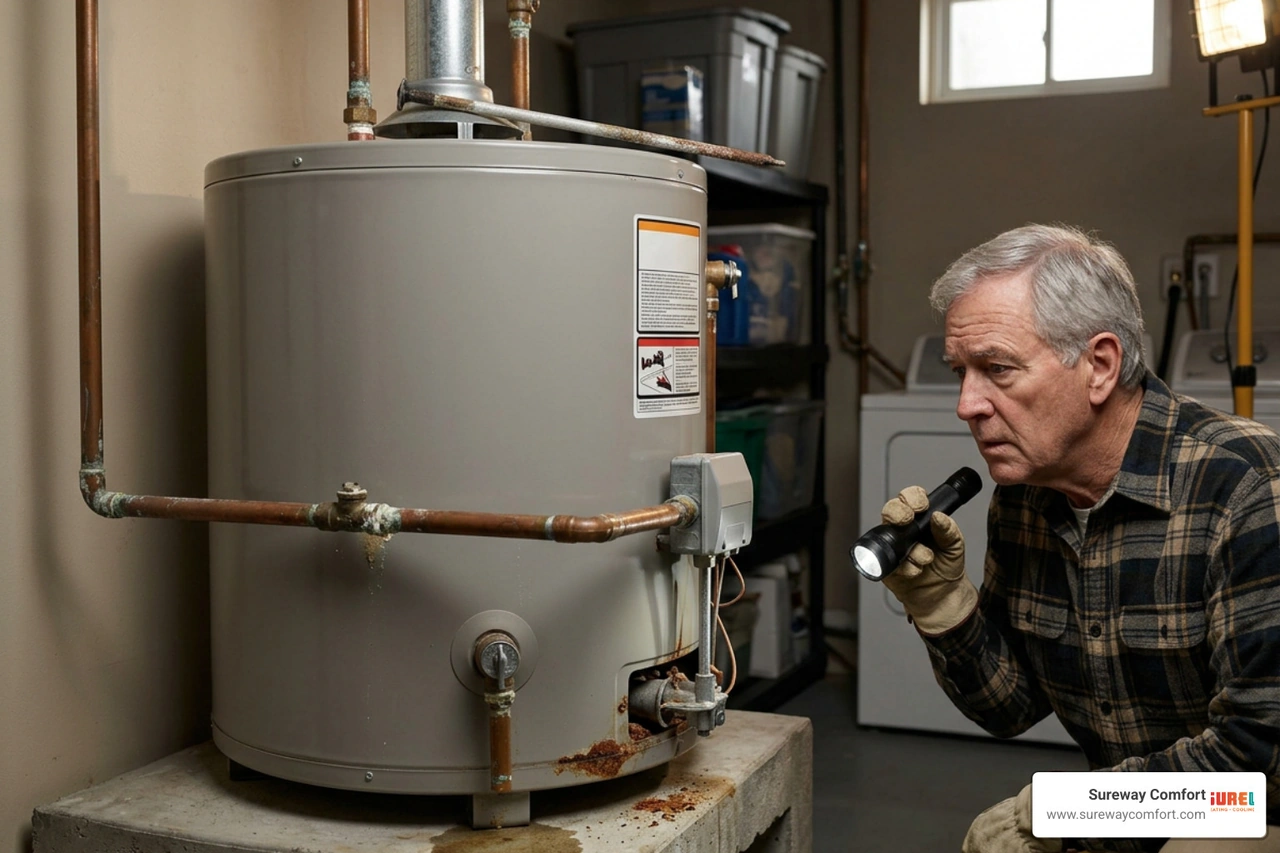
Pro Tips & Tricks: Recognizing the Signs Your Water Heater Is Reaching End of Life Before a Costly Emergency
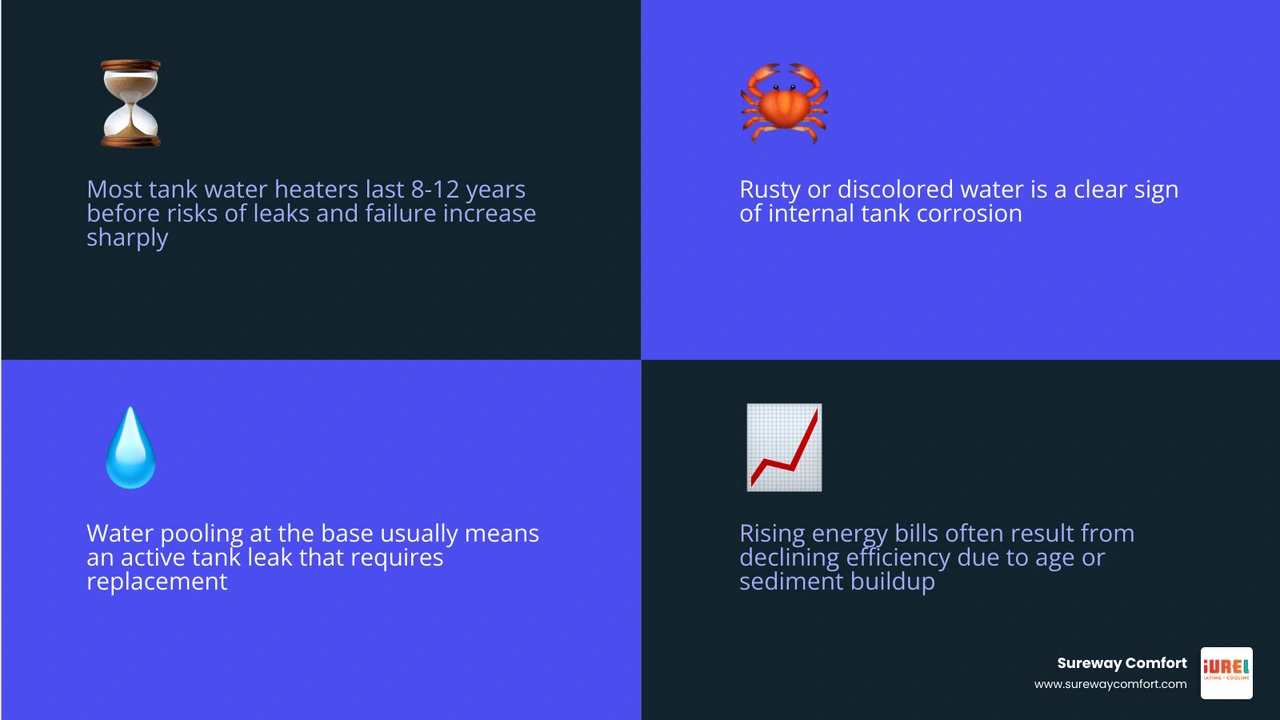
Here are the most common signs your water heater is nearing the end of its life:
• Unit is 10+ years old — What It Means: Approaching or past typical lifespan
• Rusty or discolored hot water — What It Means: Internal tank corrosion
• Rumbling or popping noises — What It Means: Sediment buildup at the tank bottom
• Water pooling around the base — What It Means: Active tank leak — likely needs replacement
• Lukewarm or inconsistent hot water — What It Means: Failing heating element or thermostat
• Rising energy bills — What It Means: Declining efficiency from age or sediment
• Frequent repairs — What It Means: Unit is no longer cost-effective to maintain
Most water heaters don't fail overnight. They send signals for months — sometimes years — before the tank finally gives out. In this guide, we’ll share practical tips and simple tricks to help you diagnose your water heater's health like a pro. By recognizing these warning signs early, you can avoid a flooded utility room, cold morning showers, and unplanned emergency calls.
For homeowners in Bridgeville, PA, staying ahead of water heater problems is one of the smartest things you can do to protect your home and your comfort. The average tank water heater lasts 8 to 12 years. After that, the risk of leaks, corrosion, and sudden failure rises significantly. Knowing what to watch for — and when to act — makes all the difference.
Signs your water heater is reaching end of life terms explained:
• how long does a water heater last
• how water quality affects water heater lifespan
• when should you replace your water heater
Understanding Water Heater Lifespans by Type
When you are trying to figure out if your hot water system is on its last legs, the very first thing to look at is the calendar. Every appliance in your home has a natural expiration date, and water heaters are no exception. Depending on the design, fuel source, and how well it has been maintained, your system's expected timeline can vary quite a bit.
To put things in perspective, let's look at how long different systems typically keep running. If you are curious about the technical differences between these setups before diving into their lifespans, checking out our guide on the Different Types of Water Heaters is a great place to start.
Tank vs. Tankless Lifespan
Traditional storage tank water heaters are the most common systems found in our local service areas like Bethel Park, Mt Lebanon, and Upper St. Clair. These systems work by keeping a large volume of water—typically 40 to 60 gallons—consistently heated so it is ready whenever you turn on a tap. Because they are constantly holding water and cycling on and off to maintain its temperature, the steel tank is under continuous thermal and physical stress. As a result, standard tank units generally have a shorter operational life.
Tankless systems, on the other hand, only heat water on demand. When you turn on a hot water faucet, cold water flows through a heat exchanger where a powerful gas burner or electric element heats it instantly. Because they do not store water and are not subjected to the constant pressure of holding dozens of gallons of hot water, they suffer far less structural wear and tear.
• Standard Gas Storage Tank — Average Lifespan Range: 8 to 12 Years — Recommended Replacement Planning Year: Year 10
• Standard Electric Storage Tank — Average Lifespan Range: 10 to 15 Years — Recommended Replacement Planning Year: Year 12
• Heat Pump / Hybrid Tank — Average Lifespan Range: 10 to 15 Years — Recommended Replacement Planning Year: Year 12
• Tankless Water Heater — Average Lifespan Range: 20+ Years — Recommended Replacement Planning Year: Year 18
As you can see, choosing between these technologies has a major impact on how long your system will last. To explore this decision further, you can read our detailed Tankless vs Tank Water Heater Comparison or learn more about the financial and operational benefits in our article on Tankless Water Heater Cost vs Value Long-Term.
Key Signs Your Water Heater Is Reaching End of Life
While age is a fantastic baseline, water heaters rarely go out quietly without dropping a few hints first. If you know what to look, listen, and smell for, you can easily spot a failing system before it turns into a major plumbing headache. Let's look at the primary warning signs and some handy tricks to diagnose them.
Age: The Most Common Signs Your Water Heater Is Reaching End of Life
Since we are currently in June 2026, any traditional storage tank water heater installed in or before 2016 has officially reached or surpassed its ten-year milestone. If your system is this old, it is living on borrowed time, even if it seems to be working perfectly fine right now.
💡 Trick #1: Deciphering the Serial Number Code
Most homeowners do not keep the original paper receipts from a decade ago. Fortunately, you can easily find the manufacture date printed right on the unit itself.
Every water heater has a metal or sticker data plate on the side of the tank containing its model and serial number. Manufacturers use a specific code within the serial number to represent the month and year of production. For most common brands, the code works like this:
• The first letter represents the month (A = January, B = February, C = March, and so on).
• The next two numbers represent the year of manufacture (for example, "15" means 2015, and "16" means 2016).
If you look at your serial number and see something like "F16XXXXXXX," your unit was manufactured in June 2016. If your system is approaching or past this age, we highly recommend planning a proactive upgrade rather than waiting for a catastrophic leak to force your hand.
Physical Damage: Structural Signs Your Water Heater Is Reaching End of Life
Your water heater is made of steel, which naturally wants to rust when exposed to water and oxygen. To prevent this, manufacturers line the inside of the tank with a glass or ceramic coating and install a sacrificial anode rod to attract corrosive elements. Over time, however, this protective lining inevitably cracks, and the anode rod completely dissolves. Once that happens, the water begins eating away at the raw steel tank.
One of the most obvious signs of this internal destruction is rusty, discolored hot water coming out of your faucets.
💡 Trick #2: The Two-Glass Rust Test
If you turn on your bathtub faucet and notice a brown, red, or yellowish tint, run this simple test to make sure the rust is actually coming from your water heater and not your home's main water pipes:
1. Fill a clear glass with cold water from a sink and look at it.
2. Fill another glass with hot water from the same sink.
3. If only the hot water is discolored, the rust is localized inside your water heater tank, meaning the metal is corroding from the inside out.
Once a steel tank begins to rust through, the metal thins and weakens. Under the constant pressure of your home's plumbing system, these weak spots will eventually turn into active leaks. If you notice water pooling around the base of your water heater, do not ignore it. While a loose valve or fitting can sometimes be tightened, water seeping directly from the bottom seams of the tank body is a clear sign of structural failure.
Inconsistent Temperatures and Performance Issues
Have you noticed that your morning showers are turning lukewarm much faster than they used to? Or perhaps the water takes hours to heat back up after someone runs the dishwasher? These performance drops are classic signs that your water heater is struggling to keep up.
In electric water heaters, inconsistent temperatures usually point to a failed upper or lower heating element. In gas units, it often means the burner is struggling to heat the water through a thick layer of sediment at the bottom of the tank. As the system ages, its overall "recovery rate"—the speed at which it can heat a fresh batch of cold water—declines. When your household's daily hot water demand begins to outpace your system's ability to produce it, replacement is usually the most reliable solution.
Strange Noises and Sediment Buildup
A healthy water heater should operate almost silently. If your basement or utility closet sounds like a boiling tea kettle, or if you hear loud popping, rumbling, or banging noises whenever the system runs, you have a severe sediment problem.
Over years of service, dissolved minerals in our local Pennsylvania water supply settle out and form a thick layer of sandy debris at the bottom of the tank. When the gas burner or electric heating element fires up, it has to heat this thick layer of sediment before it can heat the water above it.
As the water trapped beneath the sediment layer begins to boil, it turns into steam. These steam bubbles pocket, expand, and violently burst through the crust of sediment, creating the loud popping and rumbling sounds you hear. Not only are these noises annoying, but they also indicate that your system is undergoing massive thermal stress that can warp the metal tank and lead to cracks.
How Water Quality and Sediment Affect Longevity
To truly understand why water heaters fail, we have to look closely at what is flowing through them. Water quality is the single greatest environmental factor determining how long your system will survive.
The Impact of Hard Water
In many parts of Western Pennsylvania, including McDonald, Canonsburg, and Carnegie, the groundwater contains elevated levels of dissolved calcium and magnesium. This is commonly referred to as "hard water." While hard water is perfectly safe to drink, it is incredibly tough on household appliances.
When hard water is heated, the dissolved minerals crystallize and form a rock-hard scale. This scale clings to the copper heating elements in electric water heaters and coats the heat exchangers in tankless systems. As the scale builds up, it acts as an insulator, forcing your system to run longer and hotter to achieve the same water temperature. This extra workload rapidly degrades the internal components and dramatically reduces the unit's overall efficiency.
💡 Pro Tip: The Soap Suds Hardness Test
Want a quick trick to see if you have hard water? Fill a clean plastic bottle halfway with tap water, add a few drops of liquid dish soap, and shake it vigorously. If the water becomes cloudy with very few suds, you likely have hard water. If it creates a thick layer of fluffy bubbles and the water remains clear, your water is relatively soft.
How Sediment Buildup Damages the Tank
Sediment buildup does not just waste energy; it actively destroys steel tanks. When a thick layer of mineral scale settles on the bottom of a gas water heater, it traps intense heat directly against the steel floor.
Over time, this localized overheating causes the steel to expand, contract, and eventually warp. The protective glass lining on the inside of the tank cannot flex with the warped steel, causing it to crack and flake away. Once the raw steel is exposed to the hot, pressurized water, rust takes over, and a major leak is only a matter of time.
To dive deeper into this process, you can read our detailed article on How Sediment Buildup Shortens Your Water Heater Life.
Repair vs. Replacement: Making the Right Choice
When your water heater starts acting up, you do not always have to throw in the towel and buy a brand-new system. Many issues can be resolved with a simple, targeted repair. However, making the wrong call can lead to wasted money on a system that is destined to fail anyway.
To help you make the best decision for your home, we recommend using a simple framework based on the age of the unit, the frequency of repairs, and the nature of the problem.
When to Repair
As a general rule, repairing your water heater is the smartest choice if the unit is relatively young (under 8 years old) and the issue is localized to an easily replaceable part. Common repairable issues include:
• A faulty thermostat: If your water is suddenly scalding hot or completely cold, a professional technician can easily swap out the thermostat.
• A burnt-out heating element: Electric elements are designed to be replaced periodically and are easily swapped during a routine service call.
• A leaking temperature and pressure (T&P) relief valve: This vital safety valve can sometimes weep or fail, but replacing the valve itself is a quick and straightforward fix.
By keeping up with minor repairs and following a regular Water Heater Maintenance Checklist for Homeowners, you can easily maximize your system's lifespan. For more tips on keeping your system running smoothly, check out our guide on How to Extend the Life of Your Water Heater.
When to Replace
Replacement becomes the clear and logical choice when the structural integrity of the tank is compromised or when the system has simply reached the end of its useful life. You should plan to replace your water heater if:
• The steel tank is actively leaking: There is no way to safely patch a cracked or rusted steel tank. Once the tank body leaks, replacement is your only option.
• The unit is over 10 to 12 years old: Even if a repair is technically possible, investing money into an aging tank that is highly susceptible to future failure is rarely a wise investment.
• The system requires constant repairs: If you find yourself calling a plumber more than once or twice a year to keep the hot water flowing, those service calls will quickly add up to the cost of a modern, highly efficient replacement.
Frequently Asked Questions
What is the most common sign of a failing water heater?
The most common early indicator that a water heater is failing is a combination of unusual popping or rumbling noises and a noticeable drop in hot water capacity. These symptoms are almost always caused by heavy sediment accumulation at the bottom of the tank. As the sediment layer thickens, it reduces the amount of space available for hot water and forces the system to work much harder, leading to rapid component wear and eventual tank failure.
Can a leaking water heater be repaired?
It depends entirely on where the leak is originating. If water is dripping from a loose pipe connection at the top of the unit, a worn-out drain valve, or a faulty T&P valve, a technician can easily repair or replace those specific parts. However, if water is pooling at the base of the unit because the internal steel tank has rusted through and cracked, the leak cannot be repaired. In this scenario, the entire water heater must be replaced immediately to prevent a catastrophic tank rupture.
How often should I flush my water heater?
We highly recommend flushing your water heater at least once a year. However, because many areas in Western Pennsylvania have moderate to high water hardness, flushing the tank every six months is often ideal to prevent sediment from hardening into a thick, solid crust. Regular flushing clears out loose mineral deposits, maintains your system's heating efficiency, and protects the tank floor from localized overheating. For localized advice, you can read more about How Often to Flush Your Water Heater in Pennsylvania.
Conclusion
Your home's water heater is a silent workhorse, but it cannot run forever. By keeping a close eye out for the signs your water heater is reaching end of life—such as rusty water, strange popping noises, pooling water, or an age past the ten-year mark—you can take control of your home's comfort and avoid the mess and stress of an emergency plumbing failure.
At Sureway Comfort, we are proud to be your local, trusted neighbors providing reliable plumbing and HVAC services throughout Bridgeville, McDonald, Mt Lebanon, Bethel Park, Carnegie, and the surrounding areas. Our streamlined process, experienced technicians, customizable maintenance plans, and flexible financing options are designed to make keeping your home comfortable completely stress-free.
If you suspect your water heater is on its last legs, don't wait for a flood to make the decision for you. Contact us today to schedule an honest, professional assessment or to explore your options for a modern, high-efficiency upgrade with Sureway Comfort's professional water heater services.



.svg)
.avif)


