

Is Hydro Jetting vs Snaking Which Is Better for Your Drains? Here's the Quick Answer
When it comes to hydro jetting vs snaking, which is better depends on the type of clog you have and the condition of your pipes. Here's the short version:
• Single, first-time clog near a sink or shower — Best Method: Snaking
• Hair or soft debris blockage — Best Method: Snaking
• Older or fragile pipes (clay, cast iron) — Best Method: Snaking
• Recurring clogs in the same drain — Best Method: Hydro Jetting
• Grease buildup in kitchen lines — Best Method: Hydro Jetting
• Tree root intrusion — Best Method: Hydro Jetting
• Multiple slow drains at once — Best Method: Hydro Jetting
• Pre-repair pipe preparation — Best Method: Hydro Jetting
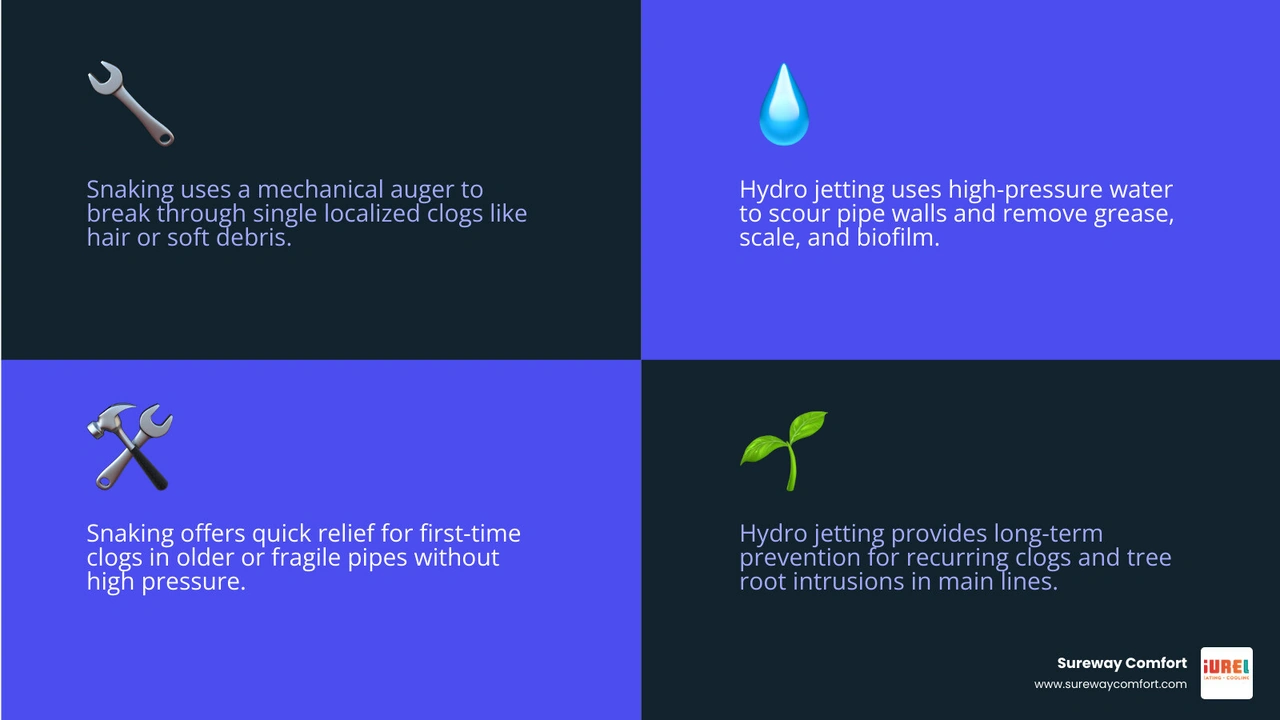
The simple rule: snaking is the right first step for a basic, one-time clog. Hydro jetting is the better long-term fix when the same problem keeps coming back.
One day your kitchen sink drains fine. The next, it's backed up again — just weeks after a plumber snaked it. Sound familiar? That frustrating cycle is one of the most common plumbing complaints homeowners in Bridgeville and surrounding areas face. The reason it happens, and the solution to it, comes down to understanding what each drain cleaning method actually does inside your pipes — and which one your situation truly calls for.
Simple guide to hydro jetting vs snaking which is better terms:
• how hydro jetting removes tree roots from pipes
• hydro jetting benefits for sewer line maintenance
• what is hydro jetting for drain cleaning
Understanding the Core Differences: Hydro Jetting vs Snaking Which Is Better for Your Pipes?
To truly understand which method is right for your home, we have to look at how these two distinct technologies operate. They are not simply two ways of doing the same job; they are entirely different tools designed for different plumbing challenges.
A plumbing snake, also known as a mechanical auger, has been a reliable staple of the plumbing industry since the 1800s. It consists of a flexible, coiled steel cable that is fed directly into the drain. When the cable reaches the blockage, a motor rotates the cable, allowing the tip—which might be a corkscrew, a blade, or a hook—to punch through, break up, or grab the obstruction.
Hydro jetting, on the other hand, is a modern, high-tech approach. It uses a specialized hose connected to a heavy-duty machine that pressurizes water up to 4,000 PSI. This pressurized water is fed through multi-directional nozzles that blast water both forward to clear blockages and backward to propel the hose through the pipe.
The fundamental difference lies in clearing vs. cleaning. A snake clears a path. It is designed to punch a hole through a solid obstruction so that water can flow again. However, it leaves the rest of the pipe walls untouched. Hydro jetting cleans the entire pipe. It scours the internal pipe walls, blasting away years of accumulated grease, soap scum, mineral scale, and biofilm, restoring the pipe to almost its original interior diameter.
For a deeper dive into how these two methods compare across various pipe conditions, you can read our Hydro Jetting vs Drain Snaking Comparison.
To help visualize how these two methods stack up, consider this comparison of their capabilities:
• Primary Action — Drain Snaking (Mechanical Auger): Punching a hole through a localized blockage — Hydro Jetting (High-Pressure Water): Scouring and washing the entire pipe wall
• Best For — Drain Snaking (Mechanical Auger): Hair, soap scum, paper, and physical objects — Hydro Jetting (High-Pressure Water): Grease, sludge, mineral scale, and tree roots
• Pipe Wall Cleaning — Drain Snaking (Mechanical Auger): Minimal; leaves grease and scale intact — Hydro Jetting (High-Pressure Water): Thorough; removes virtually all wall buildup
• Root Handling — Drain Snaking (Mechanical Auger): Cuts a temporary path through roots — Hydro Jetting (High-Pressure Water): Shears roots flush with the pipe walls
• Risk of Damage — Drain Snaking (Mechanical Auger): Low (safe for older, fragile pipes) — Hydro Jetting (High-Pressure Water): Moderate (requires sound pipe structure)
• Results Longevity — Drain Snaking (Mechanical Auger): Short-term (weeks to months) — Hydro Jetting (High-Pressure Water): Long-term (typically 2 to 3 years)
When Is Drain Snaking the Right Choice?
While hydro jetting is incredibly powerful, it is not always the best tool for every job. In fact, there are many situations where traditional drain snaking is the smarter, safer, and more practical choice.
If you are dealing with a simple, localized blockage in a single fixture—such as a hair clog in a shower drain or a toilet obstructed by too much toilet paper—snaking is the ideal solution. It provides fast, targeted relief without the setup and power required for high-pressure water jetting. When you need a Reliable Drain Service for an isolated emergency, snaking is often the first line of defense.
For Simple Clogs, Is Hydro Jetting vs Snaking Which Is Better?
When evaluating hydro jetting vs snaking, which is better for basic, everyday clogs, snaking wins hands down. It is highly effective for localized blockages that occur close to the drain opening.
Think of a bathroom sink that is running slow because of a combination of hair and soap scum. A plumber can insert a small, hand-held or motorized snake, hook the hair ball, and pull it right out. This completely resolves the problem in just a few minutes. Using a hydro jetter for this kind of simple clog would be unnecessary. Understanding these distinctions is a key part of smart home care, as outlined in our guide on Drain Cleaning When and Why It Matters.
Protecting Older and Fragile Pipe Materials
Another critical reason to choose snaking over hydro jetting is the age and material of your plumbing system. Many historical and established neighborhoods throughout our service areas—including Mt Lebanon, Bethel Park, Carnegie, and Brookline—feature homes built in the mid-20th century or earlier.
These older properties often have original drain lines made of:
• Clay pipes: Frequently used for sewer laterals; they are highly susceptible to shifting joints and cracking.
• Cast iron: Durable but prone to thinning walls, internal scaling, and rust over decades of use.
• Orangeburg pipes: Made of coal tar-impregnated wood fiber, these pipes can easily collapse under external soil pressure or internal hydraulic stress.
Because hydro jetting operates at high pressures, applying up to 4,000 PSI of water pressure to a severely corroded cast iron pipe or a fragile clay line can cause the pipe to crack, joint seals to blow out, or a weakened line to collapse entirely. In these delicate systems, the physical, rotating cable of a snake is much gentler. It can navigate the line and clear away the immediate blockage without subjecting the fragile pipe walls to intense pressure.
When Is Hydro Jetting the Superior Long-Term Solution?
While snaking is perfect for minor, localized issues, hydro jetting is the undisputed champion for deep-seated, recurring, or system-wide blockages. If you want a solution that doesn't just poke a hole in the problem but actually prevents it from returning, hydro jetting is the superior choice.
Hydro jetting shines when dealing with thick grease buildup, heavy scale deposits, and invasive tree roots that have compromised your main sewer line. To learn more about how this process works and why it is highly recommended for major sewer issues, read about Hydro Jetting and Its Benefits.
For Severe Blockages, Is Hydro Jetting vs Snaking Which Is Better?
When it comes to severe main sewer line blockages, the question of hydro jetting vs snaking, which is better has a clear answer: hydro jetting is far superior.
The most common culprit behind main sewer line backups in mature neighborhoods like Upper St. Clair, South Fayette, and Canonsburg is tree root intrusion. Thirsty roots from large oaks and maples find tiny cracks or loose joints in sewer pipes and grow inside, creating a dense, fibrous web that traps waste.
If you use a plumbing snake on tree roots, the rotating blade will simply punch a temporary hole through the root mass. The roots remain attached to the pipe walls and will quickly grow back, often within a few months. Hydro jetting, however, uses specialized rotating cutting nozzles. The high-pressure water shears the roots flush with the pipe walls and flushes them completely out of the system, providing a much cleaner and longer-lasting result. You can read more about this specialized process in our article on How Hydro Jetting Removes Tree Roots from Pipes.
Preventing the Quick Return of Clogs
Have you ever wondered why kitchen drains seem to clog repeatedly, even after being professionally snaked? The culprit is a sticky combination of grease, food particles, soap scum, and biofilm that coats the inside of your pipes.
When a snake passes through a grease-choked line, it merely punches a hole through the soft sludge. As soon as the snake is withdrawn, the grease can settle back together, or new debris can immediately stick to the remaining residue.
Hydro jetting acts like a commercial power washer for your plumbing. It strips away the sticky biofilm and restores the full interior diameter of the pipe. This complete cleaning process makes it incredibly difficult for new debris to find a foothold, which is why a jetted pipe typically stays clear for two to three years, whereas a snaked pipe with heavy grease might clog again in weeks. For more on how this keeps your main lines healthy, see Hydro Jetting Benefits for Sewer Line Maintenance.
The Critical Role of a Professional Camera Inspection
Because hydro jetting is so powerful, it should never be performed blindly. A professional camera inspection is an absolute prerequisite before any high-pressure water is introduced into your drain lines.
Using a state-of-the-art, fiber-optic camera attached to a flexible cable, our technicians can view the inside of your sewer line in real-time. This diagnostic step allows us to:
1. Pinpoint the exact location and nature of the blockage (e.g., grease vs. roots).
2. Assess the material and structural integrity of the pipe.
3. Identify any pre-existing cracks, offset joints, sagging sections, or collapsed areas that could be damaged by high pressure.
If the camera reveals that the pipe is structurally sound, we can safely proceed with hydro jetting, matching the pressure and nozzle type to your specific pipe material. If the camera reveals severe deterioration, we will recommend a safer alternative, such as targeted snaking or pipe repair. To understand how we use this technology to protect your home, read our guide on What is Hydro Jetting for Drain Cleaning.
Frequently Asked Questions & Pro Tips About Drain Cleaning
We hear many of the same questions from homeowners in McDonald, Oakdale, Green Tree, and Scott Township when they are trying to decide on the best way to care for their drains. Here are the facts and some handy tricks you need to know.
Pro Tricks and Tips for Preventative Drain Care
Before you even need to choose between snaking and hydro jetting, you can keep your pipes flowing smoothly with these simple, actionable tips:
• The Baking Soda & Vinegar Trick: Once a month, pour half a cup of baking soda down your drain, followed by half a cup of white vinegar. Let it fizz for 15 minutes, then flush with hot water to break up minor grease buildup.
• Use Drain Strainers: Place mesh strainers over all shower and sink drains to catch hair, food particles, and soap chunks before they enter your plumbing.
• Never Pour Grease Down the Sink: Always pour cooking grease into an old can, let it solidify, and throw it in the trash. Grease is the number one cause of severe kitchen clogs.
• Flush with Boiling Water: For metal pipes, pouring a kettle of boiling water down the drain once a week can help melt away accumulated soap scum and oils.
Can hydro jetting damage older or fragile pipes?
Yes, if performed incorrectly or without a prior inspection. High-pressure water at 4,000 PSI can easily crack old clay pipes, blow apart loose joints, or collapse heavily corroded cast iron lines.
However, this risk is entirely manageable. A professional plumber will always perform a camera inspection first. If the pipe is older but structurally sound, we can adjust the pressure to a safer, lower setting (such as 1,500 to 2,000 PSI) and use specialized nozzles designed for delicate lines. If the pipe is too fragile, we will recommend snaking instead. For more on safe, effective pressure cleaning, check out Effective Hydro Jetting Solutions.
Why do clogs return so quickly after snaking?
Clogs return quickly after snaking because a snake only addresses the symptom, not the underlying cause. The mechanical cable punches a temporary path through the blockage but leaves the sticky grease, scale, and biofilm stuck to the pipe walls. This remaining residue acts like a magnet, catching hair, soap, and food particles, which quickly leads to a brand-new blockage. Hydro jetting prevents this by scrubbing the pipe walls completely clean. You can learn more about this in our article on Hydro Jetting Advantages Over Traditional Snaking.
How do homeowners decide which service to request?
As a general rule, consider your plumbing history and symptoms:
• Choose snaking if this is a first-time, isolated clog in a single sink, tub, or toilet, or if you know your home has fragile, historical pipes.
• Choose hydro jetting if you are dealing with recurring clogs in the same drain, multiple slow drains throughout the house (which points to a main sewer line issue), or if a camera inspection reveals heavy grease or tree root intrusion.
Conclusion
Choosing between hydro jetting and snaking doesn't have to be a guessing game. By understanding the age of your pipes, the nature of the blockage, and whether the problem is a one-time nuisance or a recurring headache, you can make the right choice for your home's long-term plumbing health.
At Sureway Comfort, we are proud to serve our neighbors throughout Bridgeville, McDonald, Mt Lebanon, Bethel Park, Canonsburg, Collier, South Fayette, Upper St. Clair, Carnegie, Green Tree, Scott Township, Brookline, and Oakdale. Our experienced team utilizes advanced camera diagnostics to ensure we always use the safest, most effective method for your specific pipes. Whether you need a quick snake clearance or a comprehensive hydro jetting service, we are here to provide reliable, high-quality solutions.
Don't let a stubborn clog disrupt your peace of mind. Contact us today to Schedule Professional Plumbing Services and keep your home's drains flowing smoothly for years to come!





.svg)
.avif)


