


7 Essential Dryer Vent Fire Prevention Tips & Tricks for a Safer Home
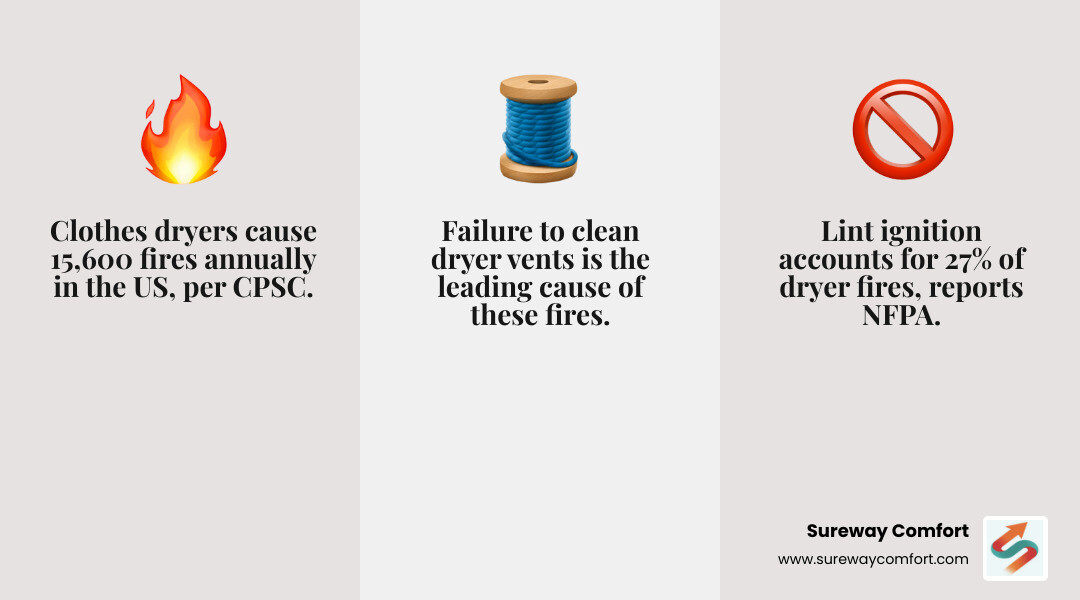
Dryer vent fire prevention tips are something every homeowner needs to know — because according to the U.S. Consumer Product Safety Commission, clothes dryers cause roughly 15,600 fires every year in the United States. The National Fire Protection Association reports that "failure to clean" is the single biggest contributing factor, with lint ignition alone responsible for about 27% of those fires.
Quick answer — the most important dryer vent fire prevention tips:
1. Clean the lint filter after every single load
2. Clean the full dryer vent system at least once a year
3. Use only rigid or semi-rigid metal ducting (never plastic or vinyl)
4. Never run the dryer while you're asleep or away from home
5. Check that the outdoor vent flap opens freely during operation
6. Keep the area around your dryer clear of clutter and flammable materials
7. Have your dryer professionally installed and inspected annually
Most homeowners don't think twice about tossing in a load of laundry. But behind the wall, lint builds up silently in dryer vents — and that buildup is highly flammable. The good news is that dryer fires are almost entirely preventable with a few simple, consistent habits.
Here's everything you need to know to keep your home and family safe.
Understanding the Risks: Why dryer vent fire prevention tips Matter
When we talk about fire safety in the home, we often think about candles or stovetops, but the laundry room is one of the most common places for a fire to start. The primary culprit is lint. Lint is composed of tiny fibers from our clothes, and it is incredibly flammable. While your lint trap catches a good portion of it, a significant amount escapes into the dryer cabinet and the exhaust duct.
According to the NFPA, 27% of dryer fires result from dust, fiber, or lint igniting. When lint builds up in the vent, it restricts airflow. This causes the dryer to work harder and run much hotter than it was designed to. Eventually, the heat can reach a point where the accumulated lint ignites, leading to a fire that can quickly spread through the walls of your home.
Beyond the immediate fire risk, a clogged vent can lead to other serious issues. In gas dryers, a blocked exhaust can cause carbon monoxide to back up into your living space, posing a silent but deadly threat to your family. Property damage from these fires is staggering, with the NFPA estimating over $233 million in annual losses. This is why understanding dryer vent cleaning and maintenance is a vital part of homeownership.
Essential Maintenance Tricks and Tips for a Safer Home
Preventing a disaster doesn't have to be complicated. It’s all about creating a routine that keeps the air flowing freely. At Sureway Comfort, we recommend a "layered" approach to maintenance:
• After Every Load: Clean the lint filter. This is the simplest and most effective way to reduce buildup. If the screen seems "waxy" from dryer sheets, wash it with warm soapy water and a nylon brush occasionally.
• Monthly: Check the outdoor vent hood. Ensure the flaps move freely and aren't blocked by snow, bird nests, or debris.
• Every 6 to 12 Months: Perform a deep clean of the entire duct system. If you have a large family and run the dryer daily, you should lean toward the six-month mark.
• Ongoing: Maintain a 36-inch clearance around the dryer. Don't use the top of the machine as a storage shelf for cleaning chemicals or stacks of paper.
For more resources on keeping your laundry room safe, browse our Category/Dryer Vent archives.
DIY dryer vent fire prevention tips for Cleaning
If you are a handy homeowner in Bridgeville or South Fayette, you can handle some of the basic cleaning yourself. Here is how to do it safely:
1. Disconnect the Power: Always unplug your electric dryer or turn off the gas supply before moving the unit.
2. Pull the Dryer Out: Carefully slide the dryer away from the wall so you can access the back.
3. Vacuum the Chassis: Use a vacuum with a long hose attachment to clean the area behind and under the dryer. Lint often settles in these "hidden" spots.
4. Clean the Duct: Disconnect the duct from the back of the dryer and the wall. Use a specialized dryer vent brush (available at most hardware stores) to reach into the duct and pull out clumps of lint.
5. Check the Flap: Go outside and ensure the vent flap opens easily when the dryer is running. If it's stuck shut, hot air and lint have nowhere to go but back into your dryer.
Professional dryer vent fire prevention tips for Installation
While DIY cleaning is great, the initial installation should always be handled by a pro. Many older homes in our area still use "accordion-style" plastic or foil vents. These are major fire hazards because they sag and have internal ridges that trap lint like a magnet.
Professional installation ensures:
• Rigid Metal Ducting: We use smooth-walled aluminum or steel ducts that allow lint to slide through easily.
• UL-Listed Materials: Everything we install meets modern safety standards.
• Booster Fans: If your laundry room is in the middle of your house and the vent run is very long, we may recommend dryer vent booster fan systems with lint trap to keep the air moving at the correct velocity.
• Gas Safety: For gas dryers, a professional ensures the gas line is flexible, leak-free, and properly connected.
Identifying the Warning Signs of a Clogged Vent
Your dryer will usually tell you when it’s struggling. If you notice any of the following, stop using the machine immediately until it’s inspected.
• Drying Time — Normal Operation: 30–45 minutes per load — Restricted Airflow (Danger!): Takes 2 or 3 cycles to dry towels
• Dryer Exterior — Normal Operation: Warm to the touch — Restricted Airflow (Danger!): Burning hot or shuts off unexpectedly
• Smell — Normal Operation: Fresh laundry scent — Restricted Airflow (Danger!): Musty or a faint burning odor
• Laundry Room Air — Normal Operation: Normal humidity — Restricted Airflow (Danger!): Room feels like a sauna or windows fog up
• Outdoor Vent — Normal Operation: Flap opens; visible steam — Restricted Airflow (Danger!): Flap stays closed; no air felt outside
If your clothes are coming out steaming hot but still damp, that is a classic sign of a restricted vent. The moisture is being trapped inside the drum because it has no way to exit the house.
Safe Laundry Habits to Protect Your Family
Beyond mechanical maintenance, how you use your dryer matters just as much.
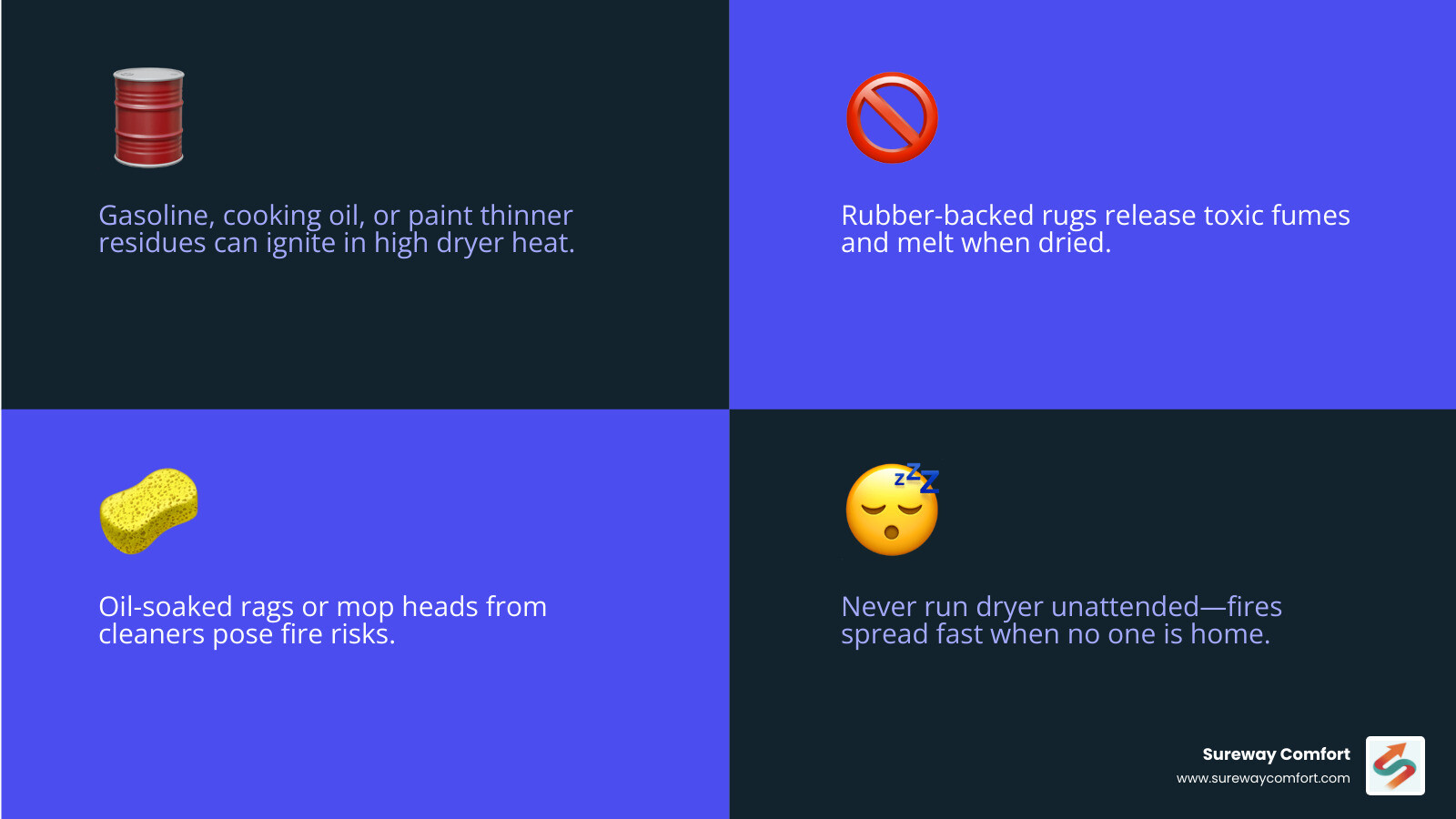
Chemical Residues: Never put anything in the dryer that has been soiled with flammable liquids like gasoline, cooking oil, or paint thinner. Even after washing, these residues can remain in the fabric. When exposed to the high heat of a dryer, they can ignite. This includes mop heads used with floor cleaners and rags used for DIY projects.
Unattended Operation: It’s tempting to start a load and then head out to the grocery store or go to bed. However, if a fire starts while you’re away or asleep, you won't be there to catch it early. Only run the dryer when an adult is home and awake.
Smoke Alarms: Ensure you have a working smoke alarm in or very near the laundry room. Test it monthly to make sure the batteries are fresh.
Fire Escape Planning: In the event of a fire, every second counts. Make sure everyone in your household knows at least two ways out of every room and has a designated meeting spot outside. You can find more advice on this in our guide to dryer vent cleaning and maintenance.
Expert Tips: Frequently Asked Questions about Dryer Safety
How often should I clean my dryer vent system?
For most households in Bridgeville and the surrounding areas, a professional inspection and cleaning should happen once a year. However, if you have a large family, pets that shed, or a very long vent run, you should consider cleaning it every six months. Of course, the lint filter itself must be cleaned after every single load without exception.
What should I do if I suspect a dryer fire has started?
If you smell smoke or see flames:
1. Call 911 immediately.
2. Keep the dryer door closed. Opening the door provides oxygen to the fire, which can cause it to flare up.
3. Turn off the power at the circuit breaker if it is safe to reach.
4. Evacuate everyone from the home immediately.
5. Only use a fire extinguisher if the fire is very small and you have a clear path to an exit.
Why is rigid metal ducting safer than flexible foil or plastic?
Rigid metal (aluminum or galvanized steel) has smooth interior walls. This prevents lint from getting snagged on ridges. Furthermore, if a small fire does start inside the duct, the metal is much better at containing the flames than plastic or thin foil, which will simply melt and allow the fire to spread into your wall cavities. In many cases, we also recommend dryer vent booster fan systems with lint trap for homes where the ductwork must travel a long distance to reach an exterior wall.
Conclusion
At Sureway Comfort, we want our neighbors in Bridgeville, McDonald, Mt. Lebanon, and throughout the region to feel safe in their homes. While we often focus on keeping your air conditioner running in the summer and your furnace humming in the winter, laundry room safety is just as critical to your family's well-being.
Don't wait for a burning smell or a long drying cycle to remind you that your vents need attention. By following these dryer vent fire prevention tips, you can significantly reduce the risk of a household fire and keep your appliances running efficiently for years to come.
Whether you need a professional inspection, a safer vent installation, or help with dryer vent booster fan systems with lint trap, our experienced technicians are here to help. We pride ourselves on our streamlined process and dedication to the local community. Give us a call today to ensure your home is as safe as it is comfortable!





.svg)
.avif)


