Gas vs Electric Water Heater Comparison: Cost & Efficiency Guide
Compare gas vs electric water heater options for efficiency, recovery rates, and home needs to choose the right model.
Gas vs Electric Water Heater Comparison: Tips Bridgeville Homeowners Can Use
Making a gas vs electric water heater comparison is one of the most practical ways to choose the right hot water system for your home. The best option usually depends on your home's current setup - existing fuel lines, electrical panel capacity, venting, and available space - not just the label on the unit.
Here is a quick side-by-side look to help you compare the basics:
| Feature | Gas Water Heater | Electric Water Heater |
|---|---|---|
| Heating method | Gas burner (combustion) | Resistance heating elements |
| Recovery rate | Faster (30-50 gal/hr) | Slower (18-25 gal/hr) |
| Energy efficiency | Lower (UEF 0.60-0.82) | Higher (UEF 0.90-0.95) |
| Works during power outage | Yes (with pilot light) | No |
| Venting required | Yes | No |
| Installation complexity | Higher | Lower |
| Lifespan | 8-15 years | 10-20 years |
| Best for | Large households, outage-prone areas | Smaller homes, simple installs |
Your water heater handles daily showers, dishes, laundry, and cleaning with very little attention - until something changes. If you are replacing an older unit or trying to get better performance, a few simple tips can help you make a smarter decision and get better results from whichever type you choose.
In Bridgeville and the surrounding area, homes vary widely - older houses with existing gas lines and basements, newer builds with updated electrical panels, and everything in between. That means there is no one-size-fits-all answer. A helpful comparison should focus on how each system fits your space, usage habits, and maintenance routine.
This guide shares practical tips on how gas and electric water heaters work, what to check before replacing one, and how to get the best day-to-day performance from your setup. If you need help sorting through the options, Sureway Comfort is here for homeowners across Bridgeville and nearby communities with responsive water heater service, replacement, and support.
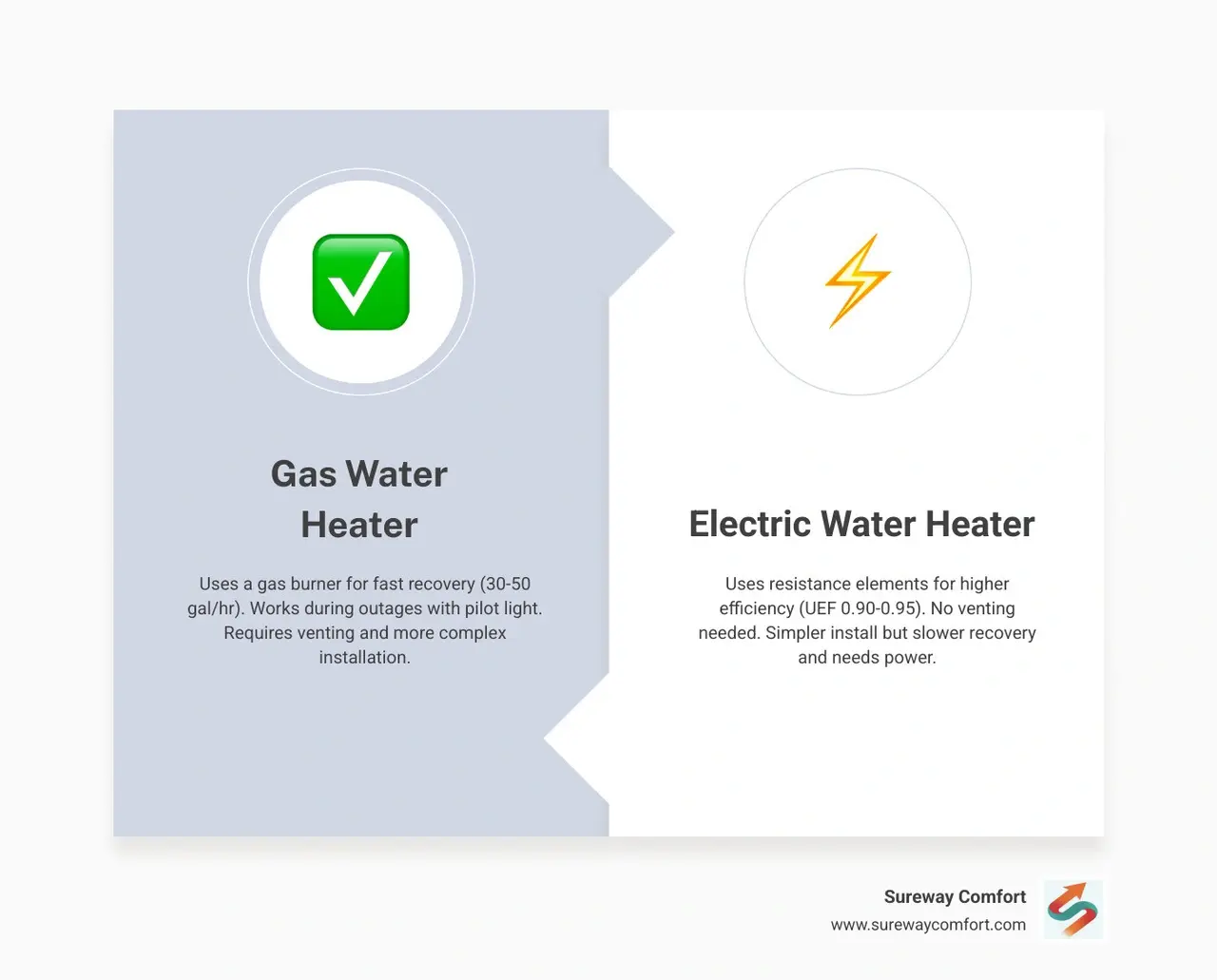
How Gas and Electric Water Heaters Work
At a basic level, both types do the same job: they heat water and store it in a tank until you need it. The difference is how they create that heat.
A gas water heater uses a burner at the bottom of the tank. The burner heats the water, and combustion gases leave through a vent pipe. An electric water heater uses one or two resistance elements inside the tank to warm the water directly. No flame, no venting, no exhaust.
Most homeowners also hear terms like first-hour rating and recovery rate when shopping. These matter more than tank size alone. A 40-gallon gas unit can sometimes keep up better than a larger electric one simply because it reheats water faster. That is why many families judge a water heater by whether the third shower is still hot, not by the label on the tank.
As a general best practice, we recommend keeping water heater temperature at about 120 degrees Fahrenheit for safety and efficiency.
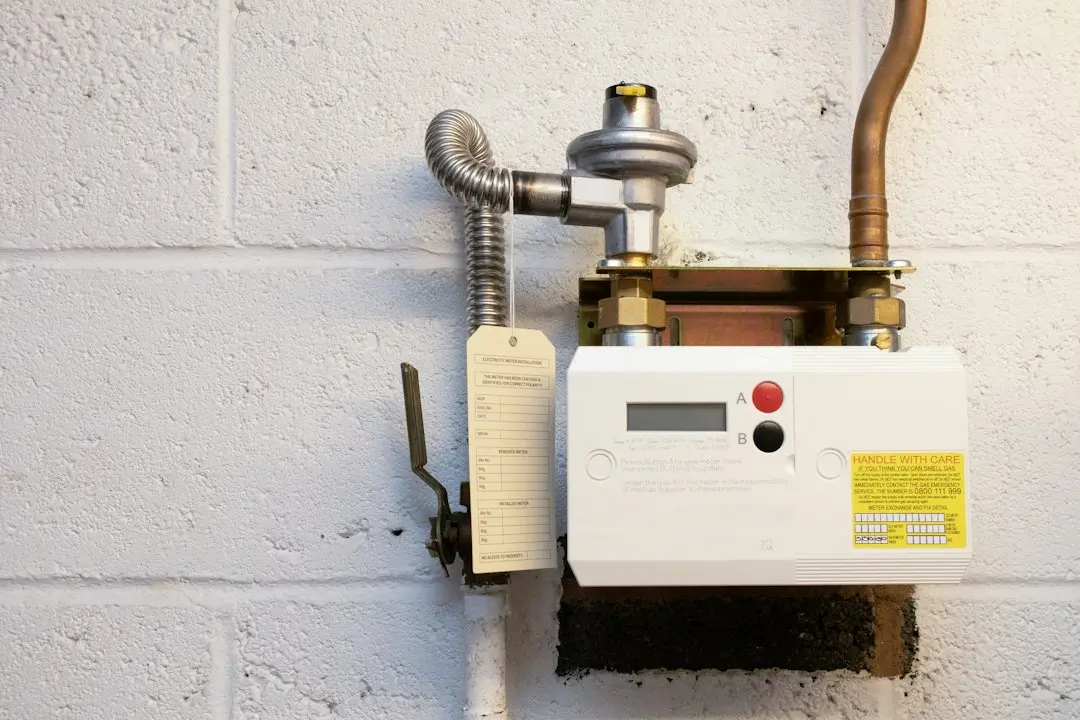
Gas vs electric water heater comparison: heating process explained
Gas models heat by combustion. A gas valve opens, fuel flows to the burner, and the flame heats the bottom of the tank. Depending on the model, ignition may come from a pilot light or an electronic igniter. Because combustion creates exhaust, gas units need proper venting and enough combustion air.
Electric models use upper and lower heating elements. Typically, the upper element heats water first so hot water is ready near the top of the tank. Then the lower element helps maintain the rest of the stored water. This design is simple, quiet, and very effective at converting electricity into heat. In fact, standard electric resistance water heaters convert nearly all of the electricity they use into heat, while gas units lose some energy through venting.
How recovery rate and first-hour rating affect daily use
Recovery rate is how quickly the heater can warm a fresh batch of water after hot water has been used. First-hour rating is how much hot water the heater can deliver in the first hour of heavy use.
These two numbers affect real life more than most people expect:
- Consecutive showers in the morning
- Laundry and dishwashing running at the same time
- Filling a soaking tub
- A larger family using hot water back-to-back
Gas usually has the edge in recovery. That makes it helpful in busy households where hot water demand comes in waves. Electric can still work very well, but it may take longer to catch up after the tank is depleted.
Gas vs Electric Water Heater Comparison: Pros and Cons for Homeowners
The best choice depends on your home, your household size, and what utilities are already in place. We usually tell homeowners to think about the whole setup, not just the heater itself. A unit that looks great on paper may be the wrong fit if your home lacks the right venting, gas line, or electrical capacity.
For a broader overview of system styles, see our guide to different types of water heaters.
| Factor | Gas | Electric |
|---|---|---|
| Hot water recovery | Stronger | Moderate |
| Installation simplicity | More involved | Simpler |
| Maintenance level | Higher | Lower |
| Safety concerns | Gas leaks, combustion, CO | Electrical faults, scalding |
| Outage performance | Can work in some cases | Does not work |
| Environmental impact | Depends on fuel combustion | Depends on local power mix |
Pros and cons of gas water heaters
Gas water heaters are popular in homes that already have natural gas service, especially larger households.
Pros:
- Faster recovery and stronger first-hour performance
- Often better for multiple back-to-back hot water uses
- Some models can still provide hot water during a power outage if they use a standing pilot
- A good match for homes with existing gas infrastructure
Cons:
- Require venting and combustion air
- Need more safety attention because of gas and carbon monoxide risks
- Typically involve more maintenance, including burner and vent inspection
- Installation is usually more complex than electric
If you want a deeper look at why many households prefer gas, read our page on gas water heater benefits.
Pros and cons of electric water heaters
Electric water heaters are straightforward and widely compatible with many homes in Bridgeville, Mt. Lebanon, Bethel Park, and the surrounding communities we serve.
Pros:
- No venting required
- Simpler installation in many homes
- Quiet operation
- Lower maintenance overall
- No combustion or carbon monoxide concerns
- Can pair well with homes focused on electrification or solar power
Cons:
- Slower recovery than gas in many standard tank models
- No hot water during a power outage
- Requires a dedicated 240-volt circuit and enough panel capacity
- Standard resistance models may not be the best fit for every household's usage needs
If your home already uses electric water heating, our electric water heater services page explains more about support and replacement options.
Gas vs electric water heater comparison for performance and efficiency
This is where things get interesting.
Electric resistance water heaters are more energy efficient at the appliance level because nearly 100% of the electricity is turned into heat. Gas units lose some heat through exhaust venting, so their efficiency is lower. Typical storage-tank UEF ranges from about 0.60 to 0.82 for gas and about 0.90 to 0.95 for electric resistance.
But efficiency is not the same as day-to-day performance in your home. Utility setup, recovery needs, and household habits all matter. That is why a true gas vs electric water heater comparison has to include both efficiency and how your family actually uses hot water.
Water heating accounts for a meaningful share of household energy use. That means your water heater has a big effect on monthly energy use, so choosing the right type matters.
Installation, Maintenance, and Safety Differences
Installation requirements often decide the winner before performance even enters the conversation. If a home already has the right hookups, replacement is much easier. If not, changing fuel types can become a much bigger project.
What installation requirements differ between gas and electric models
Gas models typically need:
- A gas supply line
- Proper venting
- Adequate combustion air
- Safe clearances around the unit
- In many cases, a suitable path for exhaust through the home
Electric models typically need:
- A dedicated 240-volt circuit
- Proper breaker sizing
- Enough capacity in the electrical panel
- Space for the unit, but no venting
This is why existing infrastructure matters so much. Replacing a gas unit with another gas unit in a house that already has a gas line and vent often makes sense. Replacing electric with electric is often the simplest path too. Switching fuel types can be worthwhile, but it should be done for the right reasons, not just because one option sounds trendy.
For more help evaluating fit, read choosing the right water heater.
Maintenance needs and common homeowner issues
Both gas and electric tank water heaters benefit from routine care.
Maintenance tasks both types share:
- Flush the tank to remove sediment
- Check the anode rod periodically
- Test the temperature and pressure relief valve
- Watch for leaks, rust, or corrosion
Gas-specific maintenance:
- Inspect burner assembly
- Check venting for safe exhaust flow
- Watch for signs of incomplete combustion
- Confirm ignition components are working properly
Electric-specific maintenance:
- Check heating elements if hot water is weak
- Inspect thermostats and wiring
- Address breaker trips or reset issues
Sediment buildup is a common troublemaker in either type. It reduces efficiency, shortens lifespan, and can make a heater rumble like it is auditioning for a drum solo. Hard water can make this worse.
Safety considerations and power outage performance
Gas and electric both have safety features, but the risks are different.
For gas units, the main concerns are:
- Gas leaks
- Carbon monoxide from venting problems
- Flame or ignition issues
For electric units, the main concerns are:
- Electrical faults
- Element failure
- Scalding if the temperature is set too high
A few smart homeowner tips:
- Keep the water heater at 120 degrees Fahrenheit
- Make sure the T&P valve is functional
- Install a carbon monoxide detector near gas equipment
- Do not block access or airflow around the unit
During a power outage, electric units stop heating immediately. Gas units may still work if they use a standing pilot or a non-electric ignition setup. However, many newer gas systems use electronic controls, so outage performance depends on the exact model.
Should You Switch, or Consider a Newer Option?
Sometimes the best answer is to keep the same fuel type. Sometimes it is worth switching. And sometimes the better move is not gas or standard electric at all, but a newer option like heat pump or tankless.
When switching from electric to gas makes sense
Switching from electric to gas can make sense when:
- Your home already has a nearby gas line
- Your household has high hot water demand
- You regularly run out of hot water
- Power outage reliability matters
- There is a practical venting path available
This is often appealing for larger families or homes where showers, laundry, and dishes all happen at once. If that sounds familiar, our article on the benefits of switching to gas water heaters may help.
When switching from gas to electric makes sense
Switching from gas to electric can make sense when:
- You want to avoid venting requirements
- Safety simplicity is a high priority
- Your current gas venting setup is problematic
- Your electrical panel can support the unit
- Your household is smaller or has lighter hot water demand
- You want to move toward electric appliances overall
This can also be a good fit in tighter utility closets where vent routing is difficult. For related reading, see our 24-hour electric water heater guide.
How heat pump and tankless options compare
If you are comparing standard gas and electric tanks, it is smart to at least look at newer alternatives too.
Heat pump water heaters:
- Use surrounding air to move heat into the tank instead of creating heat directly
- Are typically 2 to 4 times more efficient than traditional systems
- Usually work best in spaces with enough air volume and moderate temperatures
- Often need a condensate drain
- Tend to have very low operating costs
Tankless water heaters:
- Heat water on demand instead of storing it
- Eliminate standby heat loss
- Save space
- Can provide continuous hot water if properly sized
- Often last longer than tank models, with gas tankless commonly lasting 15 to 20 years
- Require careful sizing for flow rate and peak demand
For many homes, gas tankless performs better than electric tankless when whole-home demand is high. Electric tankless can work well in smaller applications or point-of-use situations, but whole-home electric tankless often requires major electrical capacity.
Explore these options here:
- Tankless vs tank water heater comparison
- Electric tankless heater guide 2025
- Point of use electric water heaters
How to Choose the Right Water Heater for Your Home
The right answer usually comes from matching the heater to your daily routine, not from picking the one with the flashiest brochure.
Here is a simple decision list to walk through:
- How many people live in the home?
- Do you use hot water in bursts or steadily through the day?
- Do multiple showers happen back-to-back?
- Do you already have a gas line and vent?
- Does your electrical panel have room for a dedicated circuit?
- Is your utility room spacious or tight?
- Do power outages happen often in your area?
- Are you replacing an existing unit with the same fuel type?
- Are efficiency and lower energy use top priorities?
- Are you planning to stay in the home long-term?
Best choice for small households, large families, and outage-prone homes
Small households:
- Electric tank units are often a solid fit
- Simpler installation and lower maintenance are appealing
- Compact electric options may work well in condos or smaller homes
Large families:
- Gas tank models or properly sized tankless systems usually shine
- Faster recovery helps with morning rushes
- A strong first-hour rating matters more than tank size alone
Outage-prone homes:
- Gas may have an advantage, but only if the specific model can operate without household power
- This should be verified before purchase, not assumed
Heat pump units can also be excellent for many households if the space and conditions are right, especially in basements or garages with enough room and airflow.
A simple gas vs electric water heater comparison checklist
Use this quick checklist before replacing your current unit:
- Check whether your current heater is gas or electric
- Look for a vent pipe above the unit
- Look for a gas line or shutoff valve
- Check for electrical access panels and a 240-volt circuit
- Think about whether you run out of hot water now
- Note the age of your current heater
- Consider whether your household size has changed
- Ask whether you want the simplest replacement or a long-term upgrade
Frequently Asked Questions About Gas and Electric Water Heaters
Is it cheaper to heat water with gas or electric?
It depends on local utility rates and the type of electric water heater. Standard electric resistance units are more efficient at the appliance level, but electricity may cost more per unit of energy than natural gas. In many areas, gas can be less expensive to operate than a standard electric tank. Heat pump water heaters are the major exception and are often the lowest-cost electric option to run.
Are gas or electric water heaters more efficient?
Standard electric resistance water heaters are more efficient than standard gas tanks because they convert nearly all electricity into heat and do not lose energy through venting. Gas storage heaters are usually less efficient on paper. Heat pump water heaters are the efficiency leader by a wide margin, often delivering 2 to 4 times the efficiency of traditional systems.
Is it worth switching from one type to the other?
Sometimes, yes. If your home already has the needed infrastructure and your hot water needs have changed, switching can make sense. If a conversion requires major new venting, gas piping, or electrical upgrades, staying with the same fuel type may be the better move. In many homes, the smartest option is the one that fits existing utility connections and household demand with the least hassle.
Conclusion
A smart water heater decision is really about fit: fit for your home, fit for your family, and fit for how you use hot water every day. Gas usually wins on recovery speed and outage resilience. Electric usually wins on simplicity, safety, and appliance efficiency. Heat pump and tankless options can be even better in the right situation.
For homeowners in Bridgeville, McDonald, Mt. Lebanon, Bethel Park, Canonsburg, Collier, South Fayette, Upper St. Clair, Carnegie, Green Tree, Scott Township, Brookline, and Oakdale, Sureway Comfort is your local team for dependable water heater help. We offer service, replacement, and support tailored to your home, and we focus on making the process clear and practical. We're your neighbors, and we'll get it done right.
If you want help comparing replacement options or planning your next upgrade, learn more about our water heater services.
Need Service?
Family owned · once & done · 24/7 emergency service across the South Hills of Pittsburgh.
(412) 643-4118 Schedule ServiceMore Services
Ready to Do It Right With Sureway?
Request a quote, schedule HVAC service, or ask about HVAC and plumbing project financing across the South Hills of Pittsburgh.