


Pro Tips: What to Do When Your Dryer Takes Too Long to Dry Clothes
Why your dryer takes too long to dry clothes is one of the most common laundry frustrations homeowners face — but these simple tips and tricks can help you fix the problem fast. Here are the most effective ways to restore your dryer's efficiency:
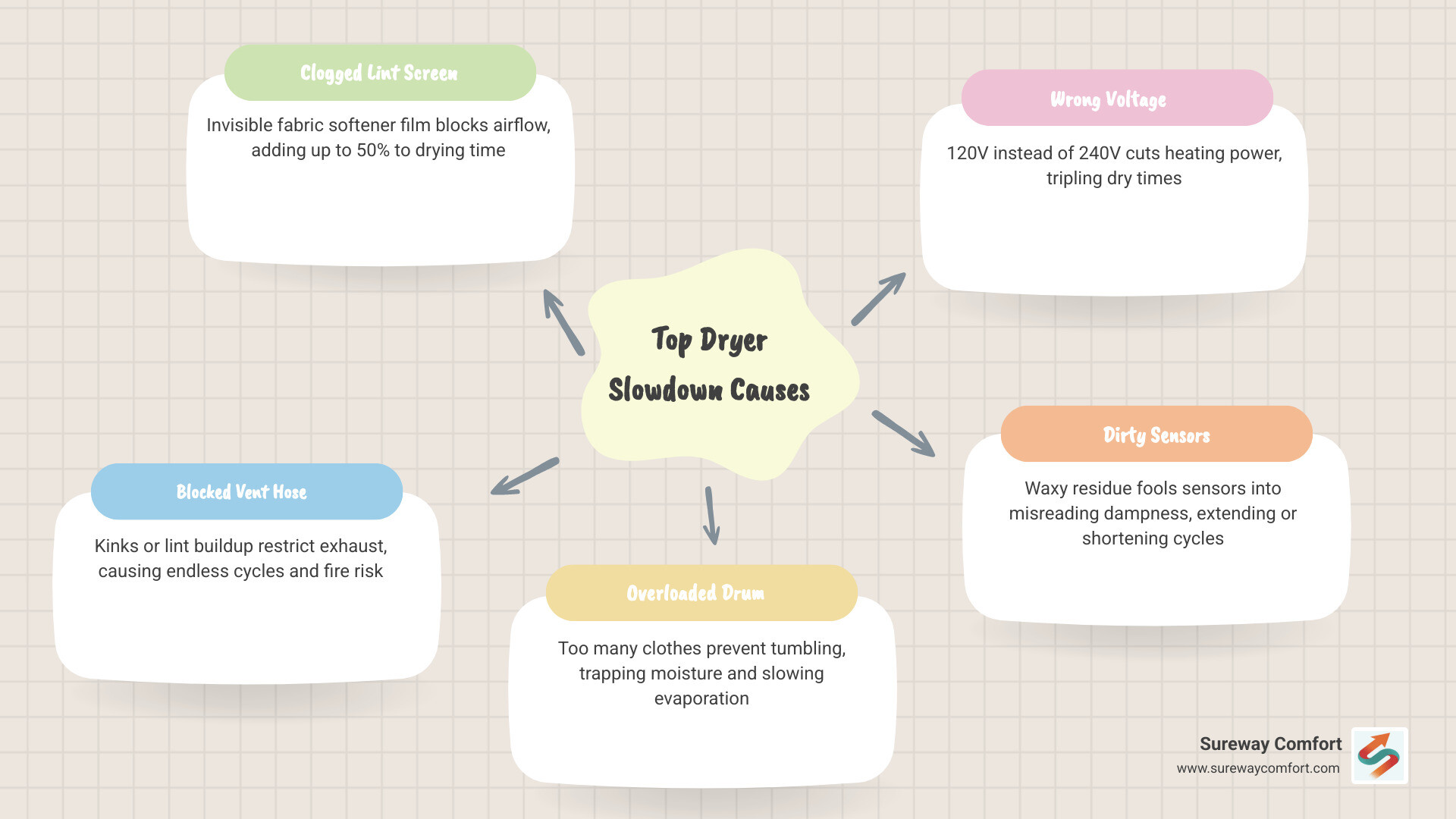
• Tip: Deep clean the lint screen — even a screen that looks clean can have an invisible film of fabric softener residue blocking airflow
• Tip: Inspect the vent hose — restricted exhaust is the single most common cause of extended drying cycles
• Tip: Watch your load size — too many clothes prevent proper tumbling and air circulation
• Tip: Check the voltage — an electric dryer running on 120V instead of 240V can take up to three times longer to dry
• Tip: Optimize the wash cycle — a weak spin cycle leaves clothes so saturated that drying time increases by 30–50%
• Tip: Clean the moisture sensors — residue on the sensor bars causes the dryer to misread dampness
• Tip: Monitor heating components — a worn heating element or thermostat means less heat reaches your clothes
Most loads of cotton clothing should be dry in 40 to 60 minutes. If your dryer regularly runs past 75 to 90 minutes, something is off — and ignoring it costs you time, energy, and potentially your appliance's lifespan.
A slow dryer is more than a minor annoyance. It is often an early warning sign that your exhaust system is clogged, your electrical supply is insufficient, or a key component is wearing out. Left unchecked, restricted airflow builds up heat inside the drum and vent — a leading cause of residential dryer fires. The good news is that most causes are straightforward to diagnose once you know what to look for.
In this guide, we walk you through every major reason your dryer may be running slow, from the simple fixes you can do today to the mechanical issues that need a professional eye.
Tip #1: Maintenance Tricks for Lint Screens and Sensors
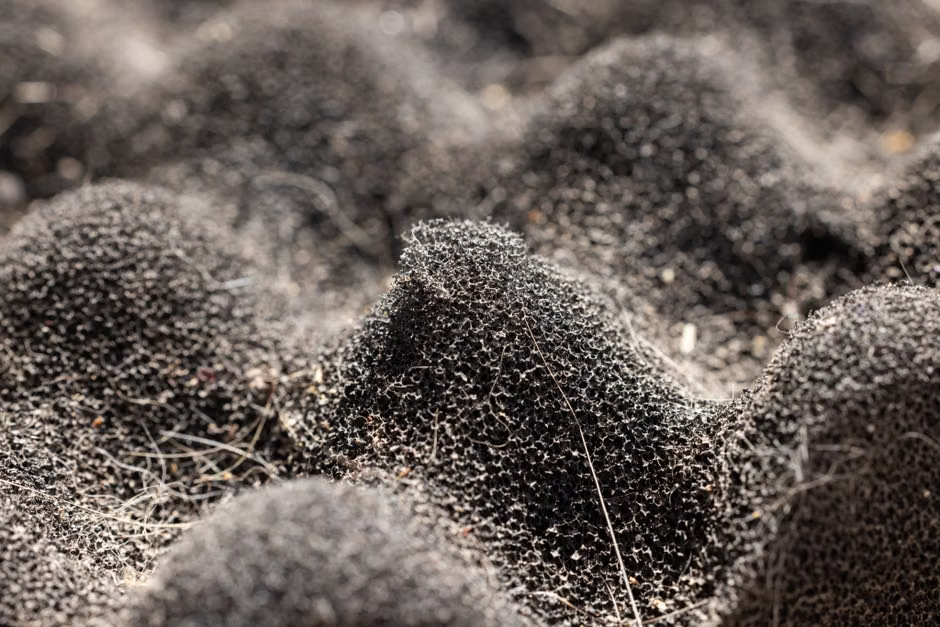
When we visit homes in Bridgeville or Upper St. Clair, the first thing we check is the lint screen. It sounds basic, but a clogged filter can increase your drying time by up to 50%. While most homeowners know to swipe the lint off after every load, many don't realize that fabric softeners and dryer sheets leave behind a waxy, invisible film. This film coats the fine mesh of the screen, acting like a plastic wrap that suffocates the airflow.
To test this, take your lint screen to the sink and run water over it. If the water pools instead of flowing straight through, you have a residue problem. A quick scrub with warm, soapy water and a soft nylon brush will restore the airflow. For more comprehensive tips on keeping your system clear, check out our guide on Dryer Vent Cleaning and Maintenance.
Another hidden culprit involves the moisture sensor bars. These are usually two small metal strips located near the lint filter housing inside the drum. Their job is to tell the dryer when the clothes are dry so it can end the cycle. If they are coated in dryer sheet residue, they "blindly" assume clothes are dry (shutting off too early) or stay damp (running forever). Simply wiping these bars with a cloth dipped in rubbing alcohol can solve the mystery of damp clothes.
• Efficiency — Sensor Dry Cycle: High (stops when dry) — Timed Dry Cycle: Lower (runs for set time)
• Best For — Sensor Dry Cycle: Average mixed loads — Timed Dry Cycle: Very small loads (under 5 items)
• Common Issue — Sensor Dry Cycle: Dirty sensors cause early shut-off — Timed Dry Cycle: Wastes energy if time is too long
Why your dryer takes too long to dry clothes when overloaded
We all want to finish laundry day faster, but cramming "just one more towel" into the drum is counterproductive. Dryers work on a "delicate equilibrium" of heat, airflow, and tumbling. If the drum is packed to the brim, there is no room for the hot air to circulate between the layers of fabric.
The golden rule is the 2/3 rule: never fill the drum more than two-thirds full. Clothes need to hit the moisture sensors and tumble freely through the air to evaporate moisture. We also recommend sorting your laundry by fabric weight. Drying heavy cotton towels with lightweight polyester shirts means the shirts will overdry while the towels stay damp, confusing the machine's sensors and extending the cycle for everyone.
Why your dryer takes too long to dry clothes due to sensor residue
As mentioned, waxy buildup from fabric conditioners is a silent efficiency killer. This residue reduces the conductivity of the moisture sensors. When the sensors can't "feel" the moisture in the fabric because of a layer of wax, the dryer’s control board receives a false signal. This results in premature cycle termination, leaving you with a pile of laundry that is warm but still frustratingly damp. Regular cleaning of the drum's interior and the sensors ensures the machine can accurately "read" your laundry's progress.
Tip #2: Airflow Hacks for Better Ventilation
Think of your dryer's exhaust system as its lungs. If it can't "breathe" out the moist, hot air, it can't bring in fresh, dry air. A blocked vent hose can easily double your drying time. Many homes in the Bethel Park and Canonsburg area use flexible foil or plastic hoses, which are prone to kinking or crushing when the dryer is pushed too close to the wall.
For maximum efficiency and safety, we always recommend rigid metal ducting. It has a smooth interior that prevents lint from snagging and doesn't collapse. If your laundry room is located far from an exterior wall, the long vent run might need extra help. In these cases, Dryer Vent Booster Fan Systems with Lint Trap can pull the air through long stretches of ductwork, ensuring moisture doesn't settle and create clogs.
Don't forget to check the exterior vent hood. This is the flap on the outside of your house. It should have a swing-out damper that opens freely when the dryer is running. If it's blocked by a bird's nest, overgrown bushes, or a "lint explosion," the backpressure will force the dryer to work twice as hard. Industry standards suggest keeping at least 12 inches of clearance between the vent hood and the ground.
Identifying blockages in the exhaust line
If you suspect a blockage, start the dryer and go outside to feel the airflow at the wall cap. It should feel like a strong, warm breeze. If the airflow feels weak or "lazy," you likely have lint accumulation inside the walls.
Another sign is vent compression. If your dryer was recently moved for cleaning or a new appliance was installed, the hose might have been crushed against the wall. Even a single 90-degree bend reduces airflow; the standard recommendation is to have no more than four 90-degree bends in a 25-foot run. Every elbow you add effectively "shortens" the maximum allowed length of your ductwork.
The danger of restricted airflow
Why your dryer takes too long to dry clothes isn't just a matter of convenience; it's a major safety concern. When airflow is restricted, the internal temperature of the dryer skyrockets. This can trip the thermal fuse, a safety device that kills the power to the heating element to prevent a fire. If your dryer runs but stays cold, a blown thermal fuse is a likely culprit.
Furthermore, trapped lint is highly flammable. Clogged vents are a leading cause of house fires in the U.S. Beyond the fire risk, a struggling dryer wastes a massive amount of electricity and puts unnecessary strain on the motor and drum belt, significantly shortening the 10-year average lifespan of the appliance.
Tip #3: Troubleshooting Electrical and Mechanical Issues
Sometimes the issue is deeper than a handful of lint. Electric dryers are power-hungry machines that typically require a dedicated 240V circuit. This circuit uses two "legs" of 120V power. If one of the household fuses blows or a double-pole breaker partially trips, the dryer motor might still have enough power to spin the drum (using 120V), but the heating element won't have the 240V it needs to get hot.
If you are experiencing exceptionally long dry times (three times longer than usual), it is worth checking your electrical panel. For residents in our service area like McDonald or Mt Lebanon, we often find that older electrical systems can struggle with the high wattage (1,500 to 5,000 watts) required by modern dryers. You can find more information on venting components in our Category: Dryer Vent section.
Voltage issues and drying efficiency
A dryer connected to a 120V circuit instead of a 240V circuit is like trying to boil a pot of water with a candle. It might eventually get the job done, but it will take hours. This is a common issue in some apartment setups or older homes where the outlet wasn't properly wired for a high-capacity appliance. If your dryer feels barely lukewarm even on the highest setting, a voltage diagnostic by a professional is necessary.
Signs of a failing heating component
If your dryer drum is spinning but the air inside is cold, your heating element has likely burned out. In gas dryers, the gas igniter or the solenoids (valves) might have failed, preventing the burner from lighting.
You can sometimes diagnose this by listening for the "whoosh" of the gas burner igniting. For electric models, a technician can use a multimeter to check for continuity in the heating coils, thermostats, and the thermal limit switch. If these components are faulty, the dryer will tumble indefinitely without ever reaching the temperatures needed for evaporation.
Bonus Tricks to Slash Your Drying Time
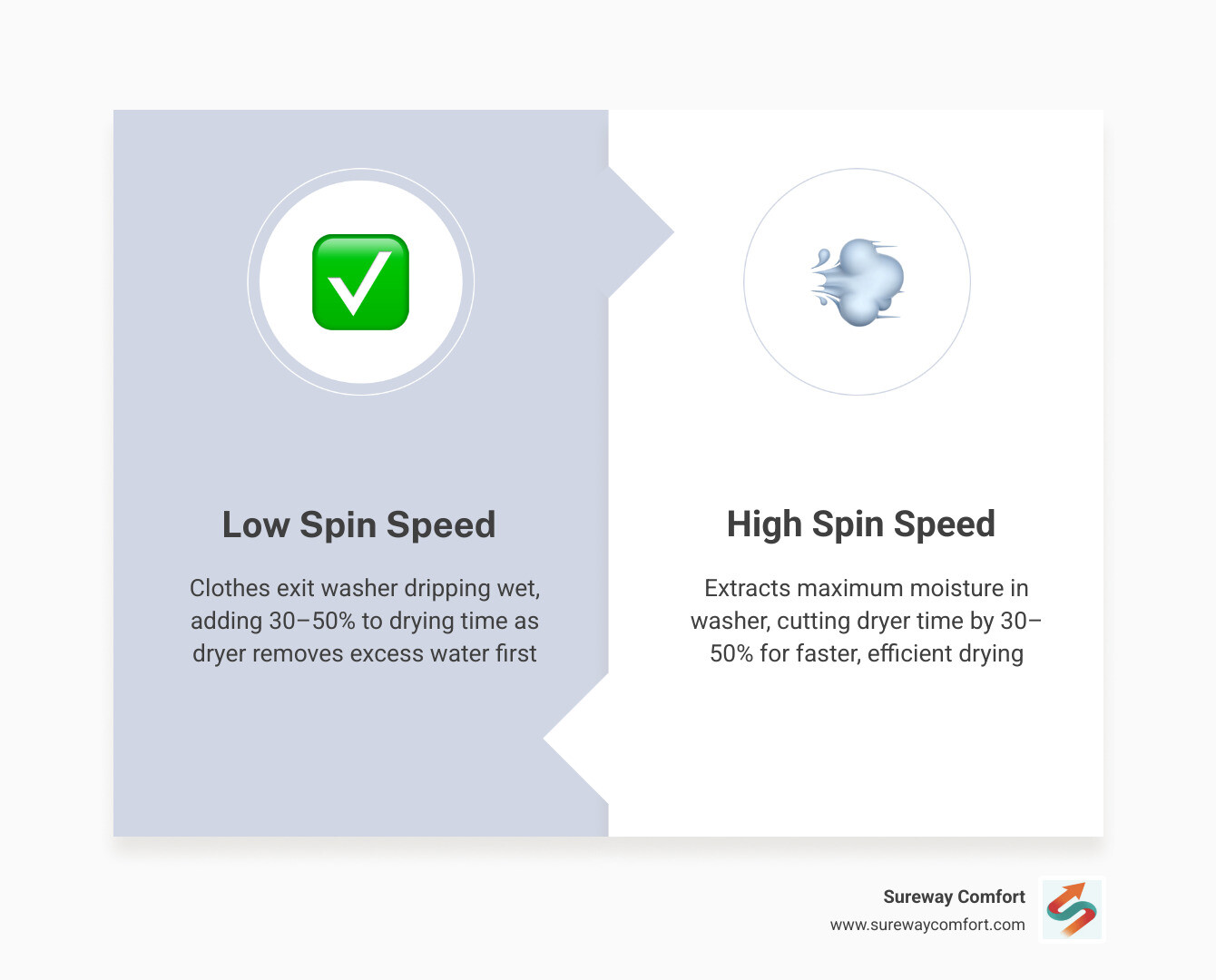
Efficiency starts in the washing machine. If your clothes come out of the washer dripping wet, your dryer has to do the washer's job before it can even start drying. This can increase drying time by 30–50%.
The Wring Test: If you can manually wring water out of a "finished" load of laundry, your washer's spin cycle isn't performing correctly. This could be due to a failing pump or an unbalanced load. Selecting a higher spin speed on your washer is the easiest way to slash minutes off your dryer's run time.
Pro-Tips for Faster Drying:
• Dryer Balls: Using wool dryer balls helps separate clothes, allowing hot air to reach more surface area.
• The Towel Trick: Adding one clean, dry towel to a load of wet sheets can help absorb initial moisture and prevent the sheets from "balling up."
• Check the Humidity: In high-humidity areas like Brookline or Scott Township, the air being pulled into the dryer is already saturated with moisture. Using a dehumidifier in your laundry room can actually help your dryer work faster.
• Level the Machine: If your dryer isn't level, clothes may migrate to the back of the drum, missing the moisture sensors at the front.
Quick Tips: Frequently Asked Questions
What is the normal drying time for a standard load?
A standard load of cotton towels or jeans should take between 40 and 60 minutes. If you are drying lightweight synthetics, it should be even faster. If your cycles are consistently hitting the 90-minute mark, you are likely dealing with an airflow restriction or a mechanical inefficiency that needs to be addressed.
How often should I clean my dryer vent system?
We recommend a professional vent cleaning at least once a year. If you have a large family and do multiple loads a day, you might need it every six months. Regular maintenance prevents the gradual buildup of lint that causes "performance creep," where you don't notice the drying time getting longer until it's a major problem.
Why are my clothes still wet but the dryer is hot?
This is the classic sign of an airflow blockage. The dryer is producing heat, but the moist air is trapped inside the drum. Because the air is saturated, it can't hold any more evaporated water from the clothes. It's like trying to dry a sponge in a steam room. Check your vent hose and the exterior wall cap immediately.
Conclusion
At Sureway Comfort, we know that a malfunctioning dryer is more than just a hassle—it's a disruption to your home's harmony and a potential safety risk. Whether you're in Bridgeville, PA, or any of our surrounding neighborhoods like South Fayette or Carnegie, we're your neighbors, and we’re here to get the job done right.
From diagnosing complex electrical issues to installing Dryer Vent Booster Fan Systems with Lint Trap, our experienced technicians provide the honest diagnostics and responsive scheduling you deserve. Don't let a slow dryer hike up your energy bills or put your home at risk. If your clothes are still damp after an hour, it's time to stop the spin and call in the experts. We'll help you keep your home comfortable and your laundry day moving smoothly.





.svg)
.avif)


