


Tips & Tricks: Understanding Heat Pump Advantages Over Traditional HVAC
If you are tired of paying too much to heat and cool your home with aging, inefficient equipment, learning the heat pump advantages over traditional HVAC systems is one of the best moves you can make. Today, we are sharing our favorite tips and tricks to help you understand these systems and get the most out of your home comfort setup.
Here is a quick look at the key advantages and tips:
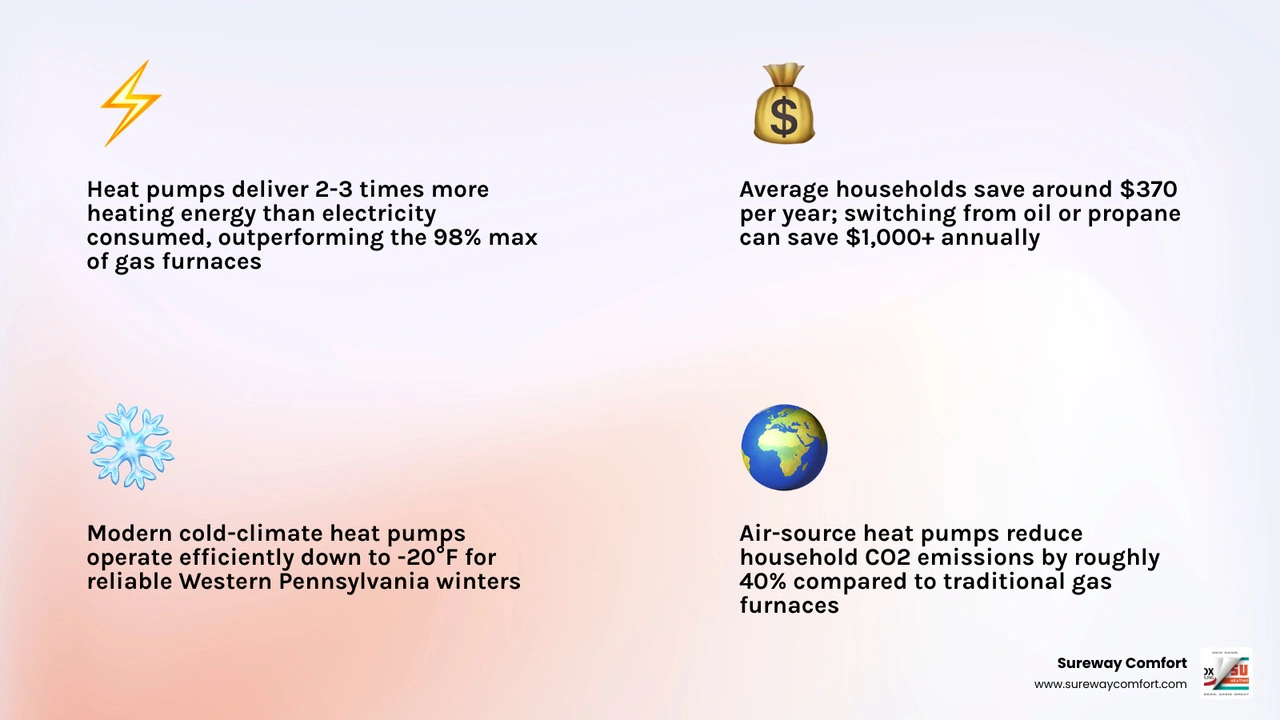
• Higher efficiency - Heat pumps deliver 2 to 3 times more heating energy than the electricity they consume, while even the best gas furnace tops out at around 98% efficiency
• Two-in-one system - A single heat pump handles both heating and cooling, replacing your furnace and air conditioner
• Lower operating costs - Average households save around $370 per year; those switching from oil, propane, or electric resistance heat can save closer to $1,000 or more annually
• Cold-weather capable - Modern cold-climate heat pumps operate efficiently down to -20°F, making them a practical option even in Western Pennsylvania winters
• Smaller carbon footprint - Air-source heat pumps can reduce household CO2 emissions by roughly 40% compared to gas furnaces
• Consistent comfort - Heat pumps run at lower, steadier levels rather than cycling on and off, which means more even temperatures throughout your home
If you already know heat pumps are right for you, Sureway Comfort's heat pump services are a great next step. Otherwise, keep reading — we'll walk through our top tips and insights to help you make a confident decision.
Heating and cooling your home is the single largest source of energy use in most households. For years, the standard setup was a gas furnace for winter and a central air conditioner for summer — two separate systems, two separate maintenance schedules, two separate bills. Heat pumps flip that model entirely by moving heat rather than generating it, which is why they can be so much more efficient than traditional systems.
More than 5 million heat pumps were sold in the U.S. in 2024, outselling traditional gas furnaces for the first time. That shift isn't a fluke — it reflects real improvements in technology, real savings on energy bills, and a growing number of homeowners who've discovered that one well-chosen system can do the job of two.
Terms related to heat pump advantages over traditional hvac:
• amana heat pump options for homeowners
• heat pump benefits for western pennsylvania homeowners
Understanding the Core Heat Pump Advantages Over Traditional HVAC
To appreciate why these systems are reshaping the home comfort industry, we have to look under the hood. While a traditional system relies on two completely different physical processes to keep you comfortable throughout the year, a heat pump uses one highly optimized process that it can run in reverse.
At its heart, a heat pump is an all-in-one comfort machine. In the summer, it functions exactly like a standard central air conditioner. It uses a closed loop of refrigerant to absorb the heat inside your living spaces and dump it outdoors.
The magic happens when the seasons change. Thanks to a specialized component called a reversing valve, the system can completely flip the flow of refrigerant. Instead of gathering indoor heat and rejecting it outside, it extracts thermal energy from the outdoor air and pumps it into your home.
By utilizing this single refrigeration loop for both seasons, you eliminate the need to maintain a separate furnace and air conditioner. To dive deeper into the physics of this process, you can read our detailed breakdown on How Does a Heat Pump Work or explore our main Heat Pumps service page.
How Heat Transfer Compares to Combustion Heating
Traditional heating systems, such as natural gas, propane, or fuel oil furnaces, rely on combustion. They burn fossil fuels to generate fire, which heats a metal heat exchanger, which then warms the air blown through your home. Electric resistance baseboards or duct heaters work similarly by forcing electricity through high-resistance metal coils to generate heat.
The physical limitation of combustion and resistance heating is that they can never be more than 100% efficient. In fact, even the highest-tier, modern gas furnaces max out at around 98% efficiency, meaning 2% of the fuel you pay for escapes straight up the chimney flue. Electric resistance heating is technically 100% efficient at converting electricity to heat, but it requires massive amounts of power to do so.
Heat pumps break through this 100% efficiency ceiling because they do not generate heat—they simply move it. By using a compressor and refrigerant to transfer existing thermal energy from one place to another, a heat pump can achieve a Coefficient of Performance (COP) between 2.0 and 4.0. This means that for every single unit of electricity the system consumes, it delivers two to four units of heat into your home.
This makes them up to 300% to 400% efficient. Even when temperatures drop, the thermodynamic reality is that outdoor air always contains some level of heat energy—even at sub-zero temperatures. To see how this thermodynamic advantage translates to local homes, check out our guide on Heat Pump Benefits for Western Pennsylvania Homeowners.
Two-in-One Functionality for Year-Round Comfort
With a traditional HVAC setup, you have an outdoor air conditioner condenser that sits idle all winter, and an indoor furnace that sits idle all summer. You are essentially paying for two separate, complex appliances, each of which experiences wear and tear and requires regular professional tune-ups.
A heat pump simplifies your home's mechanical footprint. It serves as your primary cooling system in July and your primary heating system in January. This dual functionality means you only have one outdoor unit to worry about. The transition between heating and cooling modes is entirely seamless and managed automatically by your thermostat.
When you upgrade, you can choose from highly reliable configurations like the Amana Heat Pump Options for Homeowners, which offer outstanding year-round performance and industry-leading warranties.
Efficiency and Environmental Benefits of Modern Heat Pumps
When evaluating the heat pump advantages over traditional hvac, efficiency and environmental stewardship go hand-in-hand. Because heat pumps consume far less energy to keep your home comfortable, they naturally reduce your monthly utility bills while significantly lowering your household's carbon footprint.
To help visualize how these technologies compare, let's look at how their efficiency ratings stack up:
• Standard Heat Pump — Cooling Efficiency Metric: Up to 16 SEER2 — Heating Efficiency Metric: Up to 9.0 HSPF2 — Maximum Operating Efficiency: 200% - 300% (COP of 2.0 - 3.0)
• Premium Inverter Heat Pump — Cooling Efficiency Metric: Up to 21+ SEER2 — Heating Efficiency Metric: Up to 10+ HSPF2 — Maximum Operating Efficiency: 300% - 400%+ (COP of 3.0 - 4.0+)
• Standard Gas Furnace — Cooling Efficiency Metric: N/A — Heating Efficiency Metric: 80% AFUE — Maximum Operating Efficiency: 80%
• High-Efficiency Gas Furnace — Cooling Efficiency Metric: N/A — Heating Efficiency Metric: Up to 98% AFUE — Maximum Operating Efficiency: 98%
• Standard Central AC — Cooling Efficiency Metric: Up to 16 SEER2 — Heating Efficiency Metric: N/A — Maximum Operating Efficiency: Equal to Heat Pump cooling
• Electric Resistance Heat — Cooling Efficiency Metric: N/A — Heating Efficiency Metric: 100% — Maximum Operating Efficiency: 100%
For homeowners looking for the absolute pinnacle of this technology, the Amana S Series Comfort and Efficiency Inverter Side Discharge System represents a massive leap forward, offering ultra-quiet operation and incredibly high seasonal efficiency ratings.
Key Heat Pump Advantages Over Traditional HVAC in Energy Efficiency
The secret behind the incredible efficiency of premium modern heat pumps lies in variable-speed compressor technology, often referred to as inverter technology.
Traditional furnaces and air conditioners are typically single-stage systems. They operate like a light switch: they are either 100% on or completely off. When your home cools down or warms up slightly, the system blasts on at full capacity, floods your rooms with conditioned air, and then shuts off. This constant cycling consumes massive amounts of starting energy and leads to noticeable temperature swings.
In contrast, inverter-driven heat pumps operate like a dimmer switch. They can modulate their output anywhere from 10% to 100% capacity based on the exact heating or cooling load of your home at any given second. By running continuously at lower, whisper-quiet speeds, they maintain a highly consistent indoor temperature within a fraction of a degree. This continuous low-stage operation eliminates the energy spikes caused by frequent starting and stopping, leading to substantial energy savings and significantly reduced utility bills.
Environmental Heat Pump Advantages Over Traditional HVAC
Residential heating and cooling represent the single largest source of direct greenhouse gas emissions in the average American home. When you burn natural gas, heating oil, or propane in a furnace, you are releasing carbon dioxide and other combustion byproducts directly into the atmosphere.
By transitioning to an electric heat pump, you are actively participating in home decarbonization. Because heat pumps rely on electricity to move heat rather than burning fuel, they instantly slash your home’s operational greenhouse gas emissions. In fact, switching to an air-source heat pump can trim household carbon emissions by about 40% compared to a standard gas furnace. As our electrical grids continue to incorporate more renewable energy sources like wind and solar, a heat pump-equipped home naturally becomes cleaner and more eco-friendly over time.
Additionally, the HVAC industry in 2026 has made a major transition toward lower Global Warming Potential (GWP) refrigerants, such as R-32 and R-454B. These new refrigerants are designed to be much more environmentally friendly, ensuring that your new system is built for the future.
Cold Weather Tips: Performance in Western Pennsylvania
One of the most common myths we hear from local homeowners is that heat pumps only work in warm, southern climates. While that may have been true of early-generation systems from the 1970s and 80s, modern cold-climate heat pumps are engineered to handle harsh northern winters with ease.
Today’s cold-climate heat pumps utilize variable-speed inverter compressors and advanced vapor-injection technology. This allows them to maintain excellent heating capacity and high efficiency even when outdoor temperatures plunge well below freezing. Many modern systems can operate efficiently at temperatures as low as -20°F, delivering reliable comfort when you need it most.
Pro-Tip: Consider a Dual-Fuel Setup for Extreme ColdBecause Western Pennsylvania winters can occasionally bring extended periods of extreme, sub-zero cold, a great trick is to choose a dual-fuel or hybrid system. In a dual-fuel setup, we pair an electric heat pump with a high-efficiency gas furnace.
During mild winter days (usually anything above 35°F), the heat pump handles all the heating duties with incredible electrical efficiency. If a severe cold snap hits and temperatures drop to extreme lows, the system automatically switches over to the gas furnace to provide rapid, high-temperature heat. This gives you the best of both worlds: maximum energy savings for most of the year, with a reliable combustion safety net for the coldest nights.
If you live in our local service areas, you can learn more about how these systems are designed and installed by visiting our pages on Heat Pump Installation South Fayette PA and Heat Pump Installation Carnegie PA.
Pro-Tips for Heat Pump Maintenance, Lifespan, and Home Comfort
Beyond energy bills and environmental benefits, upgrading to a heat pump has a profound impact on your daily living experience. Here are our top tips and tricks for maintaining your system and maximizing your home comfort:
A well-maintained air-source heat pump has an average lifespan of about 15 years, which is highly comparable to a traditional central air conditioner or furnace. However, because a heat pump works hard during both the heating and cooling seasons, keeping up with preventative maintenance is absolutely vital.
Tip #1: Schedule Biannual Tune-UpsWhile a standalone furnace only needs a checkup in the fall and an AC only needs a checkup in the spring, a heat pump requires biannual professional servicing. During these visits, we clean the coils, check refrigerant charges, verify electrical connections, and ensure the reversing valve functions flawlessly. Keeping your system tuned up protects your investment and prevents unexpected breakdowns. For local homeowners, we offer specialized maintenance services detailed on our Heat Pump Maintenance Bridgeville PA and Heat Pump Maintenance Mt Lebanon PA pages.
Tip #2: Leverage Inverter Technology for Consistent ComfortIn terms of daily comfort, heat pumps offer several distinct advantages over traditional HVAC systems when operated correctly:
• Consistent, even temperatures - Because inverter-driven heat pumps run almost continuously at lower speeds, they eliminate the cold drafts and hot spots often associated with traditional furnaces.
• Superior humidity control - In the summer, the continuous operation allows the heat pump to extract significantly more moisture from your indoor air than a standard AC that rapidly cycles on and off.
• Gentle, comfortable heat - Unlike gas furnaces that blast dry, scorching air into your rooms, a heat pump delivers a steady stream of warm air that doesn't dry out your skin or respiratory passages.
• Improved indoor air quality - Constant air circulation through your home's filtration system means more dust, pollen, and pet dander are captured, keeping your indoor air cleaner.
Tips, Tricks, and FAQs About Heat Pumps
Do heat pumps work effectively in freezing temperatures?
Yes, modern cold-climate heat pumps work exceptionally well in freezing temperatures. Thanks to advanced inverter technology, these systems can extract usable heat from outdoor air even when it feels freezing to us.
Quick Tip: As temperatures drop below freezing, a heat pump's heating capacity does begin to decline. To ensure your home stays perfectly warm during extreme cold snaps, most ducted heat pumps are installed with auxiliary electric resistance heat strips built into the indoor air handler, or they are paired with a backup gas furnace in a hybrid configuration. If your system ever struggles to keep up during a winter storm, prompt professional attention is key. Homeowners in our southern suburbs can rely on our quick response for Heat Pump Repair Bethel Park PA.
Can a heat pump completely replace both my furnace and air conditioner?
In many cases, yes. A ducted heat pump can connect directly to your home's existing ductwork and completely replace both an old central air conditioner and a gas or oil furnace.
Installation Tip: If your home doesn't have existing ductwork, or if you have boiler-heated radiators, you can still transition to a heat pump using a ductless mini-split system. These systems use sleek, wall-mounted indoor blowers connected to an outdoor compressor, allowing you to zone your heating and cooling room by room. If you are considering making the switch, you can explore your options further with our guide on Heat Pump Replacement Canonsburg PA.
How long do heat pumps last compared to traditional HVAC systems?
On average, a heat pump will last about 15 years. This is roughly the same lifespan as a standalone central air conditioner and slightly shorter than a high-quality gas furnace, which can sometimes last 15 to 20 years.
Longevity Trick: The primary reason for this is year-round operation. While a furnace rests in the summer and an AC rests in the winter, a heat pump is on duty all year long. You can easily maximize your system’s durability and ensure it reaches its full lifespan by scheduling regular preventative maintenance. To keep your system running efficiently year after year, check out our expert tips on Heat Pump Maintenance Scott Township PA.
Conclusion
When you weigh all the factors, the heat pump advantages over traditional HVAC systems make a compelling case for the modern homeowner. From slashing your carbon footprint and lowering seasonal energy bills to enjoying whisper-quiet, consistent comfort all year long, a heat pump is an investment in your home’s future.
At Sureway Comfort, we are proud to be your trusted local HVAC experts. Whether you live in Bridgeville, McDonald, Mt Lebanon, Bethel Park, Canonsburg, Collier, South Fayette, Upper St. Clair, Carnegie, Green Tree, Scott Township, Brookline, or Oakdale, our team of experienced technicians is here to help you design, install, and maintain the perfect comfort system for your family.
We pride ourselves on a streamlined process, honest diagnostics, and flexible financing options to make your transition to a high-efficiency heat pump as smooth as possible.
Ready to experience the heat pump difference for yourself? Schedule your consultation with Sureway Comfort today and let us help you find the perfect system for your home!




.svg)
.avif)


