The Homeowner's Guide to Surviving the 2026 Refrigerant Transition
Learn how AC refrigerant changes affect homeowners: 2026 rules, repairs, replacements and smart decisions for your system.
What the 2025–2026 Refrigerant Changes Actually Mean for Homeowners
How AC refrigerant changes affect homeowners is simpler than the headlines make it sound. Here is what you need to know right now:
Quick Summary:
- No forced replacement. If your current R-410A system is running, you are not required to replace it.
- New systems changed in 2025. As of January 1, 2025, manufacturers stopped producing new equipment using high-GWP refrigerants like R-410A.
- Repairs are still allowed. Existing R-410A systems can still be serviced and repaired after 2025 and 2026.
- New systems use different refrigerants. Replacements like R-454B and R-32 have a much lower environmental impact than R-410A.
- A2L refrigerants are safe. New refrigerants are mildly flammable but are designed with built-in safety features for residential use.
- The 2026 date is about installation, not ownership. It refers to a grace period for installing pre-2025 manufactured equipment — not a deadline for homeowners to act.
If you have a working AC system at home, you have time to make a smart, informed decision. No panic needed.
There is a lot of noise right now about refrigerant rules, and most of it is making homeowners more confused than they need to be. You may hear dramatic claims about bans or deadlines, but the real story is much more practical for homeowners.
The truth is that the EPA's rules under the AIM Act are real and meaningful — but they are aimed at manufacturers and new equipment, not at homeowners with a functioning air conditioner in their backyard. The regulations are part of a broader effort to reduce the use of refrigerants with high global warming potential. R-410A, for example, is over 2,000 times more effective at trapping heat than CO2. Newer options like R-454B and R-32 cut that impact by roughly 65%. That is a genuine environmental win — but it does not mean your existing system needs to go anywhere today.
What it does mean is that if your system is aging, leaking, or due for replacement anyway, the landscape for new equipment has changed. Understanding those changes puts you in a much stronger position to make the right call for your home and comfort.
Sureway Comfort helps homeowners throughout Bridgeville and the surrounding communities make sense of changes like these with straightforward service, honest diagnostics, and reliable repair, maintenance, and installation support.
What the 2025-2026 refrigerant rules do and do not require
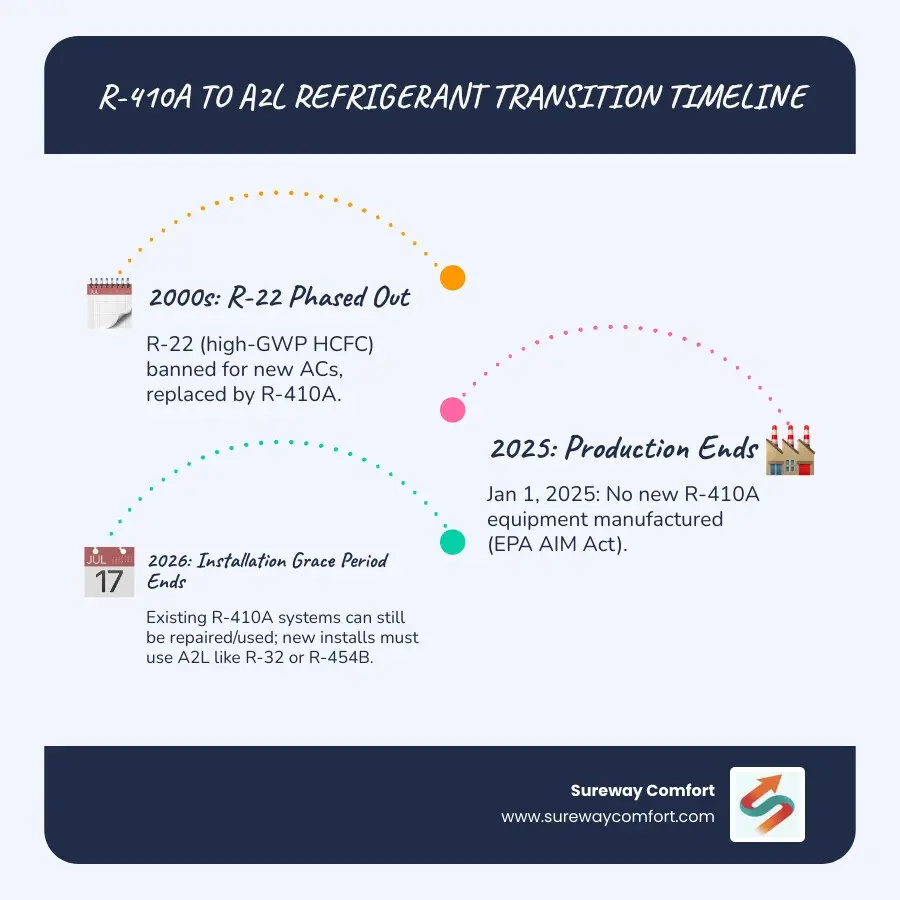
The timeline can be a bit dizzying. The main date to remember was January 1, 2025. That was the "cutoff" for manufacturing new residential AC systems using R-410A. But because the supply chain is long, the EPA provided a "grace period" for the installation of that equipment.
Do the new rules require you to replace your existing R-410A system now?
Absolutely not. There is no law requiring you to pull out a perfectly functional R-410A system. These units are "grandfathered" in. Much like when the industry moved away from R-22 years ago, many homeowners continued to use their systems for years after the transition began. If your system is working, keep it maintained and enjoy the cool air.
What the 2026 deadline really means for homeowners
The 2026 date often cited in headlines refers to the end of the installation grace period. Specifically, equipment manufactured before January 1, 2025, can generally still be installed until January 1, 2026. After that point, new installations must use the new low-GWP refrigerants. This deadline is for contractors and distributors—it is not a "use-by" date for the AC sitting in your Scott Township backyard.
Can R-410A systems still be repaired and serviced after 2026?
Yes. The EPA allows for the servicing of "legacy" equipment. That means your existing system can still be repaired if it develops a problem. R-410A will remain available for repairs for years, though it is smart to address leaks promptly and keep up with maintenance. If your system needs a check-up, you can find more info about AC repair to keep your current unit in top shape.
If you are unsure whether repair or replacement makes more sense for your home, Sureway Comfort can walk you through the next step with clear recommendations and responsive local service.
The new refrigerants replacing R-410A and what homeowners should know
The industry is moving toward a class of refrigerants called "A2L." These include R-32 and R-454B. You can usually find which refrigerant your system uses by looking at the data plate on your outdoor unit.
R-32 vs R-454B: the main replacements for new home AC systems
Different manufacturers have chosen different paths. Some have opted for R-32, while others prefer R-454B. Both are significantly better for the planet.
| Refrigerant Type | Global Warming Potential (GWP) | Status |
|---|---|---|
| R-410A | 2,088 | Phasing out for new equipment |
| R-32 | 675 | New A2L standard |
| R-454B | 466 | New A2L standard |
As you can see, R-454B and R-32 cut the climate impact by roughly 65% to 75%. While they operate similarly to the old stuff, they are not interchangeable.
Are A2L refrigerants safe for residential use?
The "A2L" designation means "mildly flammable." While that might sound scary, these refrigerants are incredibly difficult to ignite. In fact, they have been used safely in Europe and Asia for over a decade. New AC systems designed for A2L refrigerants include extra safety features like leak sensors and specialized control boards that automatically circulate air if a leak is detected, preventing any dangerous concentration of gas.
How ac refrigerant changes affect homeowners choosing a new AC
When you choose a new system today, you aren't just picking a refrigerant; you're picking a high-efficiency machine. Most new A2L systems are designed to meet SEER2 (Seasonal Energy Efficiency Ratio 2) standards. This means they often provide better humidity control—a big deal during our humid Pennsylvania summers—and lower monthly energy bills. Replacing old equipment with ENERGY STAR certified systems can cut annual energy bills by more than $160.
Repair, leaks, and the smartest next step for an older AC
A refrigerant leak is the most common reason homeowners have to deal with these regulations. Refrigerant is not "fuel"—it shouldn't ever run out. If your system is low, you have a leak.
Common signs of an AC refrigerant leak
How do you know if your system is losing its charge? Look for these red flags:
- Warm air: The vents are blowing, but the air isn't cold.
- Ice buildup: You see ice on the copper lines or the indoor coil.
- Hissing sounds: A physical hole in the line might make a noticeable sound.
- High bills: A system low on refrigerant can lose efficiency.
- Constant running: The AC never reaches the temperature set on the thermostat.
For more details on identifying these issues, check out more info about AC refrigerant leak solutions.
What to do if you suspect a refrigerant leak
If you suspect a leak, turn the system off to help prevent compressor damage. Running an undercharged system can lead to bigger problems. Call a professional to find and fix the leak rather than simply adding more refrigerant. You can learn more about AC repair top signs here.
When repair makes sense and when replacement is the better move
This is one of the biggest questions for homeowners in Bridgeville and Mt. Lebanon.
- Repair it if: The system is newer, the leak is in an accessible spot, and the overall unit is in good condition.
- Replace it if: The system is older, has a history of leaks, or continues to struggle to keep your home comfortable.
- Check for coil damage: If the coils are corroded or failing, a repair may only be a short-term fix.
Sureway Comfort helps homeowners with AC repair, replacement, and maintenance throughout the area, and we focus on giving you practical advice that fits your home—not a one-size-fits-all answer.
Compatibility, replacement planning, and avoiding expensive mistakes
One of the biggest traps homeowners fall into is thinking they can "upgrade" their refrigerant without changing the system.
Can you use new A2L refrigerants in an existing R-410A system?
No. There are no "drop-in" replacements. The new refrigerants operate at different pressures and use different types of oil. Putting R-32 into an R-410A system is dangerous and will likely destroy the compressor. If you want to move to the new refrigerant, you need a full system designed for it.
Can you replace just the outdoor unit and keep the old indoor equipment?
In the past, people sometimes "mismatched" units to save money. With the new A2L transition, this is essentially impossible. The indoor coil must have the proper safety sensors and be compatible with the new refrigerant's properties. A matched system ensures the airflow and controls work together to keep your home comfortable and your warranty valid.
Should homeowners rush to buy remaining R-410A inventory?
There is no need to rush. While some people are panic-buying R-410A units to avoid the "new" technology, modern A2L systems are excellent machines. Instead of focusing on the refrigerant type, focus on the system fit. Is the unit sized correctly for your home? Is the ductwork in good shape? A perfectly installed A2L system will always outperform a poorly installed R-410A system.
Practical homeowner tips for making a confident decision
Before you make a call, do a little homework. It can save you time and help you have a better service visit.
How to identify your current refrigerant type and approximate system age
You don't need to be a mechanic to find this out. Go to your outdoor unit and look for the manufacturer's sticker. It will clearly state "Refrigerant Type" (usually R-22 or R-410A) and provide a "Date of Manufacture." If your system was made before 2010, it likely uses R-22. If it was made between 2010 and 2024, it's almost certainly R-410A.
Simple homeowner tips before you repair or replace
Use this quick checklist before your next service visit:
- Check your outdoor unit's label for refrigerant type and age.
- Write down any symptoms, like warm air, ice buildup, or longer run times.
- Replace your air filter if it is dirty.
- Clear leaves and debris from around the outdoor unit.
- Ask your technician where the leak is located and whether the repair makes sense for the unit's age.
Homeowner mistakes to avoid during the refrigerant transition
Don't fall into these common traps:
- Topping off only: Adding refrigerant without fixing the leak is not a real solution.
- Ignoring "Buzzing": Strange noises can indicate electrical issues or compressor strain. Solve AC buzzing issues before they lead to a total breakdown.
- Delaying Maintenance: Annual tune-ups can catch leaks when they are small and easier to address.
- Chasing Headlines: Don't let a "ban" headline push you into a decision before you're ready.
For more tips, see AC repair common signs.
Conclusion: Focus on the right system for your home, not the headlines
The 2026 refrigerant transition is a milestone, but it isn't a crisis. Whether you live in Carnegie, Green Tree, or Brookline, the goal remains the same: keeping your family cool and comfortable.
At Sureway Comfort, we believe in straightforward, honest advice. We've been through industry changes like this before, and we know how to help you weigh the pros and cons of repairing your current R-410A system versus upgrading to a new, high-efficiency A2L unit. We serve our neighbors across Bridgeville and the surrounding communities with responsive scheduling, dependable workmanship, and experienced technicians who treat your home like their own.
From AC repairs and system replacements to routine maintenance that helps you avoid surprise breakdowns, our team is here to keep your home comfortable through every season. If you're ready to discuss your options or just need a reliable tune-up, explore our air conditioning services or give us a call today. We're here to ensure your home stays a sanctuary, no matter what the EPA rules say.
Need Service?
Family owned · once & done · 24/7 emergency service across the South Hills of Pittsburgh.
(412) 643-4118 Schedule ServiceMore Services
Ready to Do It Right With Sureway?
Request a quote, schedule HVAC service, or ask about HVAC and plumbing project financing across the South Hills of Pittsburgh.