The Ins and Outs of Commercial High Recovery Water Heaters for Large Homes
Discover how a commercial high recovery water heater for large homes delivers faster recovery, reliable hot water, and energy efficiency for busy households.
What is a Commercial High Recovery Water Heater?
If you have a large family, a massive house, or high-flow showerheads, standard tanks just cannot keep up with your daily needs. Heating water accounts for roughly 18 percent of a typical household's energy use, and a busy family of four can easily burn through 100 gallons of hot water in a single day. When multiple showers, laundry, and the dishwasher run at the same time, a standard residential tank quickly runs dry, leaving you with freezing water and long wait times.
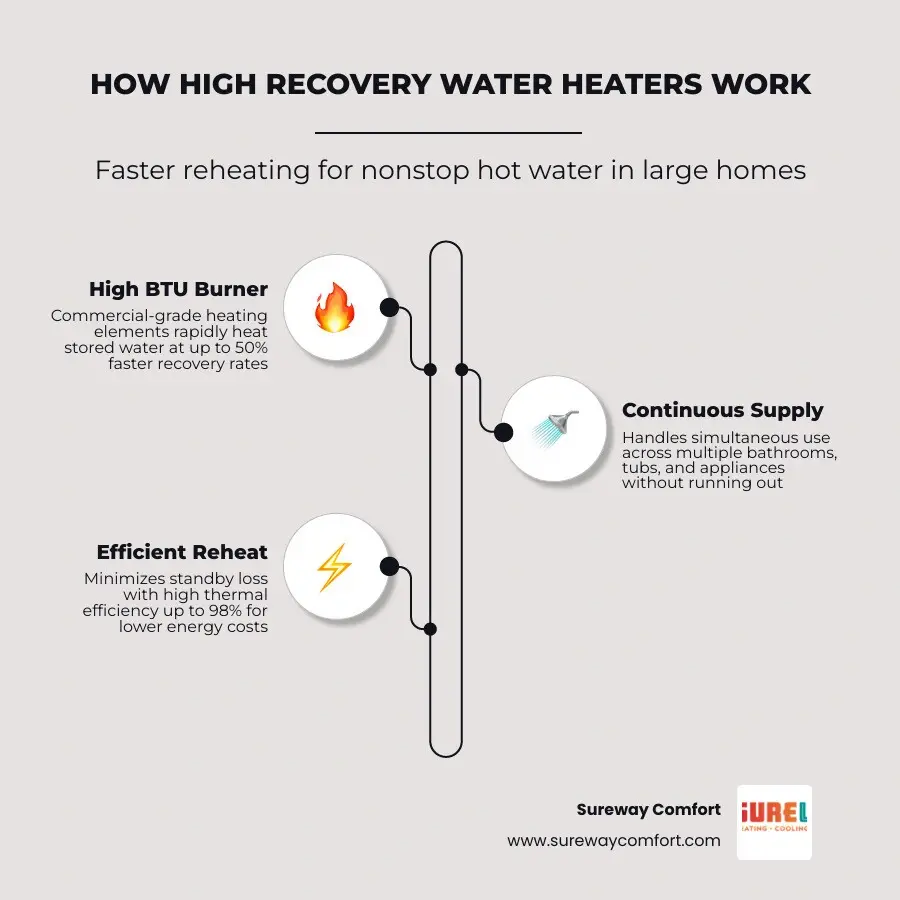
Installing a commercial high recovery water heater for large homes solves this exact problem by heating water up to 50% faster than standard units, ensuring your household never runs out of hot water during peak demand times. To help you get the most out of your system, we have compiled the ultimate tricks and tips for choosing, operating, and maintaining these high-capacity units.
- What it is: A heavy-duty water heater designed with commercial-grade burners or elements that reheat stored water at an exceptionally fast rate.
- Why large homes need it: It delivers a massive volume of hot water continuously, easily supplying multiple bathrooms, deep soaking tubs, and appliances running simultaneously.
- How it helps: It eliminates the classic "cold shower" problem without requiring a giant, space-consuming storage tank in your basement.
- Best fuel types: Available in ultra-high efficiency gas (up to 98% thermal efficiency), high-powered electric, and energy-saving hybrid heat pump models.
At Sureway Comfort, we help homeowners in Bridgeville, PA and the surrounding areas find the perfect high-capacity systems to keep their homes running smoothly. If you are tired of timing your showers or waiting hours for hot water to return, we are right here in your neighborhood to help.
Explore our professional water heater solutions to find the right fit for your home, or contact our friendly team today to schedule a hassle-free consultation.
When we talk about a Commercial High Recovery Water Heater, we are referring to a system engineered to handle intensive, non-stop hot water demands. While standard residential water heaters focus on storing a modest volume of water and heating it slowly over time, commercial-grade high recovery systems prioritize speed and power.
These units are built with commercial-grade durability, using heavy-duty materials designed to withstand constant thermal stress, high water pressures, and continuous operation. In a large home, this translates to a system that can run all day without wearing down, breaking down, or leaving you with lukewarm water.
How High Recovery Systems Differ from Standard Residential Tanks
The primary differences between standard residential tanks and high recovery systems lie in their recovery rate, BTU input, standby heat loss, and water storage volume:
- BTU Input: A standard residential gas water heater usually has an input of 30,000 to 50,000 BTUs per hour. In contrast, a light commercial or high recovery unit designed for estate homes can easily start at 75,000 BTUs and go up to 199,000 BTUs or more.
- Recovery Rate: The recovery rate measures how many gallons of water the heater can raise by 100°F in one hour. Standard tanks might recover 30 to 40 gallons per hour. Commercial high recovery systems can easily heat 100 to over 500 gallons per hour, depending on the model.
- Standby Heat Loss: High recovery systems often utilize superior, thick foam insulation and advanced flue designs to minimize standby heat loss, ensuring the energy used to heat the water is not wasted while it sits in the tank.
- Water Storage Volume: High recovery systems allow you to achieve incredible hot water delivery without needing a physically massive storage tank. Because the unit reheats the water so quickly, a 50-gallon high recovery tank can easily outperform a standard 80-gallon residential tank.
Key Features and Technical Specifications to Look For
When shopping for a high recovery system for your home, you should keep an eye out for several key technical specifications:
- Thermal Efficiency: Look for condensing gas models that boast up to 96% to 98% thermal efficiency. This means nearly all the fuel consumed is directly converted into hot water, drastically lowering your energy footprint.
- Modulating Burners: Advanced gas models feature modulating burners that adjust their fuel usage (turndown ratios up to 10:1) based on real-time demand. If you only turn on one faucet, the system burns a fraction of the gas it would use during a peak morning shower rush.
- Advanced Electronic Controls: Modern systems include digital displays, diagnostic tools, and smart connectivity. Some platforms even offer remote monitoring apps, allowing you to track performance and receive maintenance alerts directly on your smartphone.
- Corrosion-Resistant Anodes: To combat hard water and tank degradation, high recovery systems feature dual commercial-grade sacrificial anodes or even adaptive powered anodes that actively protect the tank lining from corrosion.
Why Choose a Commercial High Recovery Water Heater for Large Homes?
Large homes have unique plumbing dynamics. With multiple bathrooms, custom multi-head walk-in showers, deep soaking tubs, and secondary kitchenettes, a standard water heater simply cannot keep up with simultaneous hot water usage.
Meeting the Demands of Multi-Bathroom and Large Properties
In a sprawling home with four, five, or more bathrooms, the peak hour demand—usually in the morning when everyone is getting ready for school and work—is incredibly high. If two people are showering while the washing machine runs, a standard tank will be depleted in less than twenty minutes.
Because heating water accounts for roughly 18 percent of a home's energy use, trying to solve this by installing multiple standard tanks is both inefficient and space-consuming. A commercial high recovery water heater provides the muscle needed to supply high-flow fixtures effortlessly, ensuring that even if you have guests staying over, everyone gets a hot shower.
The Benefits of Faster Recovery Rates for Busy Households
A high recovery unit recovers hot water up to 50 percent faster than a standard 50-gallon gas model. This means that even if your household manages to temporarily deplete the hot water storage during an unusually high-demand period, the system will replenish itself in a matter of minutes rather than hours.
This rapid turnaround delivers:
- Continuous Hot Water: No more scheduling shower times or waiting between loads of laundry.
- Space Savings: You can install a smaller, more compact tank because the recovery speed compensates for storage volume.
- Peace of Mind: You can run your dishwasher, washing machine, and master shower simultaneously without a single drop in temperature.
Comparing Fuel Types: Gas, Electric, and Heat Pump Systems
Choosing the right energy source for your commercial high recovery water heater depends on your home's existing infrastructure, your efficiency goals, and your performance expectations.
| Feature | High-Efficiency Gas | Heavy-Duty Electric | Hybrid Heat Pump |
|---|---|---|---|
| Recovery Speed | Extremely Fast | Fast to Moderate | Moderate (Slowest of the three) |
| Energy Efficiency | High (Up to 98% Thermal Efficiency) | Standard (High standby loss potential) | Ultra-High (2 to 4 times more efficient) |
| Venting Required | Yes (PVC or CPVC direct vent) | No | No (Requires proper room volume/airflow) |
| Best For | Extreme, simultaneous demand | Homes without gas lines | Energy-conscious homes with moderate peak demand |
High-Efficiency Gas Storage Options
For homeowners with access to natural gas, high-efficiency gas storage options are often the premier choice. Modern condensing gas water heaters capture hot exhaust gases that would normally escape up the chimney and use them to preheat incoming cold water. This allows them to achieve outstanding thermal efficiency of up to 98%.
If you want to understand the full advantages of transitioning your home's infrastructure to support these systems, read about the Switching to Gas Water Heaters Benefits. These systems deliver the absolute fastest recovery rates, making them the gold standard for high-demand, luxury homes.
Heavy-Duty Electric and Hybrid Heat Pump Alternatives
If natural gas is not available in your part of Pennsylvania, or if you are looking to electrify your home, heavy-duty electric and hybrid heat pump models are excellent alternatives.
- Heavy-Duty Electric: These units utilize multiple high-wattage heating elements (often incoloy-sheathed to resist scaling) that fire in sequence to heat water quickly. While they have excellent recovery rates, they do require significant electrical panel capacity.
- Hybrid Heat Pump Water Heaters: According to the Department of Energy, heat pump water heaters are two to four times more energy-efficient than conventional electric water heaters. They pull heat from the surrounding air to warm your water. While their recovery rate in pure "heat pump mode" is slower, they feature hybrid settings that activate traditional electric elements during high-demand periods to speed up recovery.
To dive deeper into how these two electrical options stack up against gas systems, check out our Gas vs Electric Water Heater Guide 2026.
Sizing and Installation Considerations for Homeowners
Installing a commercial-grade appliance in a residential home requires careful planning and professional expertise. You cannot simply swap a standard tank for a high recovery commercial unit without evaluating your home's utility connections.
Pro-Tips for Sizing a Commercial High Recovery Water Heater for Large Homes
To size a water heater correctly, we do not just look at the square footage of your house. Instead, we calculate your peak hour demand. Here is a quick trick to estimate your needs:
- Count the occupants: Estimate 12 gallons of hot water per person during peak hours.
- Audit your fixtures: Note the number of bathrooms and high-flow fixtures (such as rainfall showerheads or body sprays).
- Calculate simultaneous usage: Determine the flow rate (gallons per minute) of all hot-water-using appliances likely to run at the same time.
- Factor in seasonal changes: Remember that incoming winter water temperatures in PA require more heating power.
Using advanced sizing tools, our technicians match these variables against a water heater's first-hour rating to ensure you never run out of hot water, even on the coldest winter mornings.
Residential Installation Challenges and Ventilation Requirements
Bringing a commercial-grade unit into a residential basement or utility room presents a few unique challenges:
- Ventilation: High-efficiency condensing gas units require direct venting. This means running specialized PVC, CPVC, or polypropylene vent pipes through an exterior wall to safely exhaust cool combustion gases.
- Gas Line Upgrades: Because commercial units have much higher BTU inputs, your existing residential gas line may need to be upgraded to a larger diameter to supply enough fuel.
- Electrical Requirements: Heavy-duty electric models often require dedicated 240-volt circuits with high-amperage breakers. Hybrid heat pump models require adequate air volume (typically 1,000 cubic feet) and proper condensate drainage.
Alternative Hot Water Solutions for High-Demand Properties
While commercial high recovery tanks are outstanding, they are not the only option for large homes. Many homeowners also consider tankless or hybrid configurations.
Comparing a Commercial High Recovery Water Heater for Large Homes to Tankless Systems
Tankless water heaters provide on-demand heating, warming water only when you turn on a faucet. They offer a continuous supply of hot water and take up very little wall space. However, they do have flow rate limits. If your home has multiple showers running at once, a single tankless unit might struggle to maintain water pressure and temperature across all fixtures.
If you are considering going tankless, we provide expert Tankless Water Heater Installation Canonsburg PA and service throughout the region, including Tankless Water Heater Bridgeville PA.
Hybrid High Recovery vs. Tankless Options
A hybrid high recovery system combines the best of both worlds: a small storage tank paired with a high-powered burner or tankless engine on top. This design eliminates standby heat loss while ensuring you have a reservoir of hot water ready to handle sudden spikes in peak demand.
To see which system design fits your home's layout and lifestyle best, read our comprehensive breakdown on Hybrid High Recovery vs Tankless Water Heater.
Frequently Asked Questions About High Recovery Water Heaters
How long does a commercial-grade water heater last in a home?
Because they are built with thicker steel tanks, superior glass linings, and heavy-duty components, commercial-grade water heaters installed in residential settings often enjoy a long service life. On average, you can expect these systems to last 10 to 15 years, and sometimes longer with meticulous care.
However, your home's water quality plays a massive role in this. Hard water can cause scale buildup on heating elements and tank walls, reducing efficiency and accelerating wear. To learn more about maximizing your system's lifespan, read about How Long Does a Water Heater Last and discover How Water Quality Affects Water Heater Lifespan.
What maintenance do high recovery water heaters require?
High recovery systems work hard, which means they require regular maintenance to run at peak efficiency. Homeowners should plan for:
- Annual Flushing: Flushing the tank once a year removes accumulated sediment and scale.
- Anode Rod Inspection: Checking and replacing the sacrificial anode rods every 2 to 3 years protects the tank from rusting.
- Pressure Relief Valve Testing: Ensuring the safety valves operate correctly keeps your home safe.
For a step-by-step guide on keeping your system in top shape, check out our Water Heater Maintenance Checklist for Homeowners.
When should I replace my current water heater with a high recovery model?
If your current system is over 10 years old, requires frequent repairs, or simply cannot keep up with your family's hot water needs, it is time to consider an upgrade. Upgrading before an outright failure prevents unexpected leaks and cold showers.
Learn more about the warning signs by reading When Should You Replace Your Water Heater.
Conclusion
Investing in a commercial high recovery water heater for large homes is the ultimate way to bring long-term comfort, reliability, and modern efficiency to your high-demand household. No more cold showers, no more coordinating schedules, and no more waiting around for hot water to return.
At Sureway Comfort, we are proud to serve our neighbors in Bridgeville, McDonald, Mt Lebanon, Bethel Park, Canonsburg, Collier, South Fayette, Upper St. Clair, Carnegie, Green Tree, Scott Township, Brookline, and Oakdale. Our experienced technicians are dedicated to finding the perfect plumbing and heating solutions for your unique home. With our streamlined process, comprehensive maintenance plans, and flexible financing options, we make upgrading your home's comfort simple and stress-free.
Ready to experience endless hot water? Schedule professional water heater services with Sureway Comfort today, and let our local team get the job done right!
Need Service?
Family owned · once & done · 24/7 emergency service across the South Hills of Pittsburgh.
(412) 643-4118 Schedule ServiceMore Services
Ready to Do It Right With Sureway?
Request a quote, schedule HVAC service, or ask about HVAC and plumbing project financing across the South Hills of Pittsburgh.