
A Practical Guide to Best Time of Year to Schedule Your AC Tune Up
Schedule your AC tune up in spring to beat the summer heat and secure the best time of year to schedule your AC tune up.
Pro Tips: Why the Best Time of Year to Schedule Your AC Tune Up Is Closer Than You Think
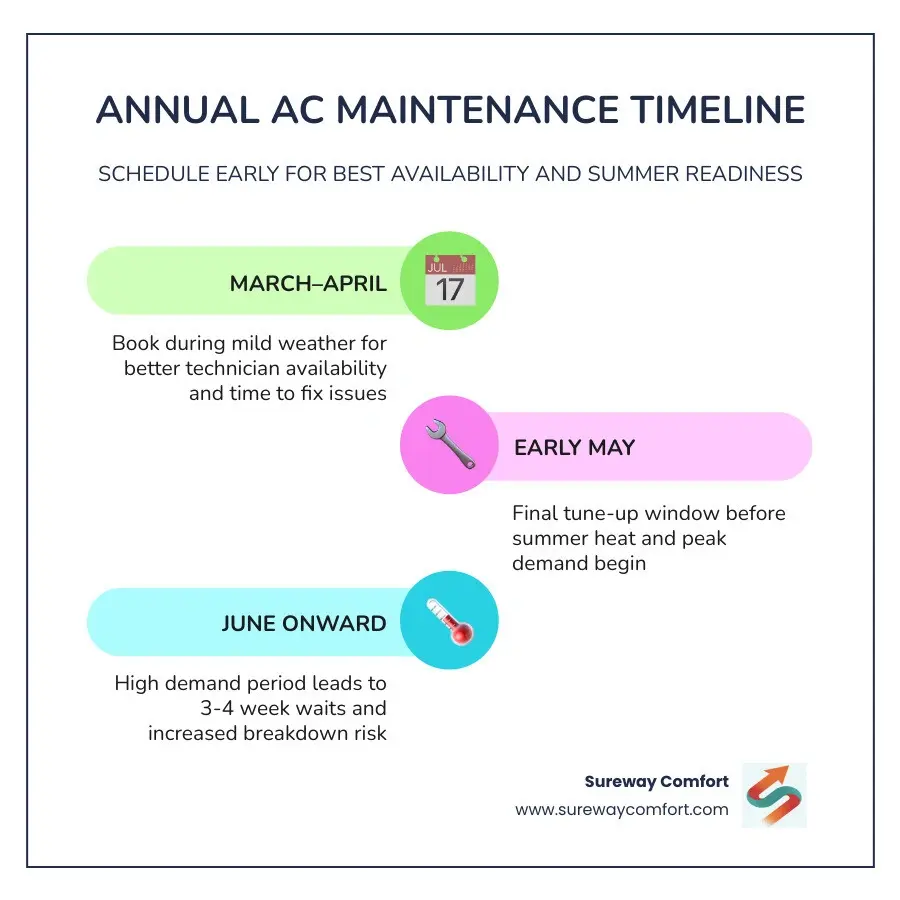
The best time of year to schedule your AC tune up is in spring — ideally between March and early May — and following this simple tip helps you beat the summer rush before HVAC schedules fill up fast.
Quick tips:
| When to Schedule | Why It Works |
|---|---|
| March - early May | Best availability, mild weather, time to fix issues before summer |
| June and later | Technicians booked 3-4 weeks out, higher breakdown risk |
| Fall (secondary) | Good for heat pump or year-round systems |
Most homeowners in the Pittsburgh area don't think about their AC until the first hot week hits. A spring tune-up is a pro tip that lets a technician catch small problems like a weak capacitor or a clogged drain line before they become a breakdown on the hottest Saturday of the year.
Skipping annual maintenance isn't just a comfort risk. A neglected system can use 15% to 30% more energy just to reach the same temperature — and may wear out years earlier than a well-maintained one.
Whether your system ran all last summer or sat quiet through a mild winter, a preseason checkup is the simplest way to protect your home comfort before you actually need it.
Expert Tips for Choosing the Best Time of Year to Schedule Your AC Tune Up
If we had to give one simple tip for homeowners in Bridgeville, Mt. Lebanon, Bethel Park, Canonsburg, South Fayette, Upper St. Clair, Oakdale, and nearby communities, it would be this: schedule AC maintenance in spring, before your first real stretch of hot weather.
That timing works because it gives us room to inspect the system, clean important components, test performance, and handle small repairs before your air conditioner has to work its hardest. It is the ultimate pro tip for planning ahead instead of reacting to a breakdown.
Why spring is usually the best time of year to schedule your AC tune up
Spring is ideal for a few practical reasons:
- Temperatures are milder, so your AC is not under heavy stress yet.
- Small issues are easier to catch before they turn into emergency repairs.
- There is still time to make follow-up repairs before peak summer heat.
- Appointment calendars are usually more flexible than they are in June or July.
In Western Pennsylvania, spring weather can bounce around a bit. That is exactly why spring scheduling is a great trick. You can get ahead of the season instead of reacting to it.
When the best time of year to schedule your AC tune up may shift slightly
Spring is the default answer, but some homes benefit from a slightly different schedule.
You may want extra attention if:
- You have a heat pump that runs nearly year-round
- You use a ductless mini-split for both heating and cooling
- Your system is older and has a history of repairs
- Someone in the home prefers lower temperatures all summer, so the AC runs hard
- Your home has uneven cooling or airflow issues already
In those cases, once-a-year maintenance is still the baseline, but a second visit later in the year can make sense. For broader planning tips, see our guides on seasonal HVAC tune-ups and efficient HVAC maintenance year round.
Why waiting until summer creates problems
Summer service is still worth scheduling if you missed spring. Late is better than never. But waiting creates a few avoidable headaches:
- Your system is more likely to fail under peak demand
- Service availability gets tighter
- Small problems become urgent problems
- You may spend days feeling like your thermostat has turned against you
Research consistently shows that by June, many HVAC companies are already booked 3 to 4 weeks out for non-emergency calls. That means if your AC starts struggling during the first heat wave, you may not get the quick, convenient appointment you wanted.

Maintenance Tricks: Why Spring Tune-Ups Pay Off Before Summer Starts
A spring tune-up is not just a box to check. It is a smart trick to help your system cool more efficiently, run more reliably, and last longer.
How spring maintenance helps prevent costly breakdowns
Most summer breakdowns do not start in summer. They start earlier, as small issues that go unnoticed.
A tune-up can catch problems like:
- Weak capacitors that may fail during a hot spell
- Loose electrical connections that affect startup or operation
- Dirty coils that make the system run longer
- Clogged condensate drains that can cause leaks or shutoffs
- Refrigerant issues that reduce cooling performance
- Short cycling that adds wear to major components
Finding these issues in spring gives us time to address them before your system is pushed hard. That is much better than discovering the problem when your house is already warming up.
How maintenance improves efficiency and comfort
A neglected AC can use 15% to 30% more energy to deliver the same cooling. That wasted energy usually shows up as:
- Longer run times
- Higher utility bills
- Rooms that never quite feel comfortable
- Sticky indoor humidity
- More wear on motors and other parts
When coils are cleaner, airflow is stronger, and controls are working properly, your system does not have to fight so hard to cool your home. You get steadier temperatures, better humidity control, and less strain on the equipment.
If you want to dig deeper into the savings side, read top reasons regular AC maintenance matters and how AC maintenance helps save money.
Why annual maintenance protects long-term performance
Well-maintained HVAC systems often last well beyond 10 to 15 years. Skipping maintenance every year tends to shorten that life by allowing dirt, wear, and minor defects to build up.
Annual service helps by:
- Reducing day-to-day strain on the system
- Limiting wear from poor airflow or overheating
- Catching repair needs earlier
- Supporting better performance season after season
If you think of your AC like a car, this makes sense fast. You would not drive year after year without basic service and expect perfect results. Your cooling system works the same way, just with less cupholder storage.
Pro Tips: What a Professional AC Tune-Up Typically Includes
A real tune-up should be more than a quick glance at the thermostat. Here are the pro tips on what professional maintenance involves: inspection, cleaning, testing, and adjustment.
Core tasks included in a tune-up visit
While the exact checklist varies by system, a tune-up commonly includes:
- Checking or replacing the air filter
- Inspecting and cleaning the outdoor condenser coil
- Inspecting the indoor evaporator coil when accessible
- Testing thermostat operation and calibration
- Checking refrigerant levels and system pressures
- Inspecting electrical connections and controls
- Measuring airflow and overall performance
- Cleaning the condensate drain line
- Inspecting blower components
- Looking for signs of wear, corrosion, or vibration issues
A tune-up generally takes around 1 to 2 hours depending on the system condition and what is found.
AC tune-up task list
| Tune-up task | Why it matters |
|---|---|
| Filter inspection | Supports airflow and indoor air quality |
| Coil cleaning | Helps heat transfer and cooling efficiency |
| Thermostat check | Confirms accurate temperature control |
| Drain line inspection | Helps prevent leaks and moisture problems |
| Electrical inspection | Reduces risk of failure from loose or worn parts |
| Refrigerant check | Confirms proper cooling performance |
| Blower and airflow review | Improves comfort and system balance |
What homeowners can do between professional visits
There are a few simple things homeowners can do without getting deep into technical work:
- Change filters regularly
- Keep supply and return vents open and unblocked
- Clear leaves, grass, and debris from around the outdoor unit
- Replace thermostat batteries if needed
- Watch for unusual noise, leaks, or weak airflow
- Make sure furniture or rugs are not blocking vents
These steps help, but they do not replace a professional tune-up. Cleaning coils properly, checking refrigerant, and testing electrical parts requires the right tools and experience.
How to prepare for your appointment
A little prep helps the visit go more smoothly.
Before we arrive, it helps to:
- Clear space around the indoor and outdoor equipment
- Secure pets
- Write down concerns like warm air, odd smells, or noisy operation
- Make sure the thermostat is accessible
- Remove stored items that block service panels
For more on seasonal upkeep, visit our article on seasonal HVAC tune-ups.
Scheduling Tips: How Often to Service and When to Call Right Away
For most homeowners, once a year is the standard. But here are the tips on when you should not wait for your next scheduled visit.
How often most homeowners should service their AC
For a typical central AC system in our area, annual maintenance is the right baseline. Spring is the best time for that visit.
You may want more frequent service if:
- Your equipment is older
- Your household runs the AC heavily
- You have a heat pump or ductless system used in multiple seasons
- Your home has indoor air quality or airflow concerns
- You want more consistent year-round system oversight
Helpful reads include how often you should service your HVAC system and our ultimate guide to HVAC maintenance.
Signs your AC needs a tune-up right away
Do not wait for next spring if you notice:
- Weak airflow
- Warm air from the vents
- Uneven cooling between rooms
- Frequent on-and-off cycling
- Strange noises like buzzing, rattling, or grinding
- Musty odors
- Water leaks near the unit
- Ice or frost on refrigerant lines or coils
- Sudden jumps in your utility bill
These warning signs often point to problems that can worsen quickly under summer demand.
What can happen if you skip annual AC maintenance
Skipping annual maintenance can lead to:
- Reduced efficiency
- Higher energy use
- More frequent repairs
- Poor humidity control
- Dirt buildup on critical components
- Shorter system life
- Surprise breakdowns during hot weather
- Possible warranty-related headaches on some systems
Spring tune-up vs delayed summer service
| Timing | Typical advantage | Common downside |
|---|---|---|
| Spring tune-up | Better planning, easier scheduling, time for repairs | Requires proactive scheduling |
| Delayed summer service | Better than skipping entirely | More stress, tighter schedules, higher breakdown risk |
Off-Season Scheduling Tricks for Pittsburgh-Area Homeowners
For homeowners around Bridgeville and the South Hills, timing is one of the best tricks for a stress-free summer. Weather can change quickly, and a cool April can turn into a sticky May before you know it.
The ideal scheduling window in Western Pennsylvania
Our best recommendation is to schedule in:
- March
- April
- Early May
That window usually puts you ahead of the first hot week, which is exactly where you want to be. You do not need to wait until your AC is running every day. In fact, that is what we are trying to avoid.
Why off-season appointments are easier to get
Off-season scheduling has practical benefits:
- More flexible appointment options
- Less chance of getting stuck in the summer rush
- More time to complete any needed follow-up work
- Less disruption to your routine
- Less pressure to make same-day repair decisions in hot weather
That is one reason maintenance plans are helpful too. If you want a closer look at that option, see our articles on AC maintenance plans, HVAC maintenance plans, and preventative HVAC maintenance.
Local AC maintenance resources for nearby homeowners
If you are looking for service information specific to your area, we have local pages for nearby communities:
- AC maintenance in Bridgeville, PA
- AC maintenance in Mt. Lebanon, PA
- AC maintenance in McDonald, PA
- AC maintenance in Canonsburg, PA
- AC maintenance in Brookline, PA
- AC maintenance in South Fayette, PA
- AC maintenance in Upper St. Clair, PA
- AC maintenance in Scott Township, PA
- AC maintenance in Bethel Park, PA
- AC tune-ups in Oakdale, PA
Frequently Asked Questions: Tips for the Best Time of Year to Schedule Your AC Tune Up
Is spring still the best time of year to schedule your AC tune up if my system seems to be working fine?
Yes. That is exactly when maintenance is most useful.
Many AC issues stay hidden until the first serious heat wave. A system can appear fine on a mild day and still have a dirty coil, weak electrical part, or partially clogged drain. Preventive service gives us a chance to catch that wear before your AC is tested by summer conditions.
Should I schedule AC maintenance more than once a year?
Usually once a year is enough for standard central AC systems in our service area. But twice-yearly maintenance may make sense if:
- You have a heat pump
- You use ductless equipment year-round
- Your system is older
- The equipment runs heavily in multiple seasons
If you are unsure, we can help you decide on a schedule based on how your system is used.
Can a tune-up really help lower monthly cooling bills?
Yes, it can.
When your system has clean coils, proper airflow, and correctly operating components, it does not have to run as long or work as hard. That improved efficiency can reduce wasted energy and help keep cooling bills more manageable during summer.
Final Tips for Your AC Maintenance
For most homeowners in the South Hills and nearby Pittsburgh-area communities, the best time of year to schedule your AC tune up is spring, especially March through early May. That timing gives you the best shot at avoiding summer delays, preventing breakdowns, improving efficiency, and keeping your home comfortable when temperatures rise.
If your system is already showing signs of trouble, do not wait for the perfect month. Schedule service as soon as you notice a problem.
At Sureway Comfort, we help homeowners stay ahead of seasonal issues with reliable maintenance, honest service, and responsive scheduling throughout Bridgeville, McDonald, Mt. Lebanon, Bethel Park, Canonsburg, Collier, South Fayette, Upper St. Clair, Carnegie, Green Tree, Scott Township, Brookline, and Oakdale.
To keep learning, explore preventative HVAC maintenance, HVAC maintenance plans, or visit our main air conditioning service page.
Need Service?
Family owned · once & done · 24/7 emergency service across the South Hills of Pittsburgh.
(412) 643-4118 Schedule ServiceMore Services
Ready to Do It Right With Sureway?
Request a quote, schedule HVAC service, or ask about HVAC and plumbing project financing across the South Hills of Pittsburgh.