


Ice Forming on Your AC Unit: Troubleshooting Tricks & Prevention Tips
Ice forming on your AC unit causes and what to do is something every homeowner should understand before a small frost problem turns into a costly breakdown. Seeing ice on your air conditioner on a hot summer day feels backwards — but it's actually a serious warning sign that your system is struggling. In this tricks and tips guide, we'll break down exactly why this happens and how you can resolve it.
Here's a quick answer if you need it right now:
If you see ice on your AC unit:
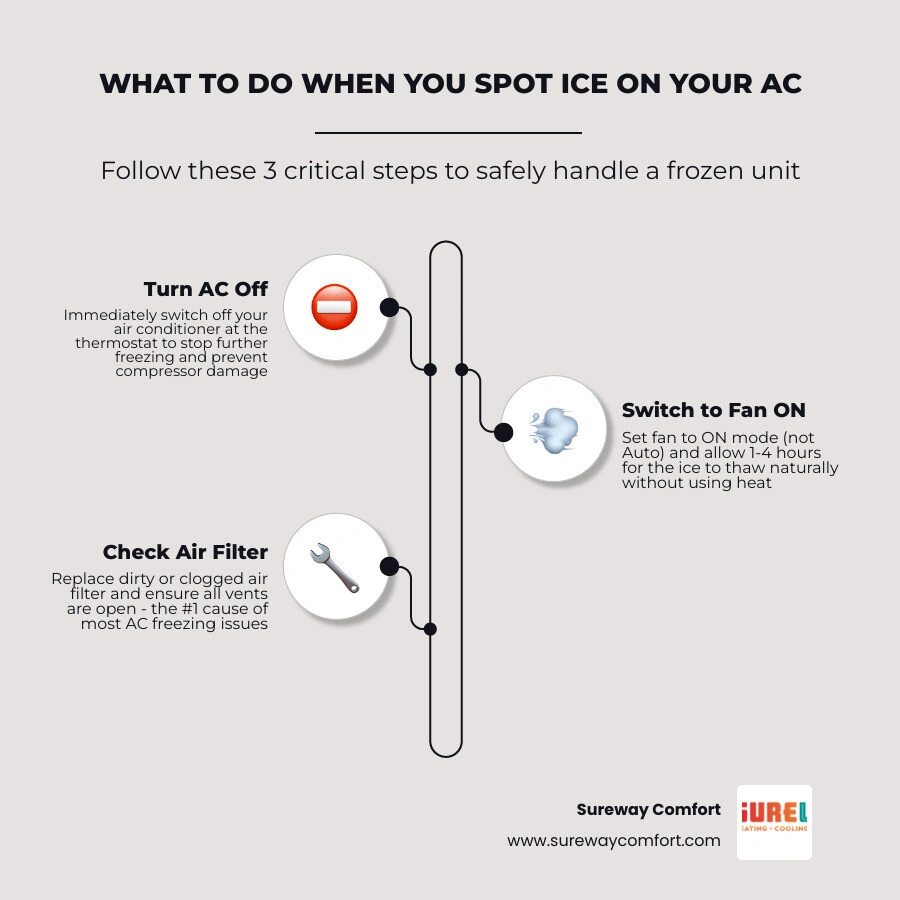
1. Turn the AC off at the thermostat immediately
2. Switch the fan to ON (not Auto) to help melt the ice
3. Wait 1 to 4 hours for the coil to fully thaw
4. Check and replace your air filter if it looks dirty or clogged
5. Make sure all vents and return registers are open and clear
6. Call an HVAC technician if the ice comes back after you restart, or if you hear hissing sounds from the unit
The two root causes behind nearly every frozen AC are restricted airflow (most often a clogged air filter) and low refrigerant from a leak. A dirty filter alone accounts for roughly half of all AC freezing cases. Low refrigerant accounts for about another quarter.
The danger isn't just the ice itself — running a frozen AC can damage or destroy the compressor, which is one of the most expensive parts in the entire system.
Basic ice forming on your ac unit causes and what to do terms:
• ac circuit breaker keeps tripping what it means
• ac troubleshooting tips before calling a pro
• how to check your thermostat before calling for repair
Ice Forming on Your AC Unit Causes and What to Do
To understand why your air conditioner is suddenly mimicking a commercial ice-maker, we have to look at the basic physics of how your home stays cool. Your air conditioner does not actually "create" cold air. Instead, it works by extracting heat and moisture from your indoor air and dumping it outside.
This magic happens at the evaporator coil, which is typically located inside your indoor air handler. Under normal operating conditions, liquid refrigerant flows through these copper coils. As warm, humid air from your home is blown across the coil by the blower fan, the refrigerant absorbs the heat from the air. This process causes the moisture in the air to condense on the outside of the cold coils—much like water droplets forming on a cold glass of iced tea on a humid July afternoon in Bethel Park or Upper St. Clair.
In a healthy system, this condensation simply drips down into a drain pan and flows safely out of your home. However, the refrigerant inside the evaporator coil is incredibly cold, usually hovering around 40°F. If the heat exchange process is disrupted, the temperature of the copper coil can rapidly drop below 32°F. When this happens, the condensation on the coil freezes instantly. As the system continues to run, more moisture accumulates and freezes, creating an insulating block of ice that completely stops the cooling process.
If you are experiencing cooling issues, it is highly beneficial to Troubleshoot Common AC Problems early on to catch these issues before the ice migrates from your indoor coils to the outdoor copper lines.
Restricted Airflow: Understanding Ice Forming on Your AC Unit Causes and What to Do
If your evaporator coil does not receive a steady, robust stream of warm air from your home, it cannot absorb enough heat to keep the refrigerant above freezing temperatures. This lack of heat exchange is the single most common reason air conditioners freeze up.
There are several culprits that can restrict airflow through your system:
• A Clogged Air Filter: This is the absolute number-one cause of a frozen AC. When your air filter is packed with dust, pet dander, and hair, your blower fan has to work twice as hard to pull air through. The reduced volume of warm air passing over the evaporator coil causes the coil temperature to plummet, turning normal condensation into solid ice.
• Blocked Vents and Return Registers: If you have pushed heavy furniture in front of your return grilles, or if you have closed off supply vents in unused rooms to try to save energy, you are actually restricting the system's airflow. Keeping registers closed builds up static pressure in your ductwork, slows down air movement across the coil, and triggers a freeze.
• A Failing Blower Motor or Fan: If the blower fan isn't spinning at the correct speed—or if it has stopped working altogether—there will be no air movement over the coils. Dust accumulation on the fan blades can also reduce their aerodynamic efficiency, leading to the same freezing result.
• A Grimy Evaporator Coil: Dust that manages to slip past a low-quality or poorly fitted air filter will eventually settle on the wet surface of the evaporator coil. This layer of dirt acts as an insulating barrier, preventing the refrigerant inside the copper tubing from absorbing the heat from your home's air.
When airflow is heavily choked, you might notice that your AC Isnt Cooling Below 80 Degrees, even if the system runs continuously.
Low Refrigerant Leaks: Ice Forming on Your AC Unit Causes and What to Do
It sounds counterintuitive at first: How does having less cooling fluid make the unit freeze?
The answer lies in the relationship between pressure and temperature, specifically explained by the Joule-Thomson effect. Your air conditioning system is a sealed loop. The refrigerant is pressurized by the compressor to change its temperature and state. When the volume of refrigerant drops due to a leak, the pressure inside the evaporator coil drops along with it.
As the pressure drops, the temperature of the remaining refrigerant plummets far below its normal operating range—well below 32°F. This super-chilled refrigerant makes the copper pipes incredibly cold. Any moisture in the air that touches the coil freezes instantly upon contact.
It is important to remember that an air conditioner does not "consume" refrigerant like a car consumes gasoline. If your system is low, it is because there is a physical leak somewhere in the copper lines, the evaporator coil, or the condenser coil. Simply adding more refrigerant without finding and repairing the leak is a temporary, ineffective fix that can harm the environment and your wallet.
Keep an eye out for these classic signs of a refrigerant leak:
• A distinct, persistent hissing or bubbling noise coming from your indoor or outdoor unit.
• Warm air blowing from your supply vents while the outdoor compressor is running.
• Oily residue on the copper refrigerant lines or near the joint connections.
Recognizing these warnings early and knowing the AC Repair Top Signs can save you from a complete system breakdown. If you hear unusual sounds, check out our guide on AC Making Strange Noises What They Mean to help identify the issue.
Airflow vs. Refrigerant Freezing: How to Tell the Difference
While both issues result in a block of ice, they present slightly different diagnostic patterns. Understanding these differences can help you determine whether you are dealing with a simple DIY filter change or a mechanical issue that requires a professional hand.
• Ice Location — Airflow-Related Freezing: Typically covers the entire evaporator coil uniformly and can travel all the way down the drain pan. — Refrigerant-Related Freezing: Often starts as partial icing right near the expansion valve or where the refrigerant enters the coil.
• Airflow Strength — Airflow-Related Freezing: Very weak, faint, or nonexistent airflow coming from your home's supply registers. — Refrigerant-Related Freezing: Airflow may feel normal in strength, but the air coming out of the vents is warm or lukewarm.
• System Noises — Airflow-Related Freezing: Blower motor may hum loudly, rattle, or sound like it is struggling against high resistance. — Refrigerant-Related Freezing: You may hear a distinct hissing, whistling, or bubbling sound near the indoor or outdoor unit.
• Most Common Cause — Airflow-Related Freezing: Dirty air filter, closed supply vents, or a dusty blower wheel. — Refrigerant-Related Freezing: A physical leak in the copper refrigerant lines or evaporator coil joints.
• Initial DIY Solution — Airflow-Related Freezing: Replace the air filter, open all registers, and clean the vents. — Refrigerant-Related Freezing: Turn off the system immediately; cannot be fixed safely without professional tools.
If your system is freezing up and running constantly without actually lowering the temperature in your home, it's critical to stop the cycle. Learn more about Stopping Your AC From Constantly Running to protect your compressor from overheating and failing.
If you look at your indoor air handler or the copper pipes leading to your outdoor unit and see a layer of frost or a thick block of ice, you must take action immediately. Do not let the system continue to run in hopes that it will "push through" the freeze.
Follow these step-by-step instructions to safely thaw your system and prevent further damage:
1. Turn the System OFF at the Thermostat: Switch your thermostat setting from "COOL" to "OFF". This cuts power to the compressor. Running a compressor when the coils are frozen can cause liquid refrigerant to flood back into the compressor motor (a destructive process known as "liquid slugging"), which can destroy the unit.
2. Switch the Fan to ON: Change your thermostat's fan setting from "AUTO" to "ON". This keeps your indoor blower fan running while the compressor is off. The fan will continuously pull warm indoor air across the frozen coils, safely accelerating the melting process.
3. Do NOT Use External Heat Sources: Never attempt to melt the ice using a hair dryer, heat gun, or propane torch. The sudden, intense temperature change (thermal shock) can easily crack the delicate copper refrigerant lines or warp the thin aluminum fins on the coil, turning a simple repair into a total system replacement.
4. Prepare for Melted Water: As the ice melts, it will produce a significant amount of water. Keep an eye on your indoor unit's condensate drain pan to ensure it isn't overflowing. Keep some old towels nearby to soak up any spills if your drain line is partially clogged.
5. Let it Thaw Completely: Depending on how thick the ice is, thawing can take anywhere from 1 to 4 hours. In severe cases where the entire unit is encased in a solid block of ice, it may take up to 12 to 24 hours to melt completely. Do not turn the cooling back on until you are certain all the ice has vanished.
If your system remains unresponsive after it has fully dried out, you may need to investigate further. Find out Why Your AC Wont Turn On to help get your home comfort back on track.
Pro Tricks and Tips to Prevent Your AC From Freezing in the Future
Once your system has fully thawed and you have resolved the immediate cause of the freeze, your focus should shift to prevention. Keeping your air conditioner running smoothly throughout the hot humid summers in Western Pennsylvania requires a bit of proactive care.
• Establish a Filter Replacement Schedule: Check your air filter every 30 days, especially during high-use summer months or if you have pets. Replace it at least every 90 days. If you use high-MERV filters, make sure your system's blower motor is rated to handle the extra resistance.
• Keep Vents and Registers Open: Ensure that at least 80% of the supply registers in your home are completely open and unobstructed by furniture, drapes, or rugs. Keeping air flowing freely maintains the balance of pressure your system needs.
• Maintain Clear Space Around the Outdoor Unit: Keep a two-foot clearance around your outdoor condenser unit. Clear away weeds, tall grass, fallen leaves, and debris to ensure the outdoor fan can reject heat efficiently.
• Schedule Professional Tune-Ups: The absolute best way to prevent ice from forming on your AC is to have it professionally serviced every spring. A technician can clean your evaporator coils, inspect the blower motor, check the electrical components, and verify that your refrigerant levels are exactly where they need to be.
To keep your system running at maximum efficiency and prevent unexpected breakdowns, read about the benefits of Regular AC Maintenance Peak Performance. If you live in our immediate service area, you can easily schedule your annual tune-up through our AC Maintenance Bridgeville PA service page.
Frequently Asked Questions About Frozen AC Units
Dealing with a frozen air conditioner can be frustrating and confusing. Here are detailed answers to some of the most common questions we hear from homeowners.
How long does it take for a frozen AC coil to thaw safely?
Normally, a light-to-moderate layer of frost on an evaporator coil will thaw in 1 to 4 hours if you turn the cooling off and run the indoor fan on the "ON" setting.
If the ice buildup is exceptionally thick—forming a solid block of ice around the entire indoor cabinet—it can take up to 12 to 24 hours to melt completely. Patience is key here; restarting the cooling cycle before the ice has fully melted will only cause the freezing cycle to start all over again, risking severe damage to your system's compressor.
Can a dirty air filter really cause an entire AC system to freeze?
Yes, absolutely. In fact, a clogged or dirty air filter is responsible for approximately 50% of all frozen AC cases.
When the filter is packed with dirt and debris, it acts like a wall, blocking the warm return air from reaching your evaporator coil. Without that warm air to heat up the refrigerant inside the coil, the temperature of the copper tubing drops below freezing. The moisture that naturally condenses on the coil from your home's air freezes instantly, starting a chain reaction that quickly encases the entire coil in ice.
What are the risks of running an AC with frozen coils?
Running an air conditioner with frozen coils carries several severe risks:
• Compressor Failure: The compressor is designed to compress gaseous refrigerant. When the coils are frozen, liquid refrigerant can travel back down the line into the compressor, causing "liquid slugging." This can destroy the internal valves and bearings, leading to a highly expensive compressor replacement.
• High Utility Bills: A frozen system runs constantly without cooling your home, drawing massive amounts of electricity and spiking your monthly energy bills.
• Water Damage: When a large block of ice melts rapidly, it can easily overwhelm your condensate drain pan, leading to water pooling on your ceilings, walls, or floors, which can cause mold growth.
If your system's electrical components are being overloaded by a struggling, frozen compressor, you might find that your AC Circuit Breaker Keeps Tripping What It Means is a protective measure your home is taking to prevent an electrical fire.
Conclusion
Dealing with a frozen air conditioner on a hot summer day is never a pleasant experience, but understanding ice forming on your ac unit causes and what to do can save you from a major headache. The moment you spot ice, turn your system off and run the fan to let it thaw safely.
If you have replaced your filter, cleared your vents, and the ice continues to return, it is time to bring in the professionals. At Sureway Comfort, we are proud to be your local HVAC experts, serving our neighbors in Bridgeville, McDonald, Mt Lebanon, Bethel Park, Canonsburg, Collier, South Fayette, Upper St. Clair, Carnegie, Green Tree, Scott Township, Brookline, and Oakdale.
We offer responsive, honest diagnostics, same-day service, and emergency repairs to ensure your home stays perfectly comfortable all summer long. We're your neighbors, and we'll get it done right.
If you need fast, reliable help with a frozen air conditioner, visit our AC Repair page or Schedule Professional Air Conditioning Service with our friendly team today!




.svg)
.avif)


